
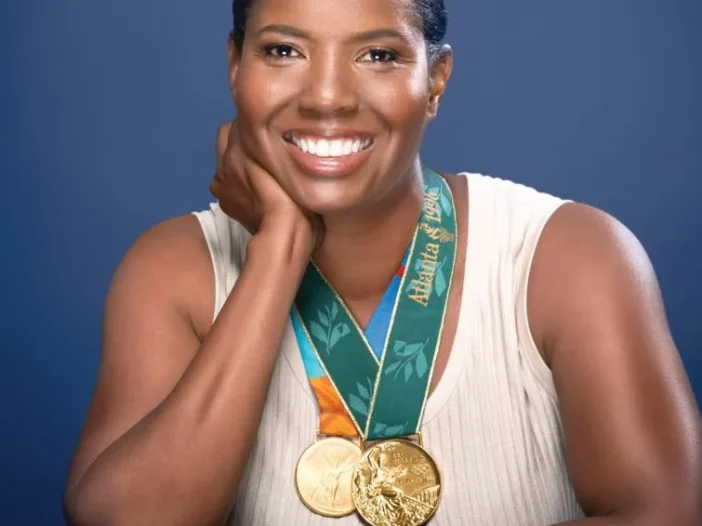
She made one save. And it changed women’s soccer forever.
On July 10, 1999, in front of 90,185 fans at the Rose Bowl in Pasadena, the largest crowd ever to watch a women’s sporting event, goalkeeper Briana Scurry dove left and stopped Liu Ying’s penalty kick cold. That single moment put the United States on the path to the 1999 FIFA Women’s World Cup title and turned women’s soccer into a national phenomenon overnight.
But the Briana Scurry biography is far bigger than one saves. It spans two Olympic gold medals, more than a decade as the starting goalkeeper for the U.S. Women’s National Team, a traumatic brain injury that nearly destroyed her, a harrowing fight back to herself, and a second act as one of the most compelling public speakers in American sports. Born September 7, 1971, in Minneapolis, Minnesota, Scurry is a Hall of Famer, a trailblazer, and a survivor. Here is the full story.
Quick Facts About Briana Scurry
| Detail | Information |
| Date of Birth | September 7, 1971 |
| Birthplace | Minneapolis, Minnesota, USA |
| Nationality | American |
| Height | 5 ft 8 in (173 cm) |
| Occupation | Retired Professional Goalkeeper, Author, Public Speaker, Advocate |
| Net Worth (est.) | $3 million |
| Spouse | Sherry Watkins (married 2018) |
| Children | None |
| Education | University of Massachusetts Amherst |
| Hall of Fame | National Soccer Hall of Fame (inducted 2017) |
Early Life and Background
Briana Collette Scurry was born and raised in Minneapolis, Minnesota, the youngest of nine children in a close-knit family. Growing up in a large household taught her resilience, competitiveness, and the value of fighting for your place, qualities that would later define her on the field.
She was a natural multi-sport athlete from an early age. Track and field, basketball, and football all held her attention before soccer became her calling. Her raw athleticism and instinctive reflexes made her stand out on every team she joined.
At Anoka High School in Minnesota, Scurry developed into a standout goalkeeper, attracting attention from college scouts across the country. She graduated as one of the most recruited young players in the Midwest.
University of Massachusetts Amherst
Scurry accepted a scholarship to the University of Massachusetts Amherst, where she became one of the finest collegiate goalkeepers in the nation. Her performances in the Atlantic 10 Conference drew consistent acclaim, and she left UMass having set multiple school records.
Her college career confirmed what scouts had already sensed: Scurry wasn’t just talented. She was built for the biggest moments. She graduated in 1993 and immediately set her sights on the national team.
Career Beginnings
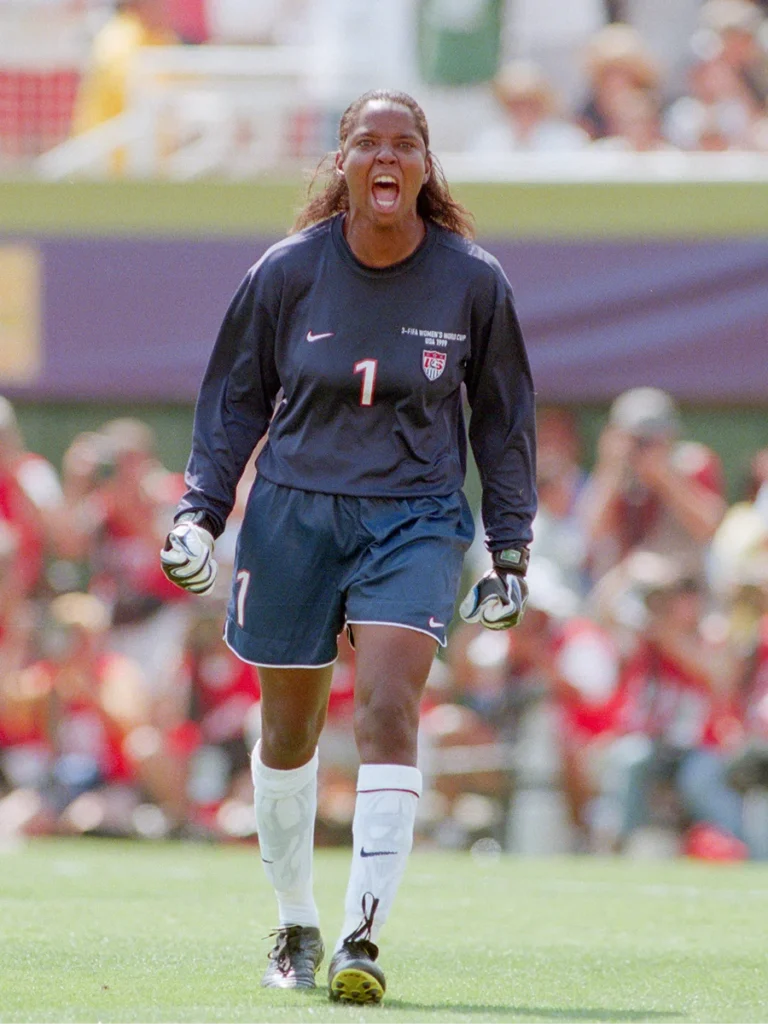
Briana Scurry made her debut with the U.S. Women’s National Team (USWNT) in 1994, stepping into a program already building toward global dominance. The competition for the starting goalkeeper spot was fierce, but Scurry’s athleticism, quick reflexes, and commanding presence in the box quickly set her apart.
Her breakthrough season came rapidly. By 1995, she had secured her role as the first-choice goalkeeper for the United States. Coaches recognized something rare in her: she didn’t flinch under pressure. She was a goalkeeper who wanted the most important moments.
That hunger was about to be tested on the world’s biggest stage.
Major Career Highlights
1996 Atlanta Olympics, First Gold Medal
The 1996 Atlanta Summer Olympics marked the first-time women’s soccer was included in the Olympic Games. The United States, playing on home soil, treated it as a coronation, and Scurry delivered. She was exceptional throughout the tournament, anchoring a defense that gave up minimal goals in the knockout rounds.
The U.S. defeated China 2–1 in the final at Sanford Stadium in Athens, Georgia, before 76,481 fans. Scurry’s first Olympic gold medal was won, and women’s soccer in America had its defining moment, until three years later, it would have an even bigger one.
1999 Women’s World Cup, The Save That Launched a Movement
The 1999 FIFA Women’s World Cup is still widely regarded as the most consequential tournament in the history of women’s sports in America. The United States hosted the entire event, and the country fell hard for the team. Sell-out crowds followed them city to city.
The final, played at the Rose Bowl in Pasadena on July 10, 1999, drew 90,185 spectators, a world record for a women’s sporting event that stood for years. The match finished 0–0 after extra time, sending it to a penalty shootout against China.
Scurry, starting in goal, watched the first two rounds of penalties go to China, and then, in the third round, she guessed correctly and moved early (a gamble referees allowed at the time), diving to her left and stopping Liu Ying’s kick. The U.S. went on to win the shootout 5–4. Brandi Chastain’s iconic shirt-removing knee-slide became the symbol of the moment, but Scurry’s save made that celebration possible.
“I knew I was going to save one,” Scurry said afterward. “I just didn’t know which one.”
2004 Athens Olympics, Second Gold Medal
Eight years after Atlanta, Scurry was still the starting goalkeeper for the USWNT at the 2004 Athens Olympics. She proved that her 1999 heroics were no peak, they were the standard.
The United States captured their second Olympic gold medal, defeating Brazil 2–1 in the final. Scurry became one of the very few soccer players in history, male or female, to win multiple Olympic gold medals. She remains one of the most decorated players in the history of U.S. soccer.
Washington Freedom, Club Career
Beyond the national team, Scurry played professionally in the Women’s United Soccer Association (WUSA) for the Atlanta Beat and later the Washington Freedom. Her club career added another dimension to a résumé already loaded with international honors.
National Soccer Hall of Fame, 2017
In 2017, Briana Scurry was inducted into the National Soccer Hall of Fame, cementing her legacy as one of the greatest goalkeepers, not just in women’s soccer, but in the sport’s entire American history. She stands alongside the legends of the game.
The Concussion That Changed Everything
The ending of Briana Scurry’s playing career was not the triumphant final game she deserved. On April 25, 2010, during a match for the Washington Freedom in the Women’s Professional Soccer (WPS) league, an opposing player’s knee struck Scurry in the head during a collision. She was immediately concussed.
What followed was years of invisible suffering. Scurry experienced:
- Debilitating, constant headaches that no medication could touch
- Extreme sensitivity to light and sound
- Depression and isolation as her symptoms made daily life nearly impossible
- The end of her playing career, with no fanfare and no farewell tour
For nearly three years, she struggled in near-silence. The sports world that had celebrated her in 1999 largely moved on, unaware of what she was enduring.
The Surgery That Saved Her
In 2013, Scurry underwent a surgery to relieve occipital nerve pressure, a procedure that finally, dramatically reduced her pain. The relief was transformative. She described it as being able to live again.
Her experience with traumatic brain injury (TBI) became the catalyst for a powerful second chapter. She became a vocal advocate for athlete brain health, concussion awareness, and the medical support that professional athletes, especially women, too often lack.
My Greatest Save, Her 2022 Memoir
In 2022, Scurry published her memoir My Greatest Save: The Brave, Brilliant, and Heart-breaking Journey of a World Champion Goalkeeper. The book pulls no punches. She writes about the 1999 World Cup with joy, and about her concussion years with raw honesty.
The memoir received wide acclaim and introduced a new generation to both her soccer legacy and her personal battle. It is essential reading for anyone interested in athlete health, mental resilience, and women in sports.
Briana Scurry as a Public Speaker
Since retiring from competitive play and recovering from her brain injury, Briana Scurry has built a meaningful career on the speaking circuit. She brings a unique combination of elite athletic achievement and profound personal adversity to every engagement.
Speaking Topics
Scurry is booked across a wide variety of industries and event types. Her core speaking topics include:
- Peak performance and mental toughness, drawing from her experience as a two-time Olympic gold medalist
- Traumatic brain injury awareness, her personal journey from injury to surgery to recovery
- LGBTQ+ visibility in professional sports, as one of the most prominent openly gay figures in U.S. soccer history
- Women in sports and the fight for equal pay, a subject she experienced first-hand during her national team career
- Resilience after career-ending adversity, reframing devastating setbacks as launching pads for new purpose
Who Books Briana Scurry?
She is frequently booked by:
- Sports organizations and athletic departments seeking to inspire current athletes
- Healthcare and brain injury conferences looking for authentic patient-advocate voices
- Corporate women’s leadership programs that prioritize resilience and breaking barriers
- College athletics programs and university events focused on mental health and student-athlete wellbeing
- LGBTQ+ advocacy organizations and Pride events
Her ability to connect real-world athletic glory to deeply human vulnerability makes her one of the most compelling booking choices for any event centered on perseverance.
Briana Scurry Net Worth 2026
Briana Scurry’s estimated net worth in 2026 is approximately $3 million. This figure reflects a career built across multiple decades and income streams rather than the mega-contracts that define today’s top athletes.
Her wealth has come from:
- Professional soccer salary, including her WUSA and WPS contracts during the peak of American women’s pro soccer
- National team bonuses and endorsements during the 1996 and 2004 Olympic campaigns and the landmark 1999 World Cup cycle
- Public speaking fees, Scurry commands competitive rates on the speaking circuit, particularly for healthcare and corporate events
- Book royalties, from her 2022 memoir My Greatest Save
- Advocacy and media work, including consulting, documentary appearances, and commentary roles
It is worth noting that Scurry, like virtually all women who played in the early WUSA era, earned a fraction of what comparable male athletes of her generation earned. Her net worth reflects excellence achieved in a system that consistently undervalued women’s sports.
Personal Life
Briana Scurry married Sherry Watkins in 2018 in a ceremony that drew warm coverage across sports media. The couple is based in the Washington, D.C. area, which has been Scurry’s home base since her playing days with the Washington Freedom.
Scurry has been openly gay for the entirety of her professional career, a rarity in American professional sports during the late 1990s and 2000s. She never hid her identity, and she has spoken frequently about what it meant to be a visible LGBTQ+ figure in sport before the cultural moment made it safer to do so.
Her personal values center on authenticity, advocacy, and community. She has been a consistent voice for LGBTQ+ rights, athlete mental health, and gender equity in sports. Those values are not peripheral to her public persona, they are its foundation.
Briana Scurry Best Quotes
On the 1999 penalty save:
“I knew I was going to save one. I just didn’t know which one. I had prepared for that moment my whole career.”
On being a goalkeeper:
“People think goalkeepers are different. We are. We have to be okay with failure being completely visible to everyone, and then reset in five seconds.”
On her brain injury:
“I went from being a world champion to not being able to leave my bedroom. Nobody prepared me for that. Nobody prepares athletes for that.”
On her surgery and recovery:
“The day after surgery, I cried. Not from pain, from relief. I hadn’t felt normal in three years. That morning, I felt like myself again.”
On her LGBTQ+ identity:
“I was never going to hide who I was. I just wasn’t. If it cost me something, it cost me something. But it never did, and I hope that made it easier for someone coming after me.”
On resilience:
“The save everyone remembers took two seconds. What nobody saw was the 20 years of preparation behind those two seconds.”
On women’s soccer’s legacy:
“We built something in 1999 that they told us couldn’t exist. Ninety thousand people showed up and said otherwise.”
On purpose after sport:
“When soccer ended, I thought I had lost myself. What I found was that I had just started.”
Frequently Asked Questions
Briana Scurry is a retired American professional soccer goalkeeper and two-time Olympic gold medalist, widely regarded as one of the greatest goalkeepers in U.S. soccer history. She served as the starting goalkeeper for the U.S. Women’s National Team from 1994 to 2008, earning gold medals at the 1996 Atlanta Olympics and the 2004 Athens Olympics. She was inducted into the National Soccer Hall of Fame in 2017.
Briana Scurry is most famous for her penalty kick save during the 1999 FIFA Women’s World Cup final against China at the Rose Bowl, a moment widely credited with launching women’s soccer as a mainstream American sport. She is also celebrated for her two Olympic gold medals, her National Soccer Hall of Fame induction, her public battle with traumatic brain injury, and her memoir My Greatest Save, published in 2022.
Yes. In the penalty shootout of the 1999 Women’s World Cup final on July 10, 1999, Scurry saved Liu Ying’s kick, diving to her left to stop the third Chinese attempt. The United States went on to win the shootout 5–4, claiming the World Cup title. The save came before Brandi Chastain’s iconic goal-winning kick and celebration, making Scurry’s stop the turning point of the entire match.
Briana Scurry’s estimated net worth in 2026 is approximately $3 million. Her wealth comes from her professional soccer career, national team earnings and bonuses during the 1996, 1999, and 2004 championship cycles, public speaking engagements, royalties from her 2022 memoir My Greatest Save, and ongoing media and advocacy work. Her earnings reflect a career achieved in an era when women’s sports were significantly underpaid compared to men’s.
Briana Scurry speaks on peak athletic performance, traumatic brain injury awareness, LGBTQ+ inclusion in sports, women’s equity in athletics, and resilience after career-ending injury. She is booked by sports organizations, healthcare conferences, college athletics departments, corporate leadership programs, and LGBTQ+ advocacy groups. Her keynotes draw on her personal journey from World Cup glory to a debilitating brain injury, and the path back to purpose that followed.
Conclusion
The Briana Scurry biography is one of American sport’s most complete stories: triumph, heartbreak, survival, and reinvention. From her childhood in Minneapolis to the Rose Bowl’s roaring crowd to years of suffering in silence, and finally to the stage as one of sport’s most powerful voices, Scurry has lived every chapter fully. She won two Olympic gold medals. She made the save that defined a generation. She endured a traumatic brain injury most athletes never recover from. And she came back, on her own terms, to tell the truth about all of it.
Briana Scurry is not just a great goalkeeper. She is one of the great Americans in sports history.
Leave a Reply