
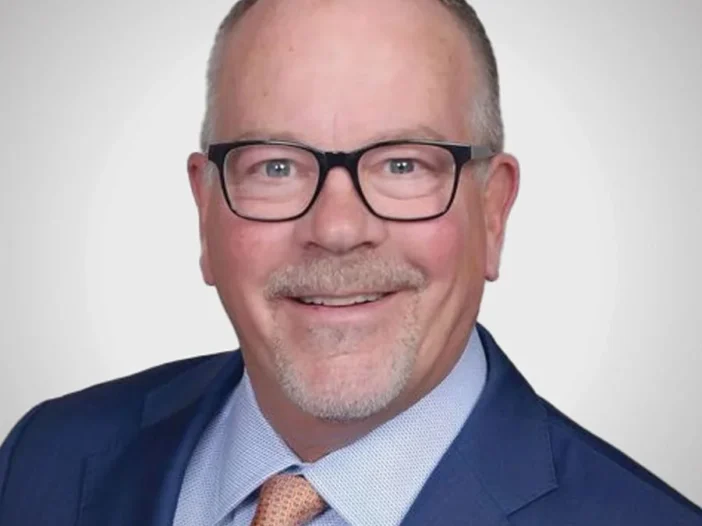
Brian Wesbury has spent decades as one of America’s most prominent and consistently bullish economic forecasters. As Chief Economist at First Trust Portfolios, a leading Wheaton, Illinois-based investment management firm overseeing hundreds of billions in assets, Wesbury is among the most-followed economic voices on Wall Street. Known for his supply-side philosophy, his pushback against doom-and-gloom consensus forecasts, and his regular appearances on Fox Business and CNBC, he has built a reputation few economists can match. The Wall Street Journal has named him one of America’s top economic forecasters, an honor grounded in his record of accuracy across multiple market cycles. This is the complete Brian Wesbury biography: his career, his ideas, his net worth, and why financial America keeps listening.
Quick Facts About Brian Wesbury
| Detail | Information |
| Full Name | Brian S. Wesbury |
| Nationality | American |
| Education | University of Montana; Northern Illinois University (MBA) |
| Occupation | Chief Economist, First Trust Portfolios; Author; Speaker |
| Employer | First Trust Portfolios L.P., Wheaton, Illinois |
| Known For | Economic forecasting, supply-side economics, bullish market analysis |
| Estimated Net Worth (2026) | ~$5 million |
| Notable Work | It’s Not As Bad As You Think (2010, John Wiley & Sons) |
| Media Appearances | Fox Business, CNBC, Bloomberg, Forbes |
| Spouse / Family | Private |
Early Life and Background
Brian Wesbury grew up with an intellectual curiosity about how markets and economies actually work, not just how they are theorized to work in textbooks. He pursued his undergraduate studies at the University of Montana, where his interest in macroeconomics and market behavior took shape.
He went on to earn his MBA from Northern Illinois University, deepening his understanding of business cycles, monetary policy, and the supply-side economic framework that would become his signature lens. Northern Illinois gave him the analytical toolkit; the markets gave him the conviction to use it contrarily.
From early on, Wesbury was drawn to the idea that free markets, when left to function, are inherently more resilient and self-correcting than most media narratives suggest. That intellectual foundation, rooted in Milton Friedman-style classical liberalism and supply-side theory, has never wavered throughout his career.
Career Beginnings
After completing his education, Wesbury moved into financial analysis, building a reputation as a rigorous and independent-minded economist. He served as Chief Economist for Fiduciary Management, Inc. in Milwaukee before joining First Trust Portfolios, establishing himself as someone unafraid to diverge from Wall Street consensus.
His early career was defined by a willingness to be contrarian when the data justified it. While many economists in the 1990s and early 2000s reflexively warned of slowdowns, Wesbury was dissecting underlying growth indicators and pushing back, often correctly.
That track record of independence attracted attention at the highest levels. In 1999, Wesbury testified before the Joint Economic Committee of the U.S. Congress on monetary policy and economic conditions, a significant platform that cemented his standing as a serious policy-influencing voice, not merely a market commentator.
Major Career Highlights
Chief Economist at First Trust Portfolios
Wesbury’s marquee role has been as Chief Economist at First Trust Portfolios L.P., a Wheaton, Illinois-based investment firm managing hundreds of billions of dollars in assets across ETFs, mutual funds, and closed-end funds.
In this role, Wesbury produces economic analysis consumed by thousands of financial advisors, institutional investors, and portfolio managers weekly. His flagship publication, the Monday Morning Outlook, is one of the most widely-read economic newsletters in the financial advisory space, arriving in inboxes each week with a clear, data-driven take on GDP growth, inflation, Federal Reserve policy, and equity market direction.
His analysis doesn’t sit on a shelf. Financial advisors cite it in client meetings. Institutional portfolios reference it in investment committee discussions. It is applied economics at scale.
Wall Street Journal Top Forecaster Recognition
The Wall Street Journal has named Brian Wesbury among America’s top economic forecasters, one of the most credible recognitions in the profession.
This recognition is not ceremonial. The WSJ ranking methodology is based on actual forecast accuracy across GDP, inflation, employment, and interest rate predictions, measured against realized outcomes. Wesbury’s repeated inclusion speaks to a forecasting record that holds up empirically.
His most-cited call came in 2003, when consensus forecasters were pessimistic about economic recovery following the dot-com bust and post-9/11 downturn. Wesbury publicly forecast strong economic growth, and was proven right. It was a defining moment that established his credibility as a forecaster willing to stand alone.
Congressional Testimony
In 1999, Wesbury appeared before the Joint Economic Committee of the U.S. Congress, providing expert testimony on monetary policy. This elevated his profile from financial commentator to recognized policy voice, a distinction that opened doors to media platforms, conference keynotes, and C-suite audiences.
Published Author: It’s Not As Bad As You Think
In 2010, at the height of post-financial-crisis pessimism, Wesbury published It’s Not As Bad As You Think: Why Capitalism Trumps Fear and the Economy Will Thrive (John Wiley & Sons).
The book made a supply-side, data-grounded case that the American economy was more fundamentally sound than the prevailing crisis narrative suggested. It argued that government intervention and monetary distortions, not capitalism itself, had produced the crisis, and that free markets, given room to recover, would do so.
Published when the unemployment rate was near 10%, the book was considered bold, even provocative. History vindicated much of its thesis. It remains a touchstone text for supply-side economics thinking in the post-crisis era.
Media Presence: Fox Business, CNBC, Bloomberg
Wesbury has been a frequent guest on Fox Business Network, CNBC, Bloomberg Television, and Forbes. His TV presence is built on a rare skill: translating complex macroeconomic data, GDP deflators, yield curve inversions, M2 money supply, into language that investors, business owners, and general audiences can act on.
He doesn’t traffic in vague hedging. He makes calls. That directness, combined with an on-screen confidence rooted in decades of research, has made him a go-to voice whenever the Fed makes a decision, a jobs report surprises, or a recession narrative takes hold.
Brian Wesbury as a Public Speaker
Brian Wesbury is one of the most in-demand economic keynote speakers in the United States, particularly within the financial services, banking, and corporate strategy verticals.
Speaking Topics
Wesbury’s keynote content covers the full range of applied macroeconomics for business audiences:
- Economic Outlook and Market Forecasting, Where GDP, inflation, and interest rates are headed, and what that means for investment strategy
- Supply-Side Economics Explained, why incentives, tax policy, and deregulation drive growth more reliably than stimulus spending
- Why Capitalism Works, A data-driven, historically grounded defense of free-market economics
- Separating Signal from Noise, how to interpret economic headlines, filter out media fear, and focus on leading indicators that actually matter
- The Federal Reserve and Monetary Policy, What the Fed is doing, why it matters, and how investors should respond
- Investment Strategy Under Uncertainty, Frameworks for portfolio positioning across economic cycles
Who Books Brian Wesbury?
Wesbury is consistently booked by:
- Financial services firms, banks, wealth management companies, RIA networks, and broker-dealers hosting client appreciation events or advisor conferences
- Corporate CFO and C-suite forums, where boards and finance teams need a credible read on the macro environment
- Economic associations and policy institutes, including think tanks aligned with free-market and fiscal conservative perspectives
- University business schools and college campuses, where his accessible, conviction-driven style resonates with both students and faculty
- Industry trade associations, insurance, real estate, manufacturing, and energy sectors that need economic context for strategic planning
His speaking fee falls within the premium keynote range typical of nationally recognized economists and former government witnesses, generally estimated between $20,000 and $40,000 per engagement, depending on format, travel, and customization.
Brian Wesbury Net Worth 2026
Brian Wesbury’s estimated net worth in 2026 is approximately $5 million, built across multiple high-value income streams over a three-decade career.
Income Sources
- First Trust Portfolios senior leadership compensation, As Chief Economist at one of America’s largest ETF and fund management firms, Wesbury commands a senior executive salary with likely performance-linked compensation components.
- Keynote speaking fees, at premium financial services speaking rates ($20,000–$40,000+ per engagement), even a modest annual speaking schedule generates significant income.
- Book royalties, It’s Not As Bad As You Think (2010) continues to generate royalties, supplemented by ongoing sales through financial advisor and university course channels.
- Media and consulting appearances, Fox Business, CNBC, and Bloomberg segments, while not always compensated directly, support the brand equity that drives speaking and consulting demand.
- Research and advisory relationships, First Trust’s institutional relationships likely include advisory and content licensing arrangements that contribute to overall compensation.
Wesbury’s wealth is not the result of a single windfall but of compounding professional credibility, the kind built by being right more often than wrong, in public, over decades.
Personal Life
Brian Wesbury is based in Wheaton, Illinois, a Chicago suburb where First Trust Portfolios is also headquartered. He is known among colleagues and clients as someone who genuinely enjoys economics, approaching the subject with the enthusiasm of a teacher as much as an analyst.
He keeps his personal life largely private, with little detail about his family in public profiles. What is well-documented is his worldview: a deep and consistent optimism about the American economy rooted not in wishful thinking but in supply-side theory and historical data patterns.
Wesbury is openly faith-influenced in his personal values, and his broader philosophy reflects a belief in individual agency, entrepreneurial energy, and institutional trust in free markets. He has written and spoken about the intersection of values and economic behavior, arguing that cultural factors like work ethic and rule of law are as important as policy levers.
He is regarded by clients, colleagues, and event audiences as accessible and generous with his time, willing to take questions, engage skeptics, and explain his reasoning without condescension. That approachability is, by many accounts, as important to his brand as his forecasting accuracy.
Brian Wesbury Best Quotes
On economic pessimism:
“Fear is not a forecasting tool. The data almost always tells a calmer story than the headlines.”, Recurring theme in keynotes and Monday Morning Outlook commentary
On capitalism and recovery:
“Capitalism doesn’t fail, it gets interrupted. And when the interruptions end, it resumes.”, Cited in multiple post-financial-crisis interviews
On the Federal Reserve:
“The Fed doesn’t create prosperity. It can only distort the timing of it.”, Fox Business appearance, multiple occasions
On supply-side economics:
“Cut taxes, reduce regulation, and get government out of the way, the economy will do the rest. It always has.”, Congressional testimony and keynote addresses
On market forecasting:
“I don’t forecast what people want to hear. I forecast what the data says. Those two things are often very different.”, CNBC guest appearance
On the 2010 recovery:
“The economy was healing itself. What looked like failure was actually the market clearing. That’s what markets do.”, It’s Not As Bad As You Think, paraphrased from author interviews
On investor behavior:
“The biggest risk in investing isn’t volatility. It’s panic. And panic is almost always a response to bad information.”, Speaking circuit, widely attributed
On American economic resilience:
“Every generation has a reason to believe this time is different, that the problems are too big. Every generation has been wrong.”, Monday Morning Outlook, 2020 edition
Frequently Asked Questions
Brian Wesbury is the Chief Economist at First Trust Portfolios L.P., a leading Wheaton, Illinois-based investment management firm. A supply-side economist, bestselling author, and keynote speaker, he has been recognized by the Wall Street Journal as one of America’s top economic forecasters. He testifies before Congress, appears regularly on Fox Business and CNBC, and is one of the most widely-read economic commentators in U.S. financial services.
Wesbury is known for bullish, supply-side economic forecasts grounded in leading indicators, monetary data, and historical growth patterns. He consistently argues that capitalism is more resilient than media narratives suggest, that government intervention distorts rather than accelerates recovery, and that investors who tune out headline fear and focus on fundamentals are rewarded over time. His specific forecasts are published weekly in his Monday Morning Outlook newsletter at First Trust Portfolios.
Brian Wesbury’s estimated net worth in 2026 is approximately $5 million. His wealth comes from a combination of his senior role at First Trust Portfolios, premium keynote speaking fees (estimated at $20,000–$40,000+ per engagement), book royalties from It’s Not As Bad As You Think (2010), and ongoing media and consulting activity. His net worth reflects decades of compounding professional credibility rather than a single high-profile transaction.
Brian Wesbury is consistently and openly bullish on the U.S. economy, a position he grounds in supply-side economic theory and historical data rather than sentiment. He is known for pushing back against recession narratives and doom-and-gloom consensus forecasts, most notably in 2003 when he correctly predicted strong economic growth while the majority of forecasters were pessimistic. His bullishness is evidence-based, not reflexive.
Brian Wesbury’s keynote topics include the U.S. economic outlook and market forecasting, supply-side economics, why capitalism works, how to separate media noise from genuine economic signals, Federal Reserve monetary policy, and investment strategy in uncertain environments. He is most frequently booked by financial services firms, corporate C-suites, banking conferences, and university business programs seeking a credible, accessible, and data-driven macroeconomic perspective.
Conclusion
Few economists have matched Brian Wesbury’s combination of forecasting accuracy, communication skill, and intellectual consistency over a multi-decade career. From his early work in financial analysis to his role as Chief Economist at First Trust Portfolios, from Congressional testimony to bestselling authorship to the keynote stage, Wesbury has built one of the most recognizable and trusted names in American economic commentary. His supply-side conviction, his Wall Street Journal-recognized forecasting record, and his ability to make macroeconomics genuinely useful to real investors make this Brian Wesbury biography a testament to what sustained credibility looks like in practice.
Leave a Reply