
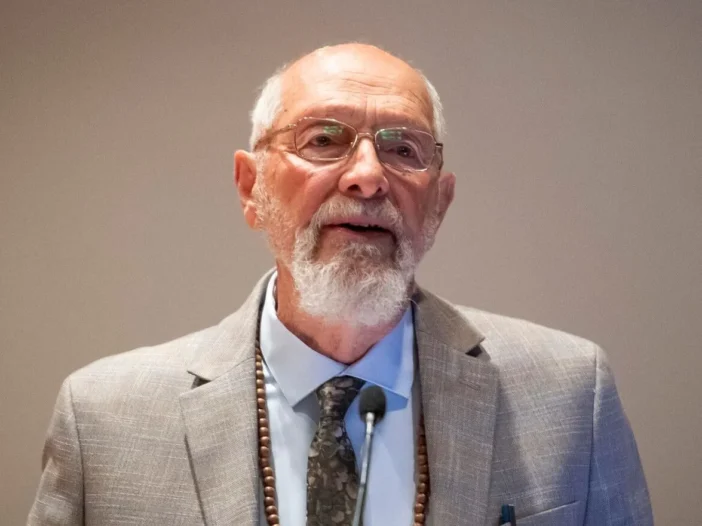
He was the son and grandson of Ku Klux Klan members. He became the first white field secretary in the history of the Student Nonviolent Coordinating Committee. That contradiction, that extraordinary, dangerous leap across the colour line, is the story of Bob Zellner, and it is one of the most remarkable in American civil rights history.
Born April 5, 1939, in Jay, Florida, and raised across small-town Alabama, Zellner was beaten unconscious by white supremacists, arrested more than 25 times, and marched beside Martin Luther King Jr., John Lewis, and Rosa Parks in the most consequential social movement of the twentieth century. This complete Bob Zellner biography covers his life, his courage, his writing, and why his voice still matters today.
Quick Facts About Bob Zellner
| Detail | Information |
| Date of Birth | April 5, 1939 |
| Birthplace | Jay, Florida |
| Raised | South Alabama |
| Nationality | American |
| Education | B.A., Huntingdon College (1961); Ph.D., History, Tulane University (1993) |
| Occupation | Civil Rights Activist, Author, Historian, Professor, Public Speaker |
| Net Worth (est.) | ~$500,000 |
| Spouse(s) | Dorothy Miller Zellner (m. 1963; later divorced); Linda Miller |
| Children | Not publicly documented |
| Current Base | Wilson, North Carolina |
| Notable Works | The Wrong Side of Murder Creek (2008); Son of the South (film, 2020) |
Early Life and Background, Son of a Klansman
Bob Zellner did not come from a family of abolitionists or progressive reformers. His father, James Zellner, was a Methodist minister who had been a member of the Ku Klux Klan. His grandfather had been a Klansman too. The American South that shaped Bob Zellner was one of strict racial hierarchy, white supremacist tradition, and enforced silence.
Growing up in rural South Alabama, Zellner absorbed the contradictions of his environment, a deeply religious household that preached Christian love yet operated inside a society built on racial terror. That tension would eventually become the engine of his life’s work.
The turning point came while he was a student at Huntingdon College in Montgomery, Alabama. A sociology class assignment, asking students to study racial problems in the South, led him to a meeting with SNCC organizers in 1960. He was not supposed to be there. White students from Alabama did not attend civil rights meetings. Bob Zellner went anyway.
Career Beginnings, Joining SNCC in 1961
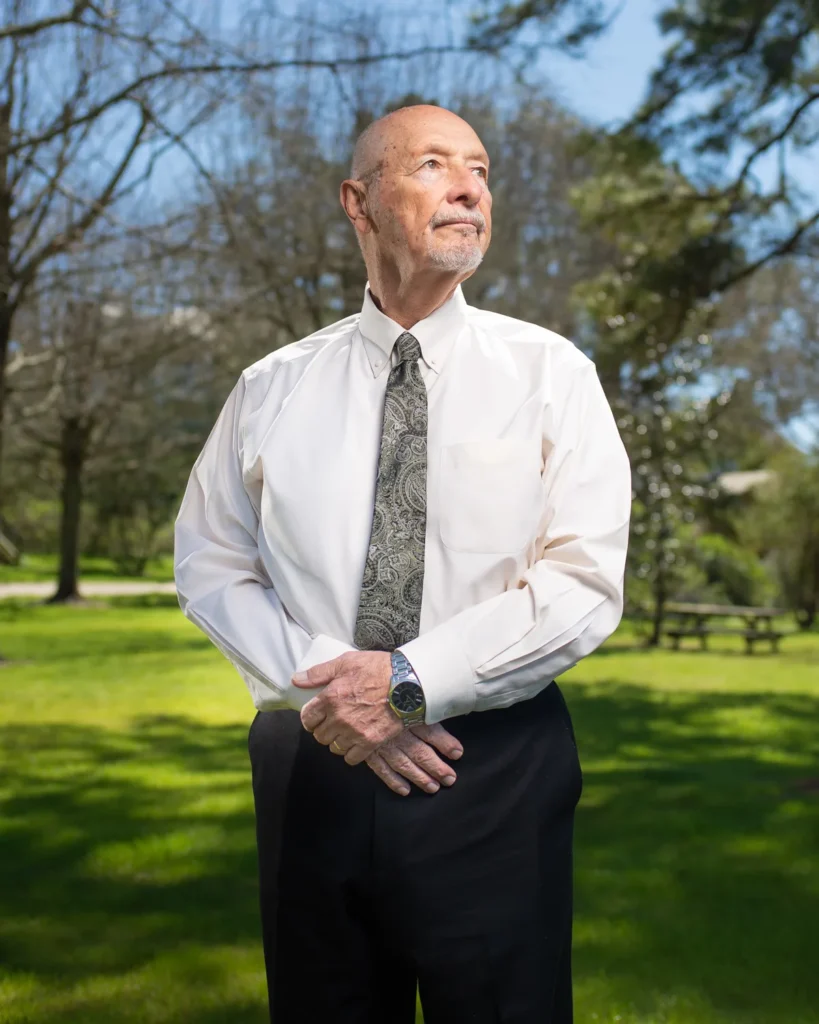
After graduating from Huntingdon College in 1961 with a degree in psychology and sociology, Zellner was hired by SNCC to do what no one had done before: conduct outreach to Southern white communities on behalf of the Black freedom movement.
His role was staggering in its risk. SNCC made him its first white field secretary, a position that made him a target for both white racists who saw him as a traitor and, at times, a complicated figure within SNCC itself, which was overwhelmingly and proudly Black-led.
He worked alongside some of the towering figures of the era:
- Ella Baker, SNCC’s founding advisor and strategic genius
- Martin Luther King Jr., whose Southern Christian Leadership Conference often overlapped with SNCC’s work
- John Lewis, who would go on to serve decades in the U.S. Congress
- Rosa Parks, whose arrest in Montgomery had sparked the Bus Boycott
- Diane Nash, one of SNCC’s most fearless organizers
- Fannie Lou Hamer, the Mississippi sharecropper turned freedom fighter
- Julian Bond, SNCC’s communications director and future Georgia state legislator
Zellner was not a bystander in this movement. He was on the ground, in the field, in the streets, and he paid a steep price for it.
Major Career Highlights
The McComb Beating, October 1961
The moment that defines the physical courage of Bob Zellner’s activism happened in McComb, Mississippi in October 1961. SNCC members were protesting the murder of voting rights activist Herbert Lee, shot dead by a state legislator in front of witnesses who were too afraid to testify.
Zellner was nearly lynched. A white mob attacked him with chains, bricks, lead pipes, and baseball bats while police stood by and watched. His eyes were nearly gouged out. He was beaten unconscious. He survived, and did not leave the movement.
25+ Arrests Across Seven States
Between 1961 and 1963, Zellner was arrested more than 25 times across seven Southern states. Each arrest was a calculated act of nonviolent resistance, deliberately provoking the machinery of segregation to expose its brutality to a watching nation.
His willingness to be jailed, again and again, was not recklessness. It was strategy, discipline, and belief.
Freedom Summer (1964)
In 1964, Zellner coordinated SNCC’s Freedom Summer efforts in Mississippi, one of the most dangerous political organizing campaigns in American history. He worked directly with Rita Schwerner investigating the murders of Michael Schwerner, James Chaney, and Andrew Goodman, three civil rights workers abducted and killed by the Klan with the collaboration of local police. The case became a defining moment in the nation’s confrontation with racial terror.
GROW, After SNCC
When SNCC voted to become an all-Black organization in 1967, Zellner did not walk away from the struggle. He co-founded GROW (Grassroots Organizing Work) with his then-wife Dorothy Miller Zellner, continuing to organize poor white workers across the South, building economic coalitions across the racial divide.
It was unglamorous, difficult work with no headlines. He did it anyway.
Academic Career
Zellner earned his Ph.D. in History from Tulane University in 1993, bringing scholarly rigor to the movement he had lived. He taught history at Long Island University, becoming one of the few people on earth who could teach the civil rights era as both subject and eyewitness.
The Wrong Side of Murder Creek (2008)
In 2008, Zellner published his memoir, The Wrong Side of Murder Creek: A White Southerner in the Freedom Movement. The title refers to both a literal creek in Alabama, which divided Black and white neighbourhoods, and the metaphorical divide Zellner crossed when he joined SNCC.
The book received strong critical attention for its rare perspective: a white Southerner, raised inside Klan culture, who chose the Black freedom movement at enormous personal cost.
Son of the South (2020 Film)
Zellner’s life was brought to the screen in 2020 with the film Son of the South, directed by Barry Alexander Brown and starring Lucas Till as Zellner. The film dramatized his journey from the son of a Klansman to SNCC’s first white field secretary.
The production marked a significant cultural recognition of a figure often overlooked in mainstream civil rights narratives.
TIME Magazine Recognition
In 2014, TIME Magazine named Bob Zellner one of 17 “living legends” of the civil rights movement, placing him alongside figures who had shaped the most transformative social campaign in modern American history.
Still Organizing at 86
In 2013, more than 50 years after his first arrest, Zellner was arrested again, this time in North Carolina, protesting the state’s controversial voter ID law. At 86 years old, he remains a speaker, advocate, and living rebuke to the idea that activism has a retirement age.
Bob Zellner as a Public Speaker
Bob Zellner is one of the most powerful and irreplaceable voices on the American lecture circuit, not because of what he studied, but because of what he lived. Colleges, universities, civil rights museums, non-profit organizations, and social justice conferences book him for his rare first-person authority.
His core speaking topics include:
- The personal cost and moral imperative of civil rights activism
- What it meant to be a white ally inside the Black freedom movement
- How the SNCC organizing model applies to today’s social movements
- Family history, inheritance, and the active choice to fight racism
- Nonviolent resistance, its philosophy, discipline, and results
- Voter suppression, historical and contemporary
- Building multiracial coalitions for working-class economic justice
Zellner speaks with the authority of scar tissue. He does not deliver sanitized history-lesson talks. He tells stories from the inside of a movement that changed America, and challenges audiences to think about what courage actually costs.
Campus bookers consistently note that student audiences are riveted by his combination of personal narrative and historical depth. He bridges generations in a way few speakers can.
Bob Zellner Net Worth 2026
Bob Zellner’s estimated net worth is approximately $500,000. His income streams over a career span decade:
- Academic salary from his years teaching history at Long Island University
- Speaking fees from university engagements, civil rights organizations, and non-profit events
- Book royalties from The Wrong Side of Murder Creek (2008), which has maintained a steady readership
- Film-related income associated with Son of the South (2020)
Zellner is not a man who built his life around wealth. At every inflection point, Huntingdon College in 1960, McComb in 1961, Mississippi in 1964, North Carolina in 2013, he chose engagement over comfort, justice over security. His net worth reflects a life in movement work and academia, not corporate America.
Personal Life
Bob Zellner has been married twice. His first marriage was to Dorothy Miller Zellner in 1963, a fellow SNCC organizer and activist with whom he co-founded GROW. They later divorced.
He subsequently married Linda Miller. He is currently based in Wilson, North Carolina, where he continues to speak, organize, and engage with the ongoing work of racial and economic justice.
His lifestyle has been consistently defined by political engagement over personal accumulation. He is described by those who know him as direct, warm, historically exacting, and incapable of detachment from the issues he has spent his life fighting.
At 86, he is one of the last living participants with direct, intimate knowledge of SNCC’s operations during the movement’s peak years. That makes him not only an important speaker but an irreplaceable archive of American history.
Bob Zellner’s Best Quotes
These quotes illuminate the mind and moral clarity of one of civil rights history’s most distinctive figures.
1. On crossing the colour line:
“I had to make a choice. Nobody makes you be a racist. Nobody makes you not be a racist. That’s a choice you make.”, Spoken in interviews reflecting on his decision to join SNCC
2. On the McComb beating:
“I knew they might kill me. I also knew I wasn’t going to stop.”, From speaking engagements recounting October 1961
3. On his family legacy:
“My father left the Klan because he found Christ. I left the world the Klan created because of what I found in SNCC.”, Recounted in The Wrong Side of Murder Creek
4. On nonviolence:
“Nonviolence is not passivity. It is the most aggressive, confrontational posture a human being can take against injustice.”, From campus speaking engagements
5. On white allyship:
“The question was never ‘is this my fight?’ The question was always ‘am I going to show up?’”, Widely quoted from lectures
6. On voter suppression (2013 arrest):
“They arrested me in 1961 for trying to help people vote. They arrested me in 2013 for the same thing. The names change. The fight doesn’t.”, Statement after his North Carolina arrest
7. On SNCC’s legacy:
“SNCC didn’t just change laws. It changed the people who were in it. It changed me in ways I’m still discovering.”, From documentary interviews
8. On history:
“You don’t have to be on the right side of history from birth. You just have to get there.”, Frequently cited in commencement and keynote addresses
Frequently Asked Questions
Bob Zellner is an American civil rights activist, historian, author, and public speaker born on April 5, 1939, in Jay, Florida. He is best known as the first white field secretary of the Student Nonviolent Coordinating Committee (SNCC), hired in 1961 to organize Southern white communities on behalf of the Black freedom movement. Raised in a family with Klan ties, he dedicated his life to racial justice, earning a Ph.D. from Tulane and authoring the memoir The Wrong Side of Murder Creek.
Bob Zellner is known for being SNCC’s first white field secretary, his arrest record of more than 25 times across seven Southern states, his near-lynching in McComb, Mississippi in 1961, and his memoir The Wrong Side of Murder Creek (2008). He was named a civil right living legend by TIME Magazine in 2014. His life was dramatized in the 2020 film Son of the South, starring Lucas Till.
Yes. Bob Zellner joined SNCC (Student Nonviolent Coordinating Committee) in 1961 after graduating from Huntingdon College. He was specifically hired to conduct outreach to white Southern communities, a role that made him SNCC’s first white field secretary. He worked alongside John Lewis, Ella Baker, Fannie Lou Hamer, and Diane Nash. He remained with SNCC until the organization became an all-Black organization in 1967.
Son of the South is a 2020 biographical drama directed by Barry Alexander Brown based on Bob Zellner’s memoir. It stars Lucas Till as Zellner, dramatizing his transformation from the son of a Klansman to a frontline SNCC organizer in the early 1960s American South. The film was produced with Zellner’s involvement and received attention for dramatizing a largely overlooked figure in mainstream civil rights cinema.
Bob Zellner speaks about his first-hand experience in SNCC, the philosophy and discipline of nonviolent resistance, the meaning of white allyship in the Black freedom movement, voter suppression (historical and contemporary), and how civil rights organizing methods apply to modern social movements. He is booked by colleges, universities, civil rights organizations, and non-profits. His talks combine deeply personal narrative with rigorous historical analysis, accessible to all ages.
Conclusion
The Bob Zellner biography is unlike almost any other in American history. He was born into a world designed to make him a bystander at best, a perpetrator at worst, and he became a frontline freedom fighter, arrested more than 25 times, beaten nearly to death, and still organizing past the age of 80. His story is proof that historical inheritance is not destiny.
From his sociology class epiphany at Huntingdon College, to the bloodied streets of McComb, to the Mississippi Delta in Freedom Summer, to a North Carolina jail cell in 2013, Bob Zellner kept showing up. His memoir, his film, and his speaking career carry that witness forward to new generations.
If you’re researching civil rights history or looking for a speaker who embodies the moral stakes of that era, Bob Zellner belongs at the top of your list.
Leave a Reply