
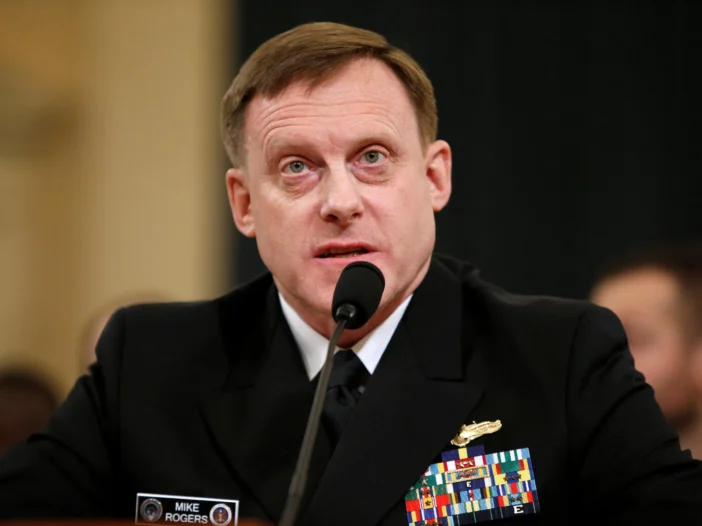
When President Barack Obama needed someone to lead the largest intelligence organization on Earth through its most turbulent era in decades, he turned to a Chicago-born Navy officer who had spent his entire career thinking about how information, and the threat of losing it, shapes the fate of nations. Admiral Michael S. Rogers spent 37 years in the United States Navy, rising to command both the National Security Agency (NSA) and US Cyber Command simultaneously, a dual role held by only one person at a time, and one of the most consequential intelligence positions in American history. This complete Admiral Mike Rogers biography covers his early life, military career, groundbreaking NSA tenure, post-service career in the private sector, net worth, speaking topics, and lasting legacy in global cybersecurity.
Quick Facts About Admiral Mike Rogers
| Detail | Information |
| Full Name | Michael S. Rogers |
| Date of Birth | October 31, 1959 |
| Birthplace | Chicago, Illinois |
| Nationality | American |
| Education | Auburn University (B.S., 1981); Naval War College (highest distinction graduate); National War College (distinguished graduate); MIT Seminar XXI Fellow; Harvard Senior Executive in National Security |
| Military Rank | Retired Four-Star Admiral, U.S. Navy |
| Years of Service | 1981–2018 (37 years) |
| Net Worth (est.) | ~$5 million |
| Occupation | Cybersecurity Consultant, Corporate Board Advisor, Public Speaker, Adjunct Professor (Northwestern Kellogg School of Management) |
| Spouse/Partner | Private |
| Children | Information not publicly disclosed |
| Notable Roles | 17th NSA Director; Commander, US Cyber Command; Commander, US Fleet Cyber Command |
Early Life and Background
Michael S. Rogers was born on October 31, 1959, in Chicago, Illinois, a city that would shape his no-nonsense, straight-talking approach to leadership and national security. Raised in the American Midwest during the height of the Cold War, Rogers came of age at a time when intelligence, military might, and technological competition with the Soviet Union dominated American strategic thinking.
Rogers pursued higher education at Auburn University in Alabama, where he enrolled in the Naval Reserve Officers’ Training Corps (NROTC). He graduated in 1981 with a Bachelor of Science degree and was simultaneously commissioned as an officer in the United States Navy, beginning a military career that would span nearly four decades.
His intellectual hunger didn’t stop there. Rogers went on to earn a Master of Science in National Security Strategy and graduated as a distinguished student from the National War College. He also achieved the highest distinction at the Naval War College, a rare honour, and later participated in the elite MIT Seminar XXI program and the Harvard Senior Executive in National Security program.
These academic credentials weren’t window dressing. They reflected the mind of a military officer who understood that winning in the modern era required as much intellectual firepower as conventional military strength.
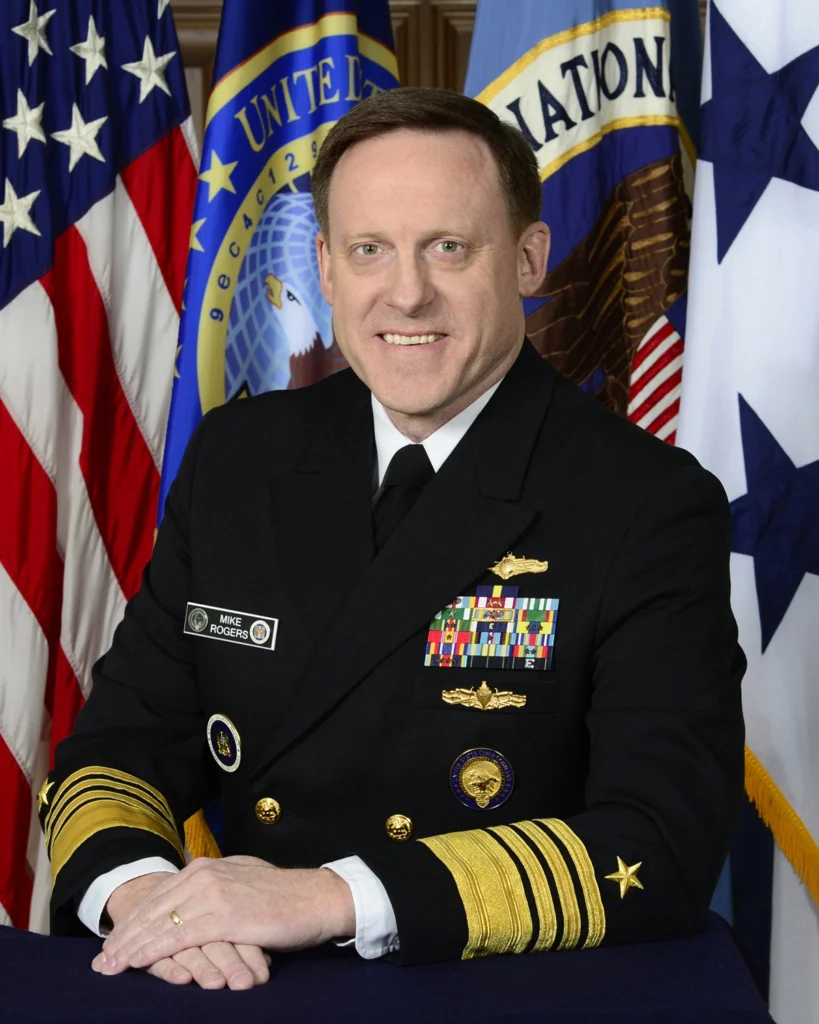
Career Beginnings, From Junior Officer to Intelligence Leader
Rogers entered the Navy as a surface warfare officer but quickly gravitated toward the world of intelligence, a field that would define his entire career. In an era when the Navy was still adapting to the post-Cold War strategic environment, Rogers stood out as someone who grasped how information dominance was becoming as critical as physical firepower.
His early assignments took him through a range of intelligence and operational billets, building the expertise that would eventually carry him to the Pentagon and beyond. He developed deep expertise in signals intelligence (SIGINT), cryptology, and cyber operations, disciplines that were still emerging as central pillars of national security strategy.
By the mid-2000s, Rogers had risen to senior leadership positions within the Navy’s intelligence community. His reputation for analytical rigor, strategic clarity, and blunt communication made him a trusted figure in an environment where bureaucratic ambiguity was the norm.
Major Career Highlights
Director of Intelligence, Joint Chiefs of Staff (2009–2011)
One of Rogers’s most significant early senior roles came when he was appointed Director of Intelligence (J2) for the Joint Chiefs of Staff, the principal military intelligence advisor to the Chairman of the Joint Chiefs and, by extension, to the Secretary of Defense and the President. This position placed Rogers at the epicenter of American military intelligence operations during a critical period that included the drawdown in Iraq and the surge in Afghanistan.
His work at the Joint Chiefs sharpened his understanding of how intelligence failures and successes shape battlefield outcomes and strategic decision-making at the highest levels of government.
Commander, US Fleet Cyber Command and Tenth Fleet
Before ascending to his most famous role, Rogers served as Commander of the U.S. Fleet Cyber Command and concurrently as Commander of the Tenth Fleet, the Navy’s primary cyber force. This dual command gave him direct operational experience leading the Navy’s cyberspace operations, information operations, and electronic warfare missions on a global scale.
This was the proving ground for everything that came next.
17th Director of the NSA and Commander of US Cyber Command (2014–2018)
This is the chapter that cemented Admiral Mike Rogers as one of the defining national security figures of his generation.
In April 2014, President Barack Obama nominated Rogers to simultaneously serve as the 17th Director of the National Security Agency and Commander of US Cyber Command, a dual-hatted position that made him responsible for both the nation’s largest intelligence collection agency and its primary offensive and defensive cyber military force.
The timing could not have been more consequential. Rogers took command in the immediate aftermath of the Edward Snowden revelations, which had shaken public trust in the NSA to its foundations and triggered a sweeping congressional review of surveillance authorities. Internally, the agency faced a crisis of morale, mission, and legitimacy.
Rogers navigated that minefield with a combination of institutional discipline and strategic vision. He worked with Congress to reform surveillance programs under the USA Freedom Act (2015), restore operational credibility, and refocus the NSA on its core foreign intelligence mission.
Under his leadership, US Cyber Command was elevated to a full Unified Combatant Command in 2017, a historic milestone that placed cyber operations on equal footing with geographic combatant commands like US Central Command and US Pacific Command. This was a Rogers-era priority that recognized cyberspace as a distinct warfighting domain.
Rogers also led the U.S. intelligence community’s analysis of Russian interference in the 2016 presidential election, one of the most politically charged and consequential intelligence assessments in modern American history. Alongside the directors of the CIA and FBI, Rogers publicly attributed the Russian interference operation to the Kremlin, a finding that put him at the center of one of the most contentious political storms in Washington in decades.
He served under both President Obama and President Trump before retiring on June 1, 2018, after four years at the helm of the NSA and Cyber Command.
Admiral Mike Rogers as a Public Speaker
Since retiring from the Navy, Admiral Mike Rogers has become one of the most sought-after voices in the national security and cybersecurity speaker circuit, and for good reason. He brings something that no amount of consulting experience can replicate: four years running the actual NSA, alongside the U.S. military’s primary cyber warfighting command.
Organizations book Rogers because he translates classified-level strategic thinking into actionable intelligence for business leaders, board members, and government audiences.
Admiral Mike Rogers’s speaking topics include:
- Cybersecurity strategy for corporate boards and C-suites, how executives should think about cyber risk the way military commanders think about battlefield threats
- Geopolitical risk and the cyber threat landscape, China, Russia, Iran, and North Korea: what their cyber capabilities mean for American businesses
- Leadership in crisis, decision-making under pressure, managing institutional trust, and leading complex organizations through adversity
- The intersection of national security and business, how geopolitical shifts create direct enterprise risk
- Election security and democratic resilience, the ongoing threat of foreign interference in democratic systems
- The future of AI and cyber warfare, how artificial intelligence is reshaping the threat environment
Rogers is regularly booked for:
- Fortune 500 cybersecurity and technology conferences
- Banking and financial services security summits
- Government and defense industry forums
- University programs and executive education sessions
- Board-level risk and governance briefings
His speaking fee is estimated at $50,000–$100,000 per engagement for major conferences, reflecting both his unique credential set and the premium placed on genuine intelligence expertise in the private sector.
Admiral Mike Rogers Net Worth 2026
Admiral Mike Rogers’s estimated net worth is approximately $5 million, built through a combination of military compensation, post-service advisory roles, board memberships, speaking fees, and academic work.
His income streams include:
- Four-star admiral pension, after 37 years of service, Rogers receives a substantial military retirement pension, calculated at a percentage of his highest active-duty pay
- Operating Partner, Team8, Team8 is an elite Israeli-American cybersecurity venture group that builds and backs cybersecurity companies; Rogers’s role as Operating Partner combines advisory compensation with potential equity stakes
- Corporate board memberships, Rogers serves on the advisory boards of multiple cybersecurity companies including Claroty and Talon Cyber Security, which typically include cash retainers and stock options
- NATO Cooperative Cyber Defence Centre of Excellence advisory board, a prestigious international role that reinforces his global standing
- Auburn University McCrary Institute for Cyber and Critical Infrastructure Security, advisory board membership at his alma mater
- Adjunct Professor, Northwestern University Kellogg School of Management, academic compensation and the prestige of one of the world’s top business schools
- Speaking fees, estimated at $50,000–$100,000 per major event, with Rogers speaking at dozens of events annually
Rogers is not among the wealthiest post-government officials, he has not pursued the Silicon Valley board seat circuit at scale, but his financial position reflects a deliberate focus on substantive work over financial maximization.
Personal Life
Admiral Mike Rogers is notably private about his personal life, a disposition that reflects both his intelligence background and his fundamental self-conception as a public servant rather than a public figure.
What is known publicly: Rogers is a Chicago native who has spent most of his adult life embedded in the culture and geography of the national security apparatus, Washington D.C., Fort Meade (NSA headquarters in Maryland), and the broader defense community. Details about his family, spouse, and children are not publicly disclosed, a choice that Rogers has consistently maintained throughout his public career.
Those who have worked with Rogers describe a leader defined by intellectual rigor, direct communication, and a fierce institutional loyalty to the men and women of the intelligence community. He is known for speaking plainly about threats that others tend to euphemize, a quality that made him both effective and occasionally uncomfortable for political leaders who preferred ambiguity.
His values, as expressed through his public career, center on the idea that the United States must compete aggressively in the information domain without abandoning the democratic principles and legal frameworks that distinguish American intelligence operations from those of its adversaries.
Admiral Mike Rogers Best Quotes
On the cyber threat from China:
“China is the biggest long-term challenge we face. The scope of Chinese intelligence collection against American government, academic, research, and commercial interests is breathtaking.”
On Russian interference in U.S. democracy:
“This is not going to stop. It did not change when we made it public. Russia has made a conscious decision to try to achieve its objectives by attempting to compromise our democratic processes.”
On leadership in the intelligence community:
“The greatest asset any organization has is not its technology. It’s the people. Never forget that.”
On cybersecurity as a business imperative:
“Cyber is not an IT problem. Cyber is a business problem. It is a leadership problem. It belongs in the boardroom, not just the server room.”
On the nature of cyber threats:
“In the cyber domain, geography doesn’t protect you. Oceans and mountain ranges are irrelevant. Your adversaries are always within striking distance.”
On transparency and institutional trust:
“Trust, once lost, is extraordinarily hard to rebuild. In intelligence, trust is everything, the trust of the American people, of our allies, and of the men and women who serve.”
On national security and business risk:
“The executives who are going to thrive in the next decade are the ones who understand that geopolitical risk IS business risk. The two can no longer be separated.”
On the future of cyber warfare:
“We are in the early innings of a competition that will define the 21st century. Artificial intelligence is going to change everything about how this contest is fought.”
Frequently Asked Questions
Admiral Michael S. Rogers is a retired four-star U.S. Navy admiral who served as the 17th Director of the National Security Agency (NSA) and Commander of US Cyber Command from 2014 to 2018. Born in Chicago in 1959, he served 37 years in the Navy before transitioning to a post-military career as a cybersecurity advisor, corporate board member, public speaker, and adjunct professor at Northwestern University’s Kellogg School of Management.
As NSA Director from 2014 to 2018, Rogers led the largest intelligence organization in the United States through several defining challenges: the aftermath of the Edward Snowden revelations, passage of the USA Freedom Act, the elevation of US Cyber Command to a full Unified Combatant Command, and the intelligence community’s assessment of Russian interference in the 2016 presidential election. He served under both Presidents Obama and Trump and retired on June 1, 2018.
Admiral Mike Rogers’s net worth is estimated at approximately $5 million. His wealth comes from multiple sources: his four-star admiral military pension after 37 years of service, his role as Operating Partner at Team8 (a cybersecurity venture firm), advisory board positions at companies including Claroty and Talon Cyber Security, an adjunct professorship at Northwestern’s Kellogg School, and speaking fees estimated at $50,000–$100,000 per major engagement.
Today, Admiral Rogers operates at the intersection of cybersecurity, national security, and corporate governance. He is an Operating Partner at Team8, serves on advisory boards for multiple cybersecurity firms, advises NATO’s Cooperative Cyber Defence Centre of Excellence, contributes to Auburn University’s McCrary Institute, teaches at Northwestern University Kellogg School of Management, and is one of the most in-demand keynote speakers on cybersecurity and geopolitical risk for Fortune 500 companies and government forums.
Admiral Rogers’s keynote speaking topics center on the intersection of national security and business risk. His core subjects include cybersecurity strategy for boards and C-suites, the China and Russia cyber threat landscape, leadership in crisis, election security and democratic resilience, AI and the future of cyber warfare, and how geopolitical instability creates direct enterprise risk. He is booked by Fortune 500 firms, financial institutions, government agencies, and university executive programs.
Conclusion
Few figures in modern American history bridge the worlds of intelligence, military leadership, and the private sector with the authority and credibility of Admiral Michael S. Rogers. This Admiral Mike Rogers biography tells the story of a Chicago-born naval officer who rose to command the NSA and US Cyber Command at the precise moment when cyberspace became the defining battleground of the 21st century. His post-military career, spanning venture capital, corporate advisory work, academic leadership, and high-stakes keynote speaking, reflects a man who has not simply traded on his credentials, but has continued to shape how American institutions and businesses think about the threats that define our era. Whether you’re a security professional, a business leader, or simply someone trying to understand the geopolitical forces reshaping the world, the story of Admiral Rogers is essential reading.
Leave a Reply