
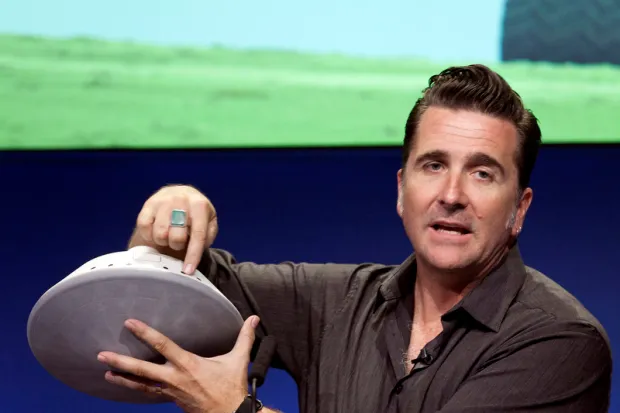
In August 2012, the world held its breath as NASA’s Curiosity rover executed the most audacious landing sequence ever attempted on another planet, the now-legendary “sky crane” manoeuvre. The engineer who designed it had pierced ears, wore snakeskin boots, styled his hair like Elvis Presley, and had once failed geometry in high school. Adam Steltzner is one of the most electrifying human stories in the history of American science, a bass-playing new wave musician who became a NASA JPL engineer, reinvented how humanity lands machines on Mars, and turned personal reinvention into a global speaking career. This complete Adam Steltzner biography covers his early failures, his astonishing academic comeback, his world-changing work at the Jet Propulsion Laboratory, and what drives one of the most unconventional minds in modern engineering.
Quick Facts About Adam Steltzner
| Detail | Information |
| Date of Birth | 1963 |
| Birthplace | San Francisco Bay Area, California |
| Nationality | American |
| Education | College of Marin → UC Davis (B.S.) → Caltech (M.S.) → University of Wisconsin-Madison (Ph.D.) |
| Estimated Net Worth | $3 million |
| Spouse/Partner | Trisha (former JPL employee) |
| Children | Two daughters |
| Occupation | NASA/JPL Engineer, Author, Public Speaker |
Early Life and Background
Adam Steltzner was born in 1963 in the San Francisco Bay Area, California, into a household of relative comfort. His father was an heir to the Schilling spice fortune, meaning Steltzner grew up without financial hardship, yet that security offered no compass for a restless, unfocused young mind.
In high school, Steltzner was, by his own frank admission, a poor student. He failed geometry. His father, frustrated by his lack of direction, reportedly told him he would never amount to anything, a wound that stayed with him and, in time, fueled him.
Rather than books, Steltzner found belonging in music. He played bass guitar in new wave rock bands throughout his teens and early twenties, briefly attended the prestigious Berklee College of Music, and spent years working in an organic grocery market, seemingly adrift from any conventional trajectory.
Then came the moment that changed everything.
One night in 1984, driving home from a late gig, Steltzner looked up and noticed the constellation Orion hanging in the California sky. He was struck by a simple, burning question: Why does Orion appear to move across the sky? The question refused to leave him. He enrolled in an astronomy class at a local community college, and that single act of curiosity pulled the thread that unraveled an entirely different life.
Career Beginnings, The Long Road Back
The astronomy class didn’t just answer one question. It opened an entire universe of them. Steltzner discovered he was, in fact, deeply capable of rigorous thinking, he had simply never been shown the right door.
From community college, he transferred to the College of Marin, then earned his Bachelor of Science in Mechanical Engineering from UC Davis in 1990. What followed was an academic sprint that would astonish anyone who knew the teenager who failed geometry:
- Caltech, Master of Science in Applied Mechanics (1991)
- University of Wisconsin-Madison, Ph.D. in Engineering Mechanics
The academic comeback wasn’t just remarkable in its speed, it was remarkable in where it landed him. Fresh out of graduate school in 1991, Steltzner joined one of the most exclusive scientific organizations on Earth: NASA’s Jet Propulsion Laboratory (JPL) in Pasadena, California.
Major Career Highlights
Early JPL Work, Learning the Language of Space
Steltzner began at JPL in Spacecraft Structures and Dynamics, contributing to landmark missions including:
- Galileo, NASA’s Jupiter orbiter
- Cassini, the spacecraft that spent 13 years studying Saturn
- Mars Pathfinder, the 1997 mission that first deployed a rover on Mars
- Mars Exploration Rovers Spirit and Opportunity, twin rovers that landed on Mars in January 2004
Over time, Steltzner gravitated toward what he describes as the most terrifying moment in any Mars mission: Entry, Descent, and Landing (EDL), the roughly seven minutes during which a spacecraft plunges through the Martian atmosphere and must decelerate from 13,000 mph to a complete stop. There is no second attempt, no rescue, no margin for error.
The Mars Curiosity Rover, The Sky Crane Landing (2012)
This is the chapter that made Adam Steltzner famous
By the late 2000s, JPL faced a problem with no obvious solution. The Mars Science Laboratory mission, carrying the Curiosity rover, involved a vehicle weighing nearly one metric ton. That was five times heavier than the Spirit and Opportunity rovers. The airbag-bounce landing system used previously wouldn’t survive the impact. Retro-rockets firing directly beneath the rover would compromise the landing site with debris and exhaust plumes.
Steltzner led the 50-person EDL team tasked with solving an impossible engineering puzzle. Their answer was audacious: a rocket-powered hovering sky crane, a descent stage fitted with eight hydrazine thrusters that would lower Curiosity on three nylon cables to the Martian surface, then fly away and crash at a safe distance. On paper, it looked like science fiction. In practice, it required the precise coordination of hundreds of autonomous events in a sequence that allowed zero failures.
On August 5, 2012, Curiosity landed flawlessly in Gale Crater. The control room at JPL erupted. The world watched Steltzner, in his snakeskin boots, visibly shaking with relief, become the human face of humanity’s greatest planetary achievement in a generation.
NASA’s short documentary “Seven Minutes of Terror,” which dramatized the landing challenge, became a viral sensation, viewed by tens of millions globally.
In 2016, Steltzner was elected to the National Academy of Engineering, one of the highest professional honours in American engineering, in recognition of his contributions to planetary landing technology.
Mars 2020, The Perseverance Rover
Steltzner’s next chapter was no less ambitious. He served as Chief Engineer for the Mars 2020 mission, which carried the Perseverance rover, NASA’s most scientifically capable Mars vehicle to date, designed to search for signs of ancient microbial life and cache samples for eventual return to Earth.
In February 2021, Perseverance used Steltzner’s proven sky crane system to land in Jezero Crater, an ancient river delta believed to have once harboured liquid water. The landing was flawless. A new generation watched in awe.
He also co-authored a landmark paper on EDL systems, and his work on sky crane architecture has fundamentally reshaped how mission planners think about landing heavy payloads on planetary surfaces.
Adam Steltzner as a Public Speaker
Steltzner did not become a public speaker by accident. His own story, the failing student who landed a rover on Mars, is a narrative so compelling it practically demands an audience. Since Curiosity’s landing in 2012, he has become one of the most sought-after voices at the intersection of innovation, leadership, and science.
His speaking topics include:
- Leadership under extreme uncertainty, how to make high-stakes decisions when failure is not recoverable
- Building creative, high-performance teams, lessons from the JPL EDL group
- The power of curiosity, how a single question can redirect an entire life
- Failing your way to success, reframing failure as essential data, not defeat
- STEM education and inspiration, especially for underrepresented students who don’t see themselves as “science people”
- Innovation and unconventional thinking, challenging the assumption that breakthroughs follow predictable paths
Steltzner’s book, “The Right Kind of Crazy: A True Story of Teamwork, Leadership, and High-Stakes Innovation” (co-authored with William Patrick, published 2016 by Portfolio/Penguin), serves as the intellectual backbone of his speaking work. The title phrase, “the right kind of crazy”, captures his philosophy that transformative ideas often look impossible until the moment they work.
He is regularly booked for:
- Fortune 500 innovation summits and corporate leadership conferences
- University STEM programs and engineering school keynotes
- Government and defence conferences on mission-critical decision-making
- TEDx-style events focused on curiosity and personal reinvention
His appeal cuts across sectors precisely because his core message is universal: curiosity transforms lives, failure is survivable, and the most improbable people sometimes accomplish the most extraordinary things.
Adam Steltzner Net Worth 2026
Adam Steltzner’s estimated net worth is approximately $3 million, built across several income streams over a career spanning more than three decades.
Primary income sources include:
- NASA/JPL Senior Engineering Salary, Steltzner spent over 30 years at JPL, where senior engineers and chief engineers at the GS-15 equivalent level earn well into the six-figure range annually
- Book Royalties, The Right Kind of Crazy (2016, Portfolio/Penguin) has sold steadily since publication and remains a staple on innovation and leadership reading lists
- Professional Speaking Fees, high-profile keynote speakers of Steltzner’s profile and subject matter typically command fees ranging from $20,000 to $50,000 per engagement
- Consulting and Advisory Work, his expertise in EDL systems and high-stakes engineering leadership makes him a valued consultant for aerospace and technology organizations
His wealth reflects a career built on intellectual capital rather than commercial enterprise, a trajectory that prioritized world-changing work over wealth accumulation, and found financial reward as a consequence of public visibility.
Personal Life
Adam Steltzner is married to Trisha, who is herself a former JPL employee, a detail that speaks to the world they’ve built together around scientific passion and shared values.
The couple has two daughters and lives in Altadena, California, a foothill community just north of Pasadena that sits close to JPL’s campus in the San Gabriel Mountains.
Those who know Steltzner describe a man whose curiosity doesn’t clock out at the laboratory. He is known to be an avid gardener, approaching the complexity of growing things with the same methodical wonder he brings to spacecraft design. Music never left him either, he still plays and maintains a deep love for the art form that shaped his youth.
Steltzner speaks openly about his spiritual and philosophical beliefs, describing himself as someone driven less by certainty than by the act of asking questions. He has spoken publicly about reconciling scientific empiricism with a broader sense of wonder, how working on Mars missions, paradoxically, deepened rather than diminished his sense of the universe’s mystery.
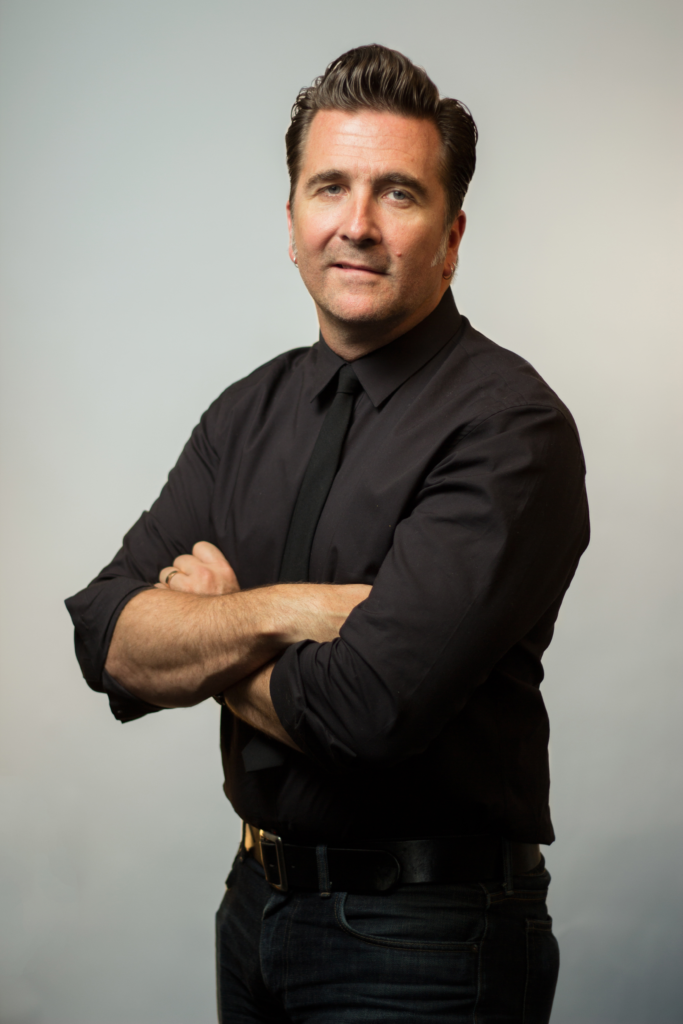
His unconventional appearance, the jewellery, the boots, the vintage style, is no affectation. He has said consistently that he never wanted to become someone different to fit a mold. The rock musician and the rocket scientist, in his telling, are the same person.
Adam Steltzner Best Quotes
On curiosity:
“Curiosity is the engine of achievement. It was a single question, why does Orion move? that changed my entire life.”
On the sky crane landing:
“The night before landing, I was terrified. Not that we’d fail, I was terrified that we’d succeed and I wouldn’t believe it was real.”
On failure:
“Failure is not the opposite of success. It’s the tuition you pay for it. I failed geometry. I landed a rover on Mars. Both of those things are true.”
On building teams:
“The best teams I’ve ever been part of weren’t made of the smartest people. They were made of people who were genuinely, fearlessly curious.”
On unconventional paths:
“I don’t fit anybody’s picture of what a rocket scientist looks like. I think that’s actually the point. Science needs all kinds of minds.”
On the Mars landing:
“When that signal came back and we knew Curiosity was alive on Mars, I felt something I have no adequate word for. Gratitude, maybe. Pure, overwhelming gratitude.”
On leadership:
“My job wasn’t to have all the answers. My job was to make sure the right questions kept getting asked, even when asking them was uncomfortable.”
On reinvention:
“The person I was at nineteen, playing bass in a band, stocking shelves, he wasn’t wasted. He was being made. I just didn’t know it yet.”
Frequently Asked Questions
Adam Steltzner is an American aerospace engineer at NASA’s Jet Propulsion Laboratory (JPL) who led the Entry, Descent, and Landing team that successfully landed the Curiosity rover on Mars in August 2012 using an innovative sky crane system. A former rock musician who failed high school geometry, he earned a Ph.D. from the University of Wisconsin-Madison and became one of NASA’s most celebrated engineers and public communicators.
At NASA’s JPL, Steltzner worked on missions including Galileo, Cassini, Mars Pathfinder, and the Mars Exploration Rovers before leading the EDL team for the Mars Science Laboratory. He designed the sky crane landing system that delivered Curiosity to Mars in 2012 and served as Chief Engineer for the Mars 2020 Perseverance rover mission, which landed in Jezero Crater in February 2021.
Adam Steltzner’s estimated net worth is approximately $3 million, accumulated through more than 30 years as a senior NASA/JPL engineer, book royalties from The Right Kind of Crazy (2016), professional speaking fees, which for keynote speakers of his profile typically range from $20,000 to $50,000 per engagement, and aerospace consulting work following the global visibility he gained after Curiosity’s landmark Mars landing.
The Right Kind of Crazy: A True Story of Teamwork, Leadership, and High-Stakes Innovation is a 2016 book by Adam Steltzner and co-author William Patrick, published by Portfolio/Penguin. It uses the story of landing Curiosity on Mars to explore principles of leadership, creative team-building, managing failure, and how organizations can pursue seemingly impossible goals. It is widely assigned in university engineering and business leadership programs across the United States.
Adam Steltzner’s keynote speaking topics center on leadership under uncertainty, building high-performance innovation teams, the transformative power of curiosity, and reframing failure as a pathway to breakthrough. He draws from his personal journey, from failing student to NASA engineer, and his experience leading the Curiosity and Perseverance Mars landing programs to deliver talks relevant to corporate, academic, government, and STEM audiences.
Conclusion
The Adam Steltzner biography is, at its core, a story about what a single question can do. From a teenager who failed geometry and played bass in nightclubs, to the man who stood in a JPL control room in snakeskin boots and watched humanity’s most ambitious robot touch down on Mars, Steltzner’s journey defies every conventional template for scientific success. He landed rovers on another planet, wrote a book about how, and built a speaking career teaching others to embrace uncertainty with courage and curiosity. His life proves that the right kind of crazy isn’t a liability. It’s a superpower. For more profiles of boundary-breaking scientists, engineers, and innovators who speak, inspire, and lead.
Leave a Reply