
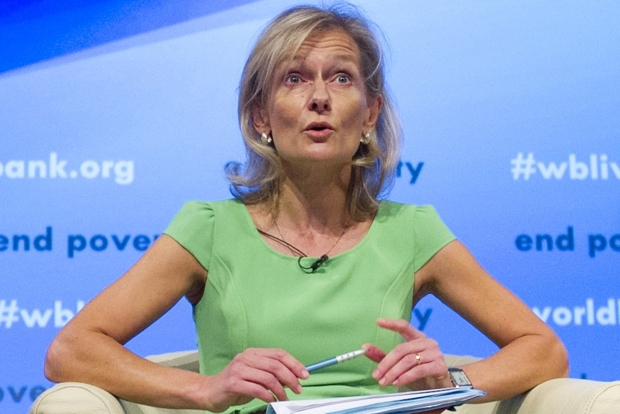
In February 2015, Zanny Minton Beddoes made history by becoming Editor-in-Chief of The Economist, the first woman to lead the publication in its then-172-year history. That single fact tells you almost everything you need to know about the weight of her appointment.
Born in Shropshire, England, in July 1967, Minton Beddoes is an Oxford and Harvard-educated economist who joined The Economist in 1994 and spent two decades climbing through its editorial ranks. Before journalism, she worked at the International Monetary Fund and helped shape economic reform in post-communist Poland alongside Jeffrey Sachs.
This complete Zanny Minton Beddoes biography covers her early life, career at The Economist, historic editorship, public speaking work, net worth, and personal life, everything you need to understand one of the most influential voices in global business journalism today.
Quick Facts About Zanny Minton Beddoes
| Detail | Information |
| Date of Birth | July 1967 |
| Birthplace | Shropshire, England |
| Nationality | British |
| Education | BA (PPE), St Hilda’s College, Oxford; Kennedy Scholar, Harvard Kennedy School (1989–1991) |
| Estimated Net Worth | $5 million |
| Spouse/Partner | Sebastian Mallaby (journalist and author) |
| Occupation | Editor-in-Chief, The Economist; Author; Global Speaker |
| Known For | First female Editor-in-Chief of The Economist |
Early Life and Background
Zanny Minton Beddoes grew up in Shropshire, a largely rural county on England’s border with Wales, a far cry from the global corridors of power she would later inhabit. Her father was a former British Army officer, and her mother was German-born, giving her a bicultural household that likely seeded her lifelong interest in cross-border economics and international affairs.
She attended Moreton Hall School, an independent boarding school in Shropshire. It was an environment that cultivated ambition and academic rigour, qualities that would define her entire career.
After school, she won a place at St Hilda’s College, Oxford, where she read Philosophy, Politics and Economics (PPE), the degree that has produced more British prime ministers, Cabinet ministers, and global policymakers than any other undergraduate programme in the world. Oxford’s PPE is, in effect, the intellectual nursery of the British establishment, and Minton Beddoes thrived there.
Career Beginnings, From the IMF to Jeffrey Sachs’s Poland Team
After Oxford, Minton Beddoes crossed the Atlantic on a Kennedy Scholarship to study at Harvard’s Kennedy School of Government from 1989 to 1991. The Kennedy School, with its focus on public policy, international development, and economic governance, was a natural fit for a PPE graduate with global ambitions.
Her first professional role was not in journalism, it was in macroeconomic policy. She joined the International Monetary Fund (IMF) as an economist, working at the institution that sits at the centre of global financial stability. This real-world grounding in monetary theory and fiscal policy gave her something most financial journalists never have: she had actually done the work before writing about it.
Her most formative early experience came when she joined Jeffrey Sachs’s advisory team working on economic reform in post-communist Poland in the early 1990s. Sachs, the celebrated Harvard economist, was then pioneering “shock therapy” economic liberalisation across Eastern Europe. Working at that frontier, watching a command economy transform in real time, gave Minton Beddoes the kind of on-the-ground macroeconomic experience that no textbook could replicate.
It was this combination of Oxford intellect, Harvard policy rigour, IMF credibility, and post-communist field experience that made her such an unusually authoritative hire when The Economist came calling.
Major Career Highlights
Joining The Economist (1994)
Zanny Minton Beddoes joined The Economist in 1994 as an Emerging Markets Correspondent. Her beat was ideally suited to her background, she had lived the economics she was now covering.
Over the following years, she wrote landmark surveys on:
- Latin American finance and regional currency dynamics
- Central Asian economies in the post-Soviet transition
- The global economy and macroeconomic policy cycles
- American economic policy from trade to fiscal reform
These were not shallow trend pieces. Minton Beddoes’s writing consistently reflected a policymaker’s understanding of how institutions, incentives, and international pressure interact, a hallmark that distinguished her work within The Economist‘s already formidable journalism.
Rising Through the Editorial Ranks
Over two decades, Minton Beddoes rose steadily through The Economist‘s editorial structure. She held senior editorial roles covering economics and finance, earning a reputation for intellectual authority, editorial boldness, and the ability to translate complex macroeconomic arguments for a global readership of business leaders, policymakers, and academics.
By the time she was appointed Editor-in-Chief in 2015, she had spent 21 years at the publication, longer than many of its editors had served before reaching the top role.
Making History, First Female Editor-in-Chief (2015)
On February 2, 2015, Zanny Minton Beddoes was appointed Editor-in-Chief of The Economist, becoming the 17th person and the first woman to hold the position in the magazine’s 172-year history.
The appointment was widely covered across global media. Debrett’s, the authority on British distinction and achievement, described her as “one of the most influential voices in financial journalism.”
Her editorship arrived at a period of profound global economic disruption:
- The aftermath of the 2008 financial crisis was still reshaping Western economies
- China’s rise as an economic superpower was accelerating
- Brexit would soon redefine Britain’s place in the global economy
- The rise of economic populism and challenges to globalisation were intensifying
Under her stewardship, The Economist maintained its signature blend of rigorous analysis, liberal economic orthodoxy, and opinionated long-form journalism, while also adapting its digital presence and subscriber model for the streaming-and-subscription era.
Membership in Global Institutions
Minton Beddoes’s influence extends well beyond the pages of The Economist. She is:
- A board member of The Economist Group
- An invitee to the Bilderberg Conference, the annual gathering of global leaders in politics, finance, and academia
- A trustee of the Carnegie Endowment for International Peace
- A regular contributor and commentator on CNN, BBC, CNBC, PBS, and NPR
These affiliations position her not merely as an observer of global economic policy, but as a participant in the conversations that shape it.
Zanny Minton Beddoes as a Public Speaker
Zanny Minton Beddoes is among the most in-demand speakers in the world of global business and public policy. She brings to the stage what few speakers can: the credibility of The Economist brand, the fluency of a trained economist, and the storytelling instincts of a world-class journalist.
Her core speaking topics include:
- Global macroeconomic trends, the forces reshaping growth, inflation, debt, and trade in developed and emerging markets
- Geopolitical risk for business leaders, how political disruption translates into economic volatility and strategic risk
- The future of capitalism, inequality, corporate responsibility, climate economics, and the social contract
- Women in leadership, her own historic journey and the structural barriers women face in elite institutions
- The role of quality journalism in democracy, in an era of disinformation and media fragmentation, The Economist‘s model as a counterweight
Who books Zanny Minton Beddoes?
- Davos (World Economic Forum), a regular presence on the programme
- Fortune 500 board retreats and C-suite leadership forums
- Investment conferences and sovereign wealth fund summits
- University economics departments and public policy schools
- Think tanks and international policy forums
Her speaking fee is estimated in the top-tier international range of $50,000–$100,000 per event, consistent with Editor-in-Chief-level speakers from global publications.
Zanny Minton Beddoes Net Worth 2026
Zanny Minton Beddoes’s estimated net worth in 2026 is approximately $5 million, accumulated across multiple high-value income streams over a career spanning more than three decades.
Her primary income sources include:
- Editor-in-Chief salary, senior editorial leadership at a global media brand of The Economist‘s stature commands a compensation package well into the six figures annually
- Speaking fees, estimated at $50,000–$100,000 per engagement, with multiple keynotes and panel appearances annually at Davos, investment conferences, and policy forums
- Media appearances, CNN, BBC, CNBC, NPR, and PBS appearances, while often not directly remunerated, enhance her personal brand value and indirectly support speaking demand
- Book chapters and editorial contributions, contributions to collected volumes on economics, journalism, and global policy
- Board and trustee roles, positions such as the Carnegie Endowment for International Peace carry compensation at senior levels
It is important to note that net worth figures for private individuals are estimates, and $5 million represents a reasonable inference based on salary levels, speaking rates, and career longevity, not a publicly verified figure.
Personal Life
Zanny Minton Beddoes is married to Sebastian Mallaby, a British journalist and author widely regarded as one of the finest chroniclers of finance and economic power writing today. Mallaby is best known for:
- More Money Than God (2010), a landmark account of the hedge fund industry
- The Man Who Knew (2016), a Pulitzer Prize-winning biography of Alan Greenspan
Both Minton Beddoes and Mallaby occupy the upper tier of global economic journalism, making theirs one of the most intellectually distinguished couples in the world of business media. They split their time between London and Washington, D.C., two cities that together form the axis of the English-speaking world’s economic and political conversation.
In her public appearances, Minton Beddoes is known for her directness, intellectual discipline, and a dry wit that reflects her British roots. She has spoken about the challenge of leading a historically male institution and the responsibility she feels to open doors for the women who come after her.
Her values, reflected consistently in The Economist‘s editorial line under her leadership, centre on open markets, liberal democracy, evidence-based policy, and a scepticism of both left-wing statism and right-wing nativism.
Zanny Minton Beddoes Best Quotes
On the role of The Economist:
“Our job is to take a side, the side of rigorous analysis, of open markets, and of liberal democracy.”, Explaining the Economist‘s editorial philosophy at a media conference.
On economic populism:
“Globalisation has created enormous wealth, but it has also left too many people behind. That is not a fact to dismiss, it is a policy failure to address.”, At the World Economic Forum, Davos.
On being the first female editor:
“I hope that my appointment makes this kind of appointment seem unremarkable in the future, that is the measure of real progress.”, Widely quoted at the time of her 2015 appointment.
On journalism’s purpose:
“The world needs rigorous, independent journalism more than ever. Not opinion masquerading as fact, journalism that holds power to account with evidence.”, Address to journalism students, Harvard Kennedy School.
On the future of capitalism:
“The question is not whether capitalism works. It does. The question is whether it is working for enough people.”, Keynote speech at a Fortune 500 leadership conference.
On women in leadership:
“Ambition in women is still treated as a character flaw in ways that would never apply to men. That has to change, and it changes faster when women are visible in positions of power.”, Panel discussion at Davos.
On economic forecasting:
“Economists are very good at explaining what happened after it happened. The honest ones will tell you that predicting the future with confidence is a different skill entirely.”, In conversation with a fellow panellist at a Council on Foreign Relations event.
On The Economist‘s model:
“We have always believed that you can be both rigorous and readable. That is not a compromise. That is the standard.”, Remarks at The Economist’s Group annual conference.
Frequently Asked Questions
Zanny Minton Beddoes is the Editor-in-Chief of The Economist, a position she has held since February 2, 2015. She is the 17th person and the first woman to serve as editor of the publication, which was founded in 1843. Before her appointment, she spent 21 years at The Economist as a writer and senior editor covering global economics and emerging markets.
Zanny Minton Beddoes is known primarily for being the first female Editor-in-Chief of The Economist in the publication’s 172-year history at the time of her appointment in 2015. She is also recognised for her expertise in global macroeconomics, her prior work at the IMF and alongside Jeffrey Sachs in Poland, and her regular appearances at Davos and on major international broadcast networks.
Zanny Minton Beddoes’s net worth is estimated at approximately $5 million as of 2026. Her wealth derives from her Editor-in-Chief salary at The Economist, speaking fees estimated at $50,000–$100,000 per engagement, and media and advisory work accumulated over a 30-year career in economics and journalism. Net worth figures for private individuals are estimates, not verified public data.
Zanny Minton Beddoes is married to Sebastian Mallaby, a British journalist and author. Mallaby is the author of More Money Than God (2010), a critically acclaimed study of the hedge fund industry, and The Man Who Knew (2016), a Pulitzer Prize-winning biography of Alan Greenspan. Both Minton Beddoes and Mallaby are prominent figures in global economic journalism, and the couple divides their time between London and Washington, D.C.
Zanny Minton Beddoes speaks on global macroeconomic trends, geopolitical risk for business leaders, the future of capitalism, women in leadership, and the role of quality journalism in democracy. She is a regular keynote speaker at the World Economic Forum at Davos, Fortune 500 leadership forums, investment conferences, and university economics departments. Her speaking fee is estimated in the $50,000–$100,000 range per engagement.
Conclusion
The Zanny Minton Beddoes biography is the story of a woman who combined intellectual rigour, real-world economic experience, and exceptional editorial instincts to reach the pinnacle of a profession that had, for 172 years, been led entirely by men. From the IMF to post-communist Poland, from Oxford’s dreaming spires to the corridors of Davos, Minton Beddoes has spent her career at the intersection of ideas and power.
As Editor-in-Chief of The Economist, she continues to shape how the world’s most influential business leaders, policymakers, and investors think about global economics, geopolitical risk, and the future of capitalism. Her influence extends far beyond any single article or edition. She is, simply, one of the most consequential figures in the history of economic journalism.
Leave a Reply