
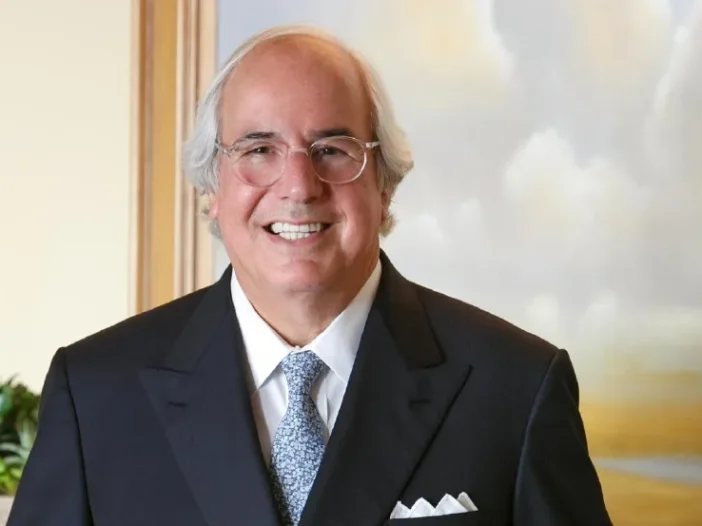
He may be the greatest con man in American history, or he may be the greatest con man about his history. Frank Abagnale Jr. is the Bronx-born fraudster whose 1980 memoir Catch Me If You Can spawned a 2002 Steven Spielberg blockbuster starring Leonardo DiCaprio, a Broadway musical, and a three-decade career as the world’s most famous fraud prevention consultant.
But beginning in the late 2010s, journalists and researchers began methodically dismantling the legendary story, raising serious questions about how much of the Frank Abagnale biography was itself a con. This article covers everything: his early life, his real criminal record, his father Frank Sr., his wife and family, his book and movie, his net worth, his speaking career, and the sprawling controversy that may be his most audacious performance yet.
Quick Facts About Frank Abagnale
| Detail | Information |
| Full Name | Frank William Abagnale Jr. |
| Date of Birth | April 27, 1948 |
| Age (2026) | 77 years old |
| Birthplace | Bronx, New York City, USA |
| Nationality | American |
| Height | Approximately 6 feet 0 inches (183 cm) |
| Net Worth (2026) | ~$10 million (estimated) |
| Wife | Kelly Abagnale (married; three sons together) |
| Children | Three sons |
| Occupation | Former con artist; Security consultant; Author; Speaker |
| Father | Frank William Abagnale Sr. |
| Mother | Paulette Abagnale (French Pied-noir) |
Early Life and Background
Frank William Abagnale Jr. was born on April 27, 1948, in the Bronx, New York City, to Frank William Abagnale Sr., an Italian-American businessman, and Paulette Abagnale, a French Pied-noir woman. The family was middle-class, and Frank Jr. grew up in a household where his father’s business success set a standard the boy admired deeply.
When Frank was approximately 14 years old, his parents divorced. The divorce was a fracture point that Abagnale has returned to repeatedly in interviews, describing his father’s departure from the family home as the emotional rupture that sent him off course. He has said he loved his father intensely, even idolized him, and the dissolution of that family structure left him unmoored.
He attended the all-boys Iona Preparatory School in New Rochelle, New York, although public records later challenged his attendance there. According to his memoir, his first fraud occurred when his father, Frank Sr., gave him a credit card to buy gasoline for a part-time job, and young Frank colluded with local station attendants to buy car parts and return them for cash, racking up $3,400 in false charges.
Career Beginnings, The Real Criminal Record
Here is where the Frank Abagnale biography becomes genuinely complicated, and critically important to understand.
What the memoir claims: Abagnale spent his teenage years from roughly ages 16 to 21 (1964–1969) as a globe-trotting impostor who successfully posed as a Pan Am pilot, a doctor, a lawyer, and a sociology professor across 26 countries, while cashing over $2.5 million in fraudulent checks and evading a dedicated FBI task force.
What public records show: Abagnale was out of prison for only approximately 14 months between the ages of 16 and 21. Cashing 17,000 checks in 14 months would require 40 fraudulent checks per day, a mathematical impossibility. Investigative journalists, including Alan C. Logan in his 2020 book The Greatest Hoax on Earth, found documented prison time that directly contradicted the memoir’s timeline.
The confirmed criminal record includes:
- December 1964, Enlists in the U.S. Navy at 16; discharged after less than three months in February 1965
- March 1965, Arrested for petty larceny in Mount Vernon, New York
- June 1965, Steals blank checks from a gas station in Tuckahoe, New York; sentenced to three years in state prison
- Released on parole, then back in prison after stealing a car in Boston
- Released December 1968, age 20
- 1969, Arrested in France for fraud; convicted and served approximately three months
- Extradited to Sweden, convicted of gross fraud by forgery; served two months in Malmö prison; banned from Sweden for eight years
- 1970, Deported back to the United States
- November 1970, Arrested in Georgia for cashing 10 fake Pan Am payroll checks; sentenced to 12 years in federal prison
- February 1974, Released on parole after serving approximately two years at Federal Correctional Institution in Petersburg, Virginia
- 1974, Arrested again at a Texas summer camp for stealing camera equipment while posing as a pilot
The brief period of impersonating a Pan Am pilot, documented in public records, lasted roughly three months in 1970, not the years-long international escapade described in the memoir. The FBI task force pursuing him consisted largely of one agent, not the sprawling manhunt portrayed in the film.
Major Career Highlights
Catch Me If You Can, The Memoir (1980)
In 1980, Abagnale published Catch Me If You Can: The True Story of a Real, co-written with journalist Stan Redding. The book became a bestseller and launched Abagnale’s public career as a reformed criminal turned fraud expert.
The memoir described his supposed years of impersonation in vivid, glamorous detail, the Pan Am pilot uniform, the fake medical credentials, the elegant escapes. It was irresistible storytelling. Whether the story was largely true, significantly embellished, or substantially fabricated became the defining question of Abagnale’s public legacy four decades later.
He has published multiple subsequent books on fraud and security:
- The Art of the Steal (2001), how to protect yourself from fraud
- Stealing Your Life (2007), identity theft prevention
- Numerous white papers and security reports for financial institutions
Catch Me If You Can, The Spielberg Film (2002)
The 2002 Steven Spielberg film Catch Me If You Can starred Leonardo DiCaprio as the young Frank Abagnale Jr. and Tom Hanks as FBI agent Carl Hanratty, the dogged federal investigator pursuing him across continents. The film grossed over $350 million worldwide and received multiple award nominations.
Abagnale himself made a cameo appearance as a French police officer who takes DiCaprio’s character into custody, a moment of genuine meta-irony that audiences loved without knowing how layered it was.
He later said in interviews that the film was approximately 80–90% accurate, a claim that became the subject of significant scrutiny after subsequent investigative reporting.
The fictional character Carl Hanratty (played by Tom Hanks) is based on a composite of FBI agents, not a single real person, though Abagnale has described his relationship with an FBI agent named Joe Shea as formative in his eventual cooperation with law enforcement.
The Broadway Musical (2011)
A Broadway musical adaptation of Catch Me If You Can opened at the Neil Simon Theatre on April 10, 2011. It ran for 170 performances and received four Tony Award nominations, with Norbert Leo Butz winning Best Actor in a Musical for his portrayal of Carl Hanratty. The musical extended Abagnale’s cultural footprint to yet another medium.
Abagnale & Associates, The Consulting Firm
In 1976, just two years after his final prison release, Abagnale made an audacious pivot. He approached a bank and offered to educate its staff on check fraud techniques, proposing a no-risk arrangement: pay nothing if his information wasn’t useful; pay a modest fee and recommend him to other banks if it was.
The approach worked. He founded Abagnale & Associates, a fraud consulting firm that grew into a multi-decade business advising banks, corporations, and financial institutions on preventing exactly the kinds of fraud he claimed to have committed.
Whether the consulting career was built on genuine expertise or on a mythologized reputation, or both, the business was real and commercially successful for decades.
FBI Consultant and Government Work
Abagnale long claimed to have worked with the FBI for over 40 years as one of the world’s foremost experts on document fraud, check fraud, and cybercrime. He said he was released from federal prison early on the condition that he assist federal authorities.
Public records have challenged the specifics of this claim. The FBI has never made an official public statement confirming or quantifying his role. However, his firm did provide security consulting to major financial institutions, and his insights on check fraud methodology were acknowledged as technically accurate by banking professionals.
AARP Fraud Watch Network
In 2015, Abagnale became the AARP Fraud Watch Network Ambassador, hosting educational programs and community discussions on identity theft and cybercrime. By 2018, he was co-hosting the popular AARP podcast The Perfect Scam.
That association ended. By 2022, AARP published an article acknowledging that “many of [Abagnale’s] tales have since been debunked” and confirmed he was no longer associated with their organization.
The Debunking, The Greatest Hoax on Earth (2020)
The most significant turning point in the Frank Abagnale story came with journalist Alan C. Logan’s 2020 book The Greatest Hoax on Earth: Catching Truth While We Can, a methodically researched investigation drawing on prison records, court documents, police reports, newspaper archives, and interviews with people who knew Abagnale.
Logan’s central conclusion: the vast majority of Abagnale’s claimed criminal history, the globe-trotting impostor career, the years of impersonation, the multi-million dollar fraud, was fabricated. The book documented that Abagnale spent most of his supposed criminal peak years in prison, not in airline cockpits.
Abagnale’s response to the book: “I have not read the book, nor do I think it is worthy of a comment.”
Frank Abagnale as a Public Speaker
Despite, or because of, the controversy, Frank Abagnale built one of the most successful speaking careers in the fraud prevention space, commanding audiences for decades before the debunking investigations significantly altered his public standing.
At his peak, he spoke to audiences ranging from corporate boardrooms to university campuses to government agencies, billing himself as the reformed con man who had seen the system from both sides and could teach institutions to protect themselves.
His core speaking themes included:
- Check fraud methodology and prevention, the technical systems he claimed to have exploited
- Identity theft and cybercrime, how criminals think and how businesses can protect themselves
- Forgery, document fraud, and modern con artistry
- Personal redemption, the journey from criminal to legitimate professional
- The psychology of deception, how trust is weaponized
Who historically booked Frank Abagnale:
- Major banks and financial institutions
- Corporate security conferences
- FBI training events (by his own account)
- Universities and business schools
- AARP and consumer protection organizations
The speaking career has contracted significantly since the Logan investigation and the AARP separation. Whether Abagnale continues to command significant speaking fees as of 2026 is unclear, given the damage to his credibility following the debunking publications.
Frank Abagnale Net Worth 2026
Frank Abagnale’s estimated net worth in 2026 is approximately $10 million, according to Celebrity Net Worth and multiple industry sources.
His primary income streams include:
- Book royalties, Catch Me If You Can (1980) and subsequent security-focused books generated decades of royalty income; the 2002 film renewed massive interest in the memoir
- Film rights and royalties, the Steven Spielberg film grossed over $350 million worldwide; Abagnale received payment for the rights to his story
- Broadway musical rights, the 2011 production generated additional licensing income
- Abagnale & Associates, his fraud consulting firm, which operated for decades advising major financial institutions
- Speaking fees, at his peak, command estimated rates of $20,000–$40,000+ per corporate engagement
- AARP partnership, the Fraud Watch Network role and The Perfect Scam podcast (now ended)
- Media appearances, multiple Tonight Show appearances, British television (including a regular slot on The Secret Cabaret in the 1990s), and documentary appearances
The controversy over whether his consulting expertise was built on a fabricated criminal history raises legitimate questions about the ethical foundations of his wealth, questions that he has never directly answered.
Personal Life, Wife, Children, and Life Today
Frank Abagnale and his wife, Kelly Abagnale, have been married for decades and have three sons together. The family relocated from Tulsa, Oklahoma, where they lived in the same house for 25 years, to Charleston, South Carolina, after their sons left for college, at Kelly’s suggestion.
Kelly Abagnale has maintained an almost entirely private public profile. Abagnale has described her as his anchor and the reason he sought to build a legitimate life, saying that when he was finally free and found himself with a wife and children, the motivation to stay out of criminal activity became real in a way that no punishment had managed.
The three sons grew up away from the public eye and have not entered the public sphere. Abagnale has expressed pride in their lives and described fatherhood as the transformation that the legal system alone could not achieve.
He has been a member of Christian faith communities and has described his religious beliefs as central to his sense of redemption and purpose. He has described the Tulsa period, years of relative quiet, family life, and legitimate professional work, as the genuinely grounding chapter of his adult life.
On his father, Frank Abagnale Sr.: Abagnale has consistently described his father with deep affection, portraying the senior Abagnale as a decent man whose departure from the family home destabilized the teenage Frank in ways that set his criminal path in motion. The father-son relationship is the emotional core of the memoir and the Spielberg film.
The relationship between Jr. and Sr., and the question of how much the divorce genuinely catalyzed the crimes he did commit, remains one of the few psychologically compelling threads that the debunking investigations have not fully unraveled.
Frank Abagnale Best Quotes
On his criminal methods:
“What landed me in jail was my other habit, which was my enthusiasm for passing bad checks.”, From his memoir, the disarmingly casual framing of his actual core crime.
On protecting yourself from fraud:
“A con man’s greatest asset is the confidence of the mark.”, From various speaking engagements, the distilled philosophy of fraud psychology he turned into a consulting career.
On his father: In the memoir and film, Abagnale describes his father as the man he most wanted to impress, and whose disappointment, expressed or feared, drove the young Abagnale to increasingly reckless behavior.
On the Spielberg film:
“About 80% of the movie is accurate… the movie really captures my essence of the story.”, From the introduction to Catch Me If You Can: The Complete Screenplay (2003).
On the debunking investigations:
“I have not read the book, nor do I think it is worthy of a comment.”, His entire public response to Alan C. Logan’s 2020 investigation The Greatest Hoax on Earth, a reply as carefully crafted as any forgery.
On check fraud innovation: He has described himself as the first forger to exploit the routing of checks through the numerical code line, a technique called “the float”, claiming this was a genuine technical innovation that banking institutions had never encountered before.
On redemption:
“In my book ‘Stealing Your Life,’ I call my criminal career a ‘foolish teenage infatuation with perpetuating swindles.'”, His own retrospective framing of the crimes he committed, carefully minimizing their scope.
On the possibility of modern identity theft:
“Frank Abagnale could write a check on toilet paper, drawn on the Confederate States Treasury, sign it ‘U.R. Hooked’, and cash it.”, Attributed quote, originally from the former police chief of Houston, that Abagnale quoted regularly in his speaking engagements as a testament to his alleged skill.
Frequently Asked Questions
The core of Frank Abagnale’s story, that he was a check forger and serial impostor, is partially true. However, investigative journalism and public records, most thoroughly documented in Alan C. Logan’s 2020 book The Greatest Hoax on Earth, concluded that the vast majority of his claimed exploits were fabricated or heavily exaggerated. Prison records show he was incarcerated during most of the years he claimed to be globe-trotting as a pilot, doctor, and lawyer.
Frank Abagnale is married to Kelly Abagnale, his longtime wife of several decades. The couple has three sons together. Kelly has maintained an extremely private public profile throughout Abagnale’s time in the public eye. The family lived in Tulsa, Oklahoma for approximately 25 years before relocating to Charleston, South Carolina after their sons left home. Abagnale has credited Kelly and fatherhood as the transformation that genuinely reformed him.
.? Frank William Abagnale Sr. was Frank Jr.’s father, an Italian-American businessman who divorced his French wife, Paulette, when Frank Jr. was approximately 14 years old. The senior Abagnale is portrayed in the memoir and film as a loving but ultimately absent father figure whose departure from the family home destabilized the teenage Frank. Abagnale Jr. has consistently described his father with affection and credited the divorce as a key catalyst for his criminal behavior.
The Broadway musical Catch Me If You Can opened at the Neil Simon Theatre on April 10, 2011, with music by Marc Shaiman. It ran for 170 performances and received four Tony Award nominations. Norbert Leo Butz won Best Actor in a Musical for his portrayal of FBI agent Carl Hanratty. The show was based on the same memoir adapted by Steven Spielberg, further extending Abagnale’s story into a third major media format.
Frank Abagnale’s estimated net worth in 2026 is approximately $10 million, according to Celebrity Net Worth. His wealth was built primarily through book royalties from Catch Me If You Can and subsequent security books, film rights to the 2002 Spielberg film (which grossed over $350 million), Broadway musical licensing, his consulting firm Abagnale & Associates, and decades of speaking fees, though his speaking demand has declined following the debunking investigations that began gaining traction around 2019.
Conclusion
The Frank Abagnale biography is, at every layer, a story about the nature of truth, performance, and identity. A man who may have committed modest fraud in his youth constructed an elaborate mythology around those crimes, one so compelling that Steven Spielberg, Leonardo DiCaprio, Tom Hanks, and millions of readers accepted it without question.
Whether his greatest con was the bank checks he forged in 1970 or the memoir he sold in 1980 remains the central unanswered question. What is beyond dispute: Frank Abagnale built a $10 million fortune and a decades-long career on a story, and that, regardless of its factual basis, is perhaps the most American tale of all.
Leave a Reply