
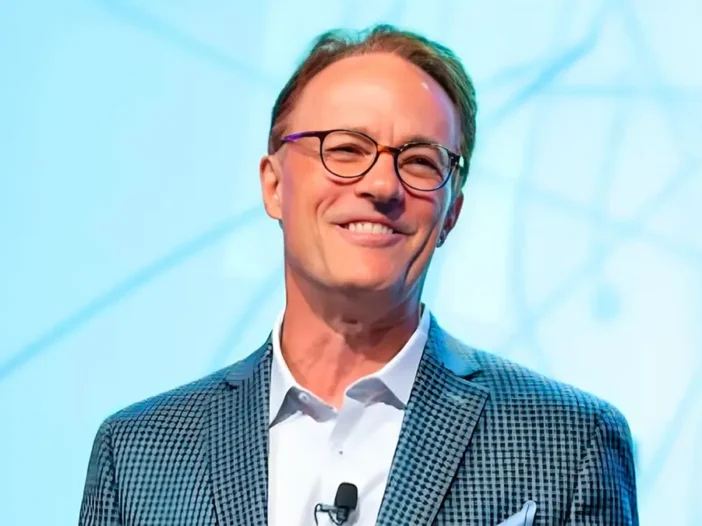
Andrew Busch holds a distinction no American has ever held before him. When the Commodity Futures Trading Commission (CFTC) needed someone to bridge the gap between Wall Street and Washington, it created a brand-new role , and picked Busch to fill it. As the first-ever Chief Market Intelligence Officer for the United States government, he rewrote how federal agencies understand financial markets. Before that, he spent years as the Global Currency and Public Policy Strategist for the Bank of Montreal (BMO) in Chicago, becoming one of the most-quoted market analysts in America. Today, the complete Andrew Busch biography reads like a master class in reinvention: banker, government innovator, author, and economic futurist who helps Fortune 500 companies navigate AI, tariffs, geopolitics, and the markets that move them all.
Quick Facts About Andrew Busch
| Category | Details |
| Full Name | Andrew Busch |
| Nationality | American |
| Based In | Washington, D.C. / Chicago, IL |
| Occupation | Economic Futurist, Keynote Speaker, Author, Former Government Official |
| Known For | First US Government Chief Market Intelligence Officer (CFTC) |
| Employer (Former) | Bank of Montreal (BMO), US CFTC |
| Company Founded | Bering Productions Inc. (BPI) |
| Book | World Event Trading |
| Estimated Net Worth | ~$5 million (2026 estimate) |
| Notable Recognition | Inc. Magazine “100 Great Leadership Speakers” |
Early Life and Background
Andrew Busch grew up with an instinct for understanding how the world works , not just politically, but economically. While specific details of his childhood and hometown are not widely publicized, what is clear is that his academic path set him firmly on a course toward finance, policy, and global markets.
He pursued higher education with a focus on economics and political science, disciplines that would later define his career as someone who sits at the crossroads of government policy and financial markets. That combination , rare in either Wall Street or Washington , became his professional superpower.
His formative years instilled a strong analytical discipline. Where others saw market noise, Busch learned to ask a sharper question: what policy decision or geopolitical shift caused this? That framework became the foundation of everything that followed.
Career Beginnings
Busch’s professional life began in earnest in the world of global banking and currency markets. He joined the Bank of Montreal (BMO) in Chicago, eventually rising to the title of Global Currency and Public Policy Strategist , a role that put him at the center of one of the most complex intersections in modern finance.
At BMO, his job was to decode how government policy, central bank decisions, and geopolitical upheaval translated into real movement in currency and capital markets. He became a go-to voice for institutional clients and media outlets trying to make sense of what Washington was actually doing to the dollar, to interest rates, and to global trade flows.
During this period, Busch also founded Bering Productions Inc. (BPI), a boutique financial markets and policy research firm. BPI gave him a platform to deliver independent, unbiased analysis , free from the institutional constraints of a large bank , and laid the groundwork for his eventual pivot into public speaking and economic futurism.
He became a regular presence on CNBC, Bloomberg, and other financial media, where his ability to translate dense policy language into plain-English market insight earned him a loyal audience. Executives, portfolio managers, and policymakers all paid attention when Busch spoke.
Major Career Highlights
Global Currency and Public Policy Strategist, Bank of Montreal (BMO)
Busch’s tenure at BMO Chicago was where his reputation was built. He covered currency markets, Federal Reserve policy, trade agreements, and the political events that regularly rattled financial markets. His analysis combined the precision of a trader with the contextual fluency of a policy wonk , a combination that set him apart from both camps.
He worked extensively on how geopolitical events , elections, diplomatic crises, energy shocks , filtered through into currency pairs, equity indices, and commodity prices. That framework would become central to his later World Event Trading book and keynote work.
Founder, Bering Productions Inc. (BPI)
Bering Productions Inc. was Busch’s independent research vehicle , a firm designed to provide financial markets and policy intelligence to corporate and institutional clients without the conflicts that often accompany large-bank research. BPI positioned Busch as an independent voice in a world increasingly hungry for clear, unfiltered market intelligence.
Chief Market Intelligence Officer, US CFTC
The most landmark chapter of Busch’s career came when the Commodity Futures Trading Commission appointed him as the first-ever Chief Market Intelligence Officer in US government history.
The role was unprecedented. The CFTC , the federal regulator of futures and options markets , recognized a critical gap: the government had mountains of market data but lacked a systematic way to synthesize it into actionable intelligence for policymakers and regulators. Busch was brought in to solve exactly that problem.
In this role, he:
- Condensed complex financial market data into accessible intelligence briefings for government decision-makers
- Built frameworks for understanding how global market events affected US regulatory priorities
- Served as a bridge between the private sector’s market expertise and the government’s need for clear economic insight
- Established processes that improved the CFTC’s ability to anticipate and respond to market disruptions
It was a role that no resume could have fully prepared anyone for , because no one had ever done it before.
Author , World Event Trading
Busch is the author of World Event Trading a book that laid out a systematic approach for understanding how major global crises , pandemics, wars, financial collapses, political upheaval , ripple through financial markets.
The book was ahead of its time. Published before the era of COVID-19 supply chain shocks, the Russian invasion of Ukraine, and the return of large-scale tariff wars, World Event Trading gave investors and executives a replicable framework for navigating chaos. The core thesis: world events are not black swans you endure , they are signals you can learn to read.
Andrew Busch as a Public Speaker
Post-CFTC, Busch launched AndrewBusch.com as an economic futurist platform and stepped fully into the keynote speaking world. He is consistently booked for Fortune 500 leadership summits, financial services conferences, energy industry events, and chambers of commerce across the United States.
Inc. Magazine recognized him as one of the “100 Great Leadership Speakers” , placing him among the elite tier of speakers commanding corporate stages nationwide.
His signature framework, the Future Growth Opportunities (FGO) model, is built around one central promise: cut through the bias and noise to identify which sectors and strategies will deliver real growth , regardless of political headlines or market volatility. Clients consistently rate his presentations 5.0 out of 5.0, including the North Carolina Chamber of Commerce, which reported a 100% client satisfaction rate.
Andrew Busch Speaking Topics
His keynote catalog is squarely focused on the forces reshaping the global economy:
- AI and Its Economic Impact , how artificial intelligence is restructuring labor markets, productivity, and competitive advantage across industries
- Geopolitics and Supply Chains (Globalization 2.0) , the rewiring of global trade and what it means for American companies
- Interest Rates and Inflation as Geopolitical Outcomes , why understanding central bank policy requires understanding foreign policy
- Tariff Wars and Trade Disruption , the real cost of protectionism and how to position ahead of it
- Future Growth Opportunities by Sector , using the FGO model to identify where the next decade of growth is hiding
- The Intersection of Markets, Policy, and Leadership , a keynote designed specifically for C-suite and board-level audiences
He is particularly well-suited for audiences in chemicals, financial services, energy, and manufacturing , industries where policy shifts translate almost immediately into bottom-line impact.
Andrew Busch Net Worth 2026
Andrew Busch’s estimated net worth in 2026 is approximately $5 million, built across multiple high-value professional chapters.
His wealth has been accumulated through several income streams:
- BMO Career: Years as a senior strategist at a major global bank represent a substantial foundational income, including salary, bonuses, and investment-grade compensation packages
- CFTC Government Role: While government positions are not high-paying by private sector standards, the prestige and connections generated significant career capital
- Keynote Speaking Fees: Premium corporate keynote speakers at Busch’s level typically command $20,000–$50,000+ per engagement, and with Fortune 500 clients and a packed conference calendar, speaking alone represents a major annual revenue stream
- Bering Productions Inc. (BPI): His boutique research and consulting firm serves corporate clients in energy, finance, chemicals, and manufacturing , sectors where high-stakes advisory work commands premium fees
- Book Royalties and Media: World Event Trading and ongoing media appearances contribute to his public profile and passive income
Busch’s financial profile reflects a broader pattern among elite economic voices who leverage government credibility, institutional expertise, and media presence into a diversified and highly valuable platform.
Personal Life
Andrew Busch is based primarily in the Washington, D.C. area, with deep ties to Chicago from his BMO years. He keeps a relatively private personal life compared to his very public professional one.
Those who have seen him on stage consistently describe him as bringing high energy, sharp wit, and an unusual gift for making complex economic topics accessible , even entertaining , for general business audiences. He has a communicator’s instinct: he knows that an idea no one understands is an idea no one acts on.
His values are evident in his work. Busch is deeply committed to the idea that clarity is a form of service , that helping executives, policymakers, and everyday investors understand what is happening in the global economy is one of the most practical things an economist can do. That ethos drives both his speaking and his writing.
He is also known for intellectual independence. Whether inside the government or on a corporate stage, Busch has consistently prioritized honest, data-driven analysis over comfortable narratives , a trait that has made him trusted across partisan and ideological lines.
Andrew Busch Best Quotes
Here are some of Andrew Busch’s most memorable statements on markets, policy, and the future of the global economy:
1. On the intersection of politics and markets: “Markets don’t care about your politics. They care about policy. When you learn to read policy, you learn to read markets.” , A core theme of his keynote work and BMO analytical career.
2. On AI and economic disruption: “Artificial intelligence is not coming for your job. It’s coming for your job description. The people who survive will be the ones who rewrite it first.” , From his AI economic impact keynote.
3. On tariffs and trade: “Tariffs are taxes. When politicians talk about protecting American industry, someone is always writing a check , and it’s usually the consumer.” , Frequently cited in his trade disruption presentations.
4. On the Future Growth Opportunities model: “The noise will always be louder than the signal. The job isn’t to ignore the noise , it’s to know exactly what you’re listening for.” , The foundational premise of the FGO framework.
5. On geopolitics and markets: “Geopolitics used to be a footnote in financial analysis. Now it IS the analysis. The executives who understand this will outperform the ones who don’t.” , From his Globalization 2.0 keynote.
6. On government and financial markets: “Washington moves slowly by design. Markets move at the speed of information. My job at the CFTC was to close that gap , and it matters more than most people realize.” , Reflecting on his historic CFTC appointment.
7. On inflation: “Inflation is never just an economic outcome. It’s always a policy outcome. If you want to understand where prices are going, start by understanding where the votes are going.” , A signature line from his interest rates and inflation keynote.
8. On leadership in uncertainty: “The leaders who thrive in uncertainty aren’t the ones with the best predictions. They’re the ones with the best frameworks for acting when the predictions are wrong.” , From corporate leadership summit presentations.
Frequently Asked Questions
Andrew Busch is an American economic futurist, keynote speaker, and author best known as the first-ever Chief Market Intelligence Officer for the US government, a role he held at the Commodity Futures Trading Commission (CFTC). Before that, he served as the Global Currency and Public Policy Strategist at the Bank of Montreal (BMO) in Chicago. He now advises Fortune 500 companies on AI, geopolitics, tariffs, and market strategy through his platform AndrewBusch.com.
At the Commodity Futures Trading Commission, Andrew Busch served as the first Chief Market Intelligence Officer in US government history , a role he created alongside agency leadership. His mission was to synthesize complex financial market data into clear, actionable intelligence for government regulators and policymakers. He built processes that improved the CFTC’s ability to understand real-time market dynamics, bridging the gap between Wall Street expertise and Washington’s regulatory needs.
Andrew Busch’s estimated net worth in 2026 is approximately $5 million. His wealth reflects a career spanning senior roles at the Bank of Montreal, a landmark government appointment at the CFTC, premium corporate keynote speaking fees (typically $20,000–$50,000+ per engagement), consulting through Bering Productions Inc., and royalties from his book World Event Trading. His diversified income streams , banking, government, speaking, and consulting , have built a substantial financial foundation.
Andrew Busch’s keynote topics center on the forces reshaping the global economy, including AI’s economic impact, geopolitics and supply chain disruption (Globalization 2.0), interest rates and inflation, tariff wars, and his signature Future Growth Opportunities (FGO) model. He is frequently booked for Fortune 500 leadership summits, chambers of commerce, financial services conferences, and energy sector events , particularly for C-suite audiences who need to connect macroeconomic trends to business strategy and competitive positioning.
The Future Growth Opportunities (FGO) model is Andrew Busch’s proprietary analytical framework for identifying which economic sectors and business strategies will generate real growth , cutting through political noise, media bias, and market volatility. Rather than reacting to headlines, the FGO model gives executives a structured lens for evaluating macro trends and translating them into sector-specific opportunity maps. Clients across chemicals, financial services, energy, and manufacturing have applied the FGO model to long-range strategic planning.
Conclusion
The Andrew Busch biography is ultimately a story about one man’s ability to move fluently between worlds that rarely talk to each other , banking and government, Wall Street and Washington, data and strategy. From his landmark years at Bank of Montreal to his historic appointment as the first US Chief Market Intelligence Officer at the CFTC, and now as one of America’s premier economic futurists, Busch has consistently operated at the intersection of markets, policy, and leadership. His speaking platform, his FGO model, and his book World Event Trading all reflect the same core commitment: turning complexity into clarity, and clarity into competitive advantage. For executives navigating an era of AI disruption, tariff wars, and geopolitical realignment, Andrew Busch may be the most important voice in the room.
Leave a Reply