
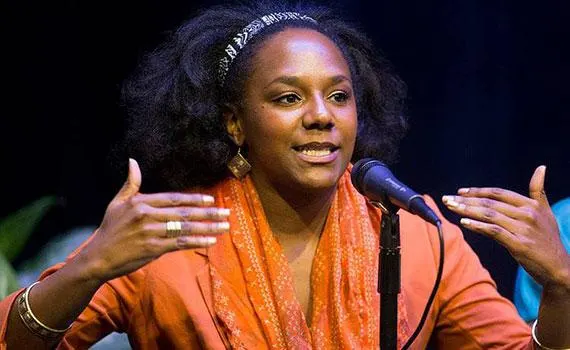
On June 27, 2015, ten days after a white supremacist murdered nine Black parishioners at Mother Emanuel AME Church in Charleston, South Carolina, Brittany “Bree” Newsome climbed a 30-foot flagpole at the South Carolina State House and took down the Confederate battle flag that had flown there since 1961. As she descended, she was arrested. Within two weeks, South Carolina permanently removed the flag. That single act of principled defiance made Bree Newsome one of the most recognized civil rights activists of her generation. She is also an award-winning filmmaker, writer, public speaker, and community organizer whose work spans art, faith, and racial justice. This complete Bree Newsome biography traces her journey from a Charlotte, North Carolina childhood to the national stage, and the life she has built since. Born May 13, 1985, her story is still very much being written.
Quick Facts About Bree Newsome
| Detail | Information |
| Full Name | Brittany Ann Newsome Bass |
| Date of Birth | May 13, 1985 |
| Birthplace | Charlotte, North Carolina, USA |
| Nationality | American |
| Height | Approx. 5’4″ (not publicly confirmed) |
| Education | BFA, Film & Television, NYU Tisch School of the Arts |
| Occupation | Filmmaker, Activist, Writer, Public Speaker |
| Spouse / Partner | Marcus Bass (married October 2018) |
| Children | Not publicly disclosed |
| Estimated Net Worth (2026) | ~$1 million |
| Known For | Removing the Confederate flag from the SC State House, 2015 |
Early Life and Background
Brittany Ann Newsome was born on May 13, 1985, in Charlotte, North Carolina, a city that sits at the intersection of the American South’s complicated racial history and its modern progressive ambitions. She grew up in a household where faith, scholarship, and Black history were the air everyone breathed.
Her father, Dr. Clarence Newsome, served as Dean of Howard University’s School of Divinity and is a nationally respected scholar in African American religious history. Her mother was an educator. It was not a passive home, it was a household of purpose, and Bree absorbed that from childhood.
The family later relocated to Columbia, Maryland, where Bree came of age in a more suburban but still racially conscious environment. She showed artistic gifts early: she wrote her first play at age nine and went on to create a short-animated film in high school that won her a college scholarship. Her creative voice and her moral imagination were inseparable from the start.
By her teenage years, her talents were already drawing national attention. In 2003, YM Magazine named her one of its “20 Coolest Girls in America”, a light-hearted milestone that nonetheless signalled she was someone to watch.
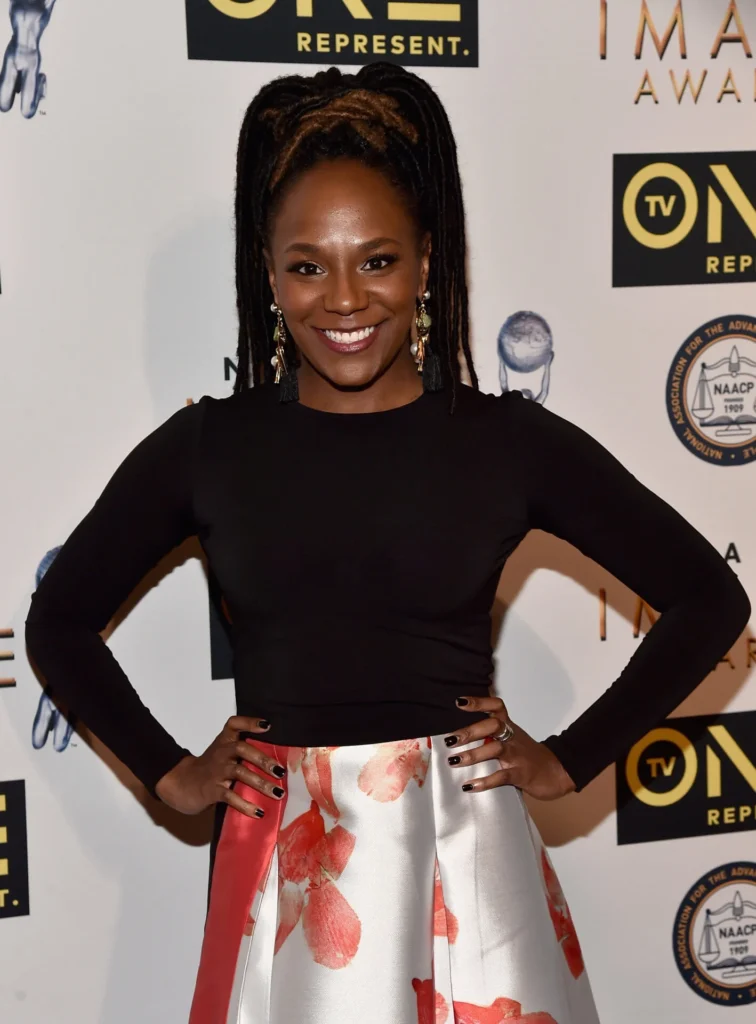
Career Beginnings
Bree’s creative gifts took her to New York University’s Tisch School of the Arts, one of the most competitive film and television programs in the country. She earned her BFA in Film and Television there, graduating as part of a generation of young Black artists who understood that storytelling was itself a form of civic power.
Her short film “Wake” was no student project curiosity, it was a fully realized work that announced her arrival. “Wake” won the Outstanding Independent Short Film award at the Black Reel Awards (2012) and took home Best Short Film at the BET Urban World Film Festival.
The themes she explored, identity, survival, spiritual endurance, were not accidental. Art and activism had been woven together in Bree’s DNA long before she ever set foot on a flagpole. She was not interested in art for its own sake; she was interested in art that meant something.
Early in her career, she also began engaging directly in North Carolina’s escalating political battles. In 2013, she was among the activists participating in the Moral Monday movement, a series of weekly protests against the state legislature’s rollback of voting rights, Medicaid expansion, and unemployment benefits. She was arrested that year while protesting voter ID laws, her first arrest, and not her last.
Major Career Highlights
The Confederate Flag Removal, June 27, 2015
No moment in Bree Newsome’s life has been larger, or more consequential, than what happened on the morning of June 27, 2015.
Ten days earlier, a 21-year-old white supremacist had entered Mother Emanuel AME Church in Charleston, South Carolina, and murdered nine Black parishioners during a Bible study session. The nation was convulsed in grief. And yet the Confederate battle flag, a symbol of white supremacy and segregationist resistance, continued to fly over the South Carolina State House grounds, as it had since 1961.
Bree had had enough.
She coordinated with a team of 11 activists, some of whom acted as spotters and others as witnesses, to execute a precise act of civil disobedience. Dressed in climbing gear, she scaled the 30-foot metal flagpole as police watched and approached.
As officers arrived, she called out:
“You come against me with hatred, oppression, and violence. I come against you in the name of God. This flag comes down today!”
She recited Psalm 23 as she was handcuffed. The image of her descending the pole, flag in hand, rocketed around the world within hours.
The hashtag #FreeBree went viral immediately. A crowdfunding campaign raised $125,705 in bail money. Both Bree and a fellow activist, James Tyson, were charged with defacing a monument, charges that were later handled through a deferred prosecution agreement.
The political impact was swift and stunning. On July 10, 2015, thirteen days after Bree’s climb, the South Carolina legislature voted to permanently remove the Confederate flag from the State House grounds. Governor Nikki Haley signed the bill that same day.
The “Wake” Film (2012)
Released during her early post-NYU years, “Wake” was the film that established Bree as a serious creative voice. Its double honors at the Black Reel Awards and BET Urban World Film Festival put her in conversation with the best emerging Black filmmakers in the country.
The film explored themes of spiritual survival, a preview of the publicly faith-rooted activism she would become known for.
#StayStrong: A Love Song to Freedom Fighters (EP)
Bree has consistently used multiple creative forms to express her activism. She released the #StayStrong EP, a collection of original music she described as a love song to freedom fighters, people who persist in the face of systems designed to exhaust them. The project reflects her belief that sustaining movements requires art and joy, not just strategy.
Housing Rights Advocacy (2017–present)
Beginning in 2017, Bree expanded her organizing focus to include housing rights, fighting displacement, gentrification, and predatory landlord practices in North Carolina communities. This quieter, ground-level work is less viral than her 2015 act of courage, but it is equally central to who she is.
Bree Newsome as a Public Speaker
Bree Newsome is in significant demand as a speaker at universities, conferences, faith institutions, and racial equity organizations across the United States. She brings to the stage not just a dramatic personal story, but a sophisticated analytical framework for understanding American racism, its history, its symbols, and the cost of resistance.
Her core speaking topics include:
- The history and meaning of Confederate iconography in American public life
- Civil disobedience and principled direct action as tools of social change
- Black womanhood, faith, and resistance, the intersection of spiritual conviction and political courage
- The Charleston Massacre and its aftermath as a turning point in American racial politics
- Sustaining activists and movements against systemic exhaustion and burnout
- Media, storytelling, and the power of narrative in social movements
Who books Bree Newsome?
- University diversity, equity, and inclusion programs
- NAACP chapters and civil rights organizations
- Racial equity conferences and DEI summits
- Faith communities exploring social justice
- Black History Month programming at colleges and corporations
- Progressive political organizations and advocacy groups
Her presence on college campuses is particularly notable. She speaks directly to students who are grappling with questions of identity, responsibility, and civic courage, and she does so with both intellectual rigor and personal vulnerability.
Bree Newsome Net Worth 2026
Estimating Bree Newsome’s net worth requires acknowledging what is not publicly disclosed: she is a deliberately independent activist who does not operate within the kind of large non-profit or media infrastructure that generates large reported incomes.
That said, her income streams are real and multiple:
- Professional speaking fees at universities, conferences, and events
- Filmmaking and creative projects, including commissioned work and grants
- Writing and journalism, she has written for major publications and platforms
- Consulting and advocacy work with organizations advancing racial justice
- Crowdfunding and community support following her 2015 arrest
Based on these streams, her estimated net worth in 2026 is approximately $1 million. This is a reasonable estimate for a nationally prominent speaker and cultural figure, though Bree has never publicly commented on her personal finances.
What is notable is how she built this, not through institutional gatekeeping or corporate backing, but through independent action that generated its own cultural and economic gravity.
Personal Life
Bree Newsome married Marcus Bass in October 2018 in what friends and followers described as a celebration befitting two people who had devoted their lives to justice. Marcus is himself a committed activist and organizer, making theirs a partnership rooted in shared purpose as much as personal affection.
The couple is based in North Carolina, where Bree has deep roots and where much of her ongoing organizing work is centered.
Bree has been notably intentional about operating outside formal organizational structures. She has spoken publicly about the choice to remain independent, arguing that freedom from institutional constraints gives her greater political flexibility and allows her to speak and act without the compromises that organizational affiliations sometimes require.
Her Christian faith is not window dressing. It is the spine of her activism. She recited Psalm 23 descending the flagpole not as a performance, but as a genuine act of spiritual grounding. She has written and spoken extensively about how the Black church tradition, the tradition her father spent his career studying, informs her understanding of both suffering and resistance.
Bree Newsome Best Quotes
1. At the top of the flagpole, June 27, 2015:
“You come against me with hatred, oppression, and violence. I come against you in the name of God. This flag comes down today!”, Perhaps the most quoted words she has spoken; a declaration that reframed direct action as spiritual warfare against injustice.
2. On civil disobedience:
“We’re demanding that the law be applied equally, and sometimes that means breaking a law that isn’t being applied equally.”, Articulating the moral logic of principled lawbreaking in the tradition of Dr. King.
3. On the Confederate flag’s meaning:
“That flag is not heritage. It is hatred dressed up in history.”, A concise formulation that has been widely cited in discussions of Confederate monuments.
4. On being a Black woman activist:
“Black women have always been at the center of liberation movements, and we’ve always been asked to step back from credit. I’m not stepping back.”, Spoken at a 2018 university lecture, addressing the erasure of Black women from civil rights history.
5. On faith and activism:
“The church gave me the language of liberation long before I knew what to do with it.”, Reflecting on her father’s theological influence and the Black church tradition.
6. On sustaining movements:
“Burnout is the system’s most effective weapon. Joy and rest are revolutionary acts.”, From her #StayStrong project, addressing activist exhaustion.
7. On art and politics:
“Storytelling is not a soft skill. It is how people survive. It is how movements win.”, Spoken at a filmmaker panel, articulating her philosophy of art as resistance.
8. On the aftermath of the flag removal:
“The flag came down, and the work is not done. It was never about the flag.”, Cautioning against the mistake of treating symbolic victories as endpoints.
Frequently Asked Questions
Bree Newsome, full name Brittany Ann Newsome Bass, is an American activist, filmmaker, writer, and public speaker born on May 13, 1985, in Charlotte, North Carolina. She is best known for climbing a 30-foot flagpole at the South Carolina State House on June 27, 2015, and removing the Confederate battle flag. She holds a BFA from NYU’s Tisch School of the Arts and is married to activist Marcus Bass.
Bree Newsome took down the Confederate flag ten days after the Charleston Massacre of June 17, 2015, in which a white supremacist murdered nine Black parishioners at Mother Emanuel AME Church. The flag had flown at the South Carolina State House since 1961 as a symbol of segregationist defiance. Bree viewed its continued presence as a public endorsement of white supremacy and an act of disrespect to the murder victims and their families.
Bree Newsome and her fellow activist James Tyson were arrested and charged with defacing a monument, a misdemeanor under South Carolina law. A crowdfunding campaign raised over $125,000 for their bail. The case was later resolved through a deferred prosecution agreement, meaning the charges did not result in a conviction. Bree continued her activism, speaking, and filmmaking work without interruption.
Bree Newsome’s net worth is estimated at approximately $1 million as of 2026. Her income comes from professional speaking engagements, filmmaking projects, writing and journalism, and advocacy consulting. She operates as an independent activist outside of large institutional structures. She has never publicly disclosed her personal finances, so all estimates are based on industry norms for speakers and cultural figures of her prominence.
Bree Newsome speaks on racial justice, civil disobedience, Confederate iconography, Black womanhood, and faith-rooted resistance. She is frequently booked by universities, NAACP chapters, racial equity conferences, and corporate DEI programs. Her talks combine personal narrative, including the 2015 flag removal, with historical analysis, theological grounding, and practical reflections on sustaining long-term activist commitment without burning out.
Conclusion
The Bree Newsome biography is not just the story of one dramatic morning on a South Carolina flagpole. It is the story of a woman who grew up surrounded by scholarship, faith, and the long tradition of Black resistance, and who found her own way to carry that tradition forward. From award-winning films to street-level organizing, from viral acts of courage to the quieter work of housing rights advocacy, Bree Newsome has built a life defined by principled, creative action. She is one of the most important civil rights voices of her generation, and her story is still being written.
Leave a Reply