
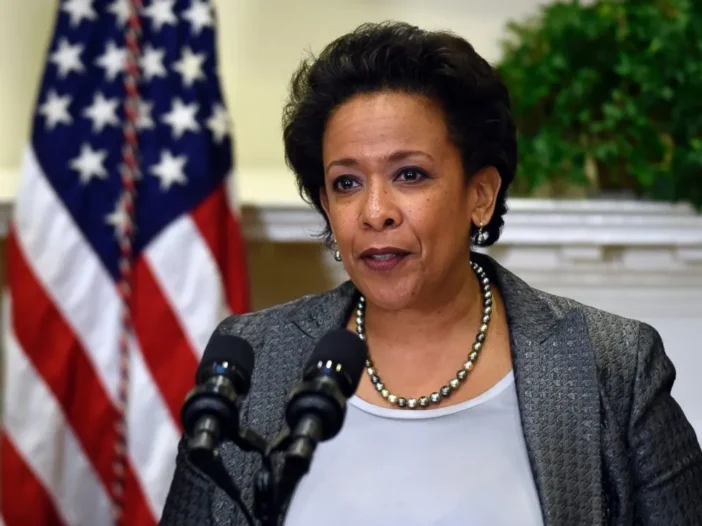
On April 23, 2015, Loretta Lynch made history. Confirmed by the United States Senate as the 83rd Attorney General, she became the first African American woman ever to serve as the nation’s top law enforcement officer, a milestone that reverberated far beyond the walls of the Department of Justice. Born May 21, 1959, in Greensboro, North Carolina, Lynch built her remarkable ascent through 25 years of disciplined, ground-breaking work as a federal prosecutor. This Loretta Lynch biography covers her early life, her path through Harvard, her landmark tenure under President Barack Obama, her influential post-government career, and why she remains one of the most sought-after voices in American law and public life today.
Quick Facts About Loretta Lynch
| Detail | Information |
| Date of Birth | May 21, 1959 |
| Birthplace | Greensboro, North Carolina |
| Nationality | American |
| Education | Harvard University (BA, English); Harvard Law School (JD) |
| Occupation | Attorney, Former US Attorney General, Public Speaker, Partner at Paul, Weiss |
| Net Worth | Estimated $7 million (2026) |
| Spouse/Partner | Stephen Hargrove |
| Children | None publicly reported |
Early Life and Background
Loretta Lynch grew up in Greensboro, North Carolina, a city that carries enormous weight in American civil rights history. Greensboro was the site of the famous 1960 Woolworth’s lunch counter sit-ins, where Black college students peacefully protested segregation and helped ignite a national movement.
Her father, Lorenzo Lynch, was a Baptist minister and a committed civil rights advocate. Growing up in his household, Loretta absorbed an early and deep sense of justice, community responsibility, and the power of moral conviction. Her mother, Lorine Lynch, was a school librarian who nurtured a love of reading and intellectual rigor.
From an early age, Lynch demonstrated exceptional academic ability. She earned a place at Harvard University, where she studied English literature and graduated with distinction. She remained in Cambridge for law school, completing her Juris Doctor at Harvard Law School, one of the most competitive law programs in the world.
Those formative years, growing up in a civil rights household, educated at America’s most prestigious university, would define the contours of a career built on institutional integrity and the rule of law.
Career Beginnings
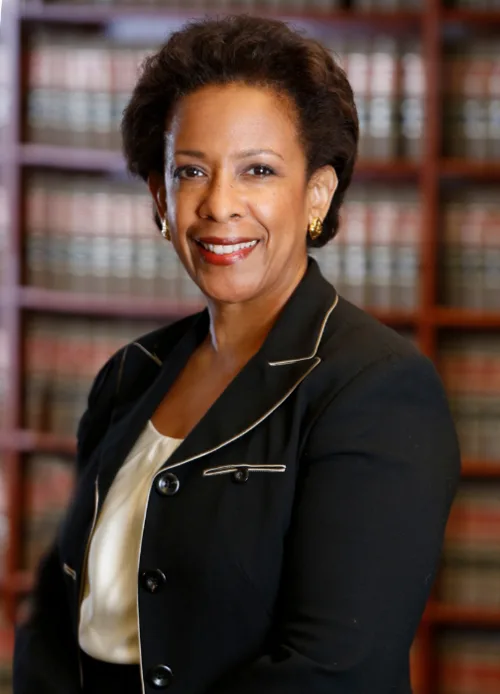
After graduating from Harvard Law School, Lynch moved to New York City and began her legal career in private practice at Cahill Gordon & Reindel, a prominent Wall Street firm. She quickly demonstrated a talent for complex litigation and a sharp legal mind.
Her calling, however, was public service. In 1990, Lynch joined the U.S. Attorney’s Office for the Eastern District of New York (EDNY) as an Assistant U.S. Attorney. The EDNY, which covers Brooklyn, Queens, Staten Island, and Long Island, is one of the most powerful and active federal prosecutor’s offices in the country.
Lynch thrived in that environment. She worked her way up through the office handling a range of serious federal matters, establishing a reputation as a methodical, unflappable, and exceptionally well-prepared trial lawyer. Colleagues consistently described her as someone who commanded a courtroom through preparation and precision, not theatrics.
Major Career Highlights
U.S. Attorney for the Eastern District of New York, First Appointment (1999–2001)
In 1999, President Bill Clinton appointed Lynch as the U.S. Attorney for the Eastern District of New York, making her the first African American woman to lead that office.
During her first tenure, she oversaw prosecutions involving:
- Organized crime and the dismantling of major criminal enterprises
- Public corruption cases involving elected officials
- Financial fraud and white-collar criminal networks
She served until 2001, when she returned to private practice following the change in administration.
U.S. Attorney for the Eastern District of New York, Second Appointment (2010–2015)
In 2010, President Barack Obama returned Lynch to the EDNY’s top post, a rare second appointment that signalled both her exceptional record and the administration’s trust in her judgment.
Her second tenure was marked by several landmark prosecutions:
- Terrorism financing cases, including the prosecution of individuals connected to international terror networks
- The FIFA corruption scandal, a massive international bribery investigation that brought down top officials of world soccer’s governing body
- Continued public corruption prosecutions targeting politicians and government contractors
By the time President Obama nominated her to lead the Department of Justice, she had compiled one of the most respected records in federal prosecution.
Attorney General of the United States (2015–2017)
Loretta Lynch was nominated by President Obama on November 8, 2014, to succeed Eric Holder as the 83rd Attorney General of the United States. Her confirmation process was lengthy, she waited 166 days for a Senate vote, the longest confirmation wait for an Attorney General in decades.
On April 23, 2015, the Senate confirmed her 56–43. She was sworn in and immediately became the highest-ranking African American woman in the history of the U.S. executive branch.
During her tenure at the Department of Justice, Lynch navigated some of the most turbulent law enforcement and civil rights issues of the era:
- Police accountability and reform: Lynch’s DOJ oversaw consent decrees with police departments in cities including Baltimore and Ferguson, Missouri, following high-profile police killings that sparked national protests.
- LGBTQ+ rights: The DOJ under Lynch took a firm legal position against North Carolina’s controversial HB2 “bathroom bill,” arguing it violated federal anti-discrimination laws.
- Criminal justice reform: Lynch advanced policies aimed at reducing mass incarceration and reforming federal sentencing guidelines.
- Cybersecurity and national security: She prioritized cybercrime prosecution and international cooperation on terrorism.
One of the most-discussed moments of her tenure was the June 2016 tarmac meeting in Phoenix, where Lynch briefly spoke with former President Bill Clinton at an airport, just days before a Justice Department decision about Hillary Clinton’s email server. Lynch acknowledged the meeting created the appearance of a conflict, publicly stating it was a mistake to have had the conversation, and recused herself from final decisions in the email investigation.
Lynch left office on January 20, 2017, with her reputation for legal integrity and institutional commitment intact.
Loretta Lynch as a Public Speaker
Since leaving government, Loretta Lynch has become one of the most respected and in-demand public speakers on the American conference circuit. She brings to the stage something most speakers cannot, the lived experience of holding one of the most powerful positions in U.S. government while navigating historic civil rights moments in real time.
Speaking Topics
Lynch speaks on a focused range of subjects that draw from her career and her convictions:
- Criminal justice reform, the systemic challenges, practical solutions, and the path forward
- Civil rights and the rule of law, what it means in contemporary America and who protects it
- Women in law and government, barriers, breakthroughs, and leadership lessons for the next generation
- Law enforcement accountability, balancing public safety with civil liberties
- Leadership under public pressure, how to make principled decisions when the stakes are highest
- Diversity, equity, and inclusion in the legal profession
Who Books Loretta Lynch?
Lynch’s audience spans a wide range of sectors:
- Law schools and universities, particularly for inaugural lectures, law review events, and diversity programming
- Legal conferences and bar associations, the American Bar Association, state bars, and specialized legal organizations
- Corporate governance events, Fortune 500 companies seeking credible voices on compliance, ethics, and DEI
- Civil rights and social justice organizations
- Government and policy conferences
She commands premium speaking fees, with estimates ranging from $50,000 to $100,000 per engagement, reflecting both her historical significance and the depth of expertise she brings.
Loretta Lynch Net Worth 2026
Loretta Lynch’s estimated net worth in 2026 is approximately $7 million, built across multiple income streams over a distinguished career.
Income sources include:
- Paul, Weiss, Rifkind, Wharton & Garrison partnership income: Lynch joined this elite New York law firm as a partner following her AG tenure. Paul, Weiss is consistently ranked among America’s top ten law firms, and partnership-level compensation at such firms typically runs into the high six to seven figures annually.
- Public speaking fees: At an estimated $50,000–$100,000 per appearance, even a modest schedule of engagements adds significant annual income.
- Government career: While federal salaries are far below private-sector equivalents, Lynch’s government career spanned decades, contributing to her financial foundation through salary and federal pension benefits.
- Board positions and advisory roles: Lynch has served in select advisory and board capacities since leaving office, adding additional income.
Her wealth profile is consistent with senior partners at major law firms who have also held significant government roles, comparable to peers like former Attorney General Eric Holder, who followed a similar public-to-private trajectory.
Personal Life
Loretta Lynch is married to Stephen Hargrove, a musician and music producer. The couple are based in New York City, which has been Lynch’s professional home since her days as a federal prosecutor in Brooklyn.
Lynch is known professionally for a set of characteristics that colleagues and observers describe consistently:
- Meticulous preparation, she is widely regarded as one of the most thoroughly prepared lawyers in any room she enters
- Calm under pressure, even during some of the most contentious moments of her AG tenure, Lynch maintained a measured, deliberate public presence
- Institutional loyalty, throughout her career, Lynch has expressed a deep belief in the role of law and government institutions in protecting civil rights and democratic norms
She was raised in a Baptist household, and her father’s ministry appears to have left a lasting imprint on her values, a sense of moral clarity and commitment to justice that has run through her career from beginning to present.
Lynch does not maintain a highly public personal social media presence, preferring to let her professional work and public appearances speak for themselves.
Loretta Lynch Best Quotes
On making history:
“I have always believed that if you do your job well and you do it right, the rest will take care of itself.” (Said during her Senate confirmation hearing, reflecting on her long wait for confirmation.)
On the role of the Justice Department:
“The Department of Justice is not just a law firm for the United States government. We represent the people of the United States.” (In her first major address as Attorney General, articulating the mission of her office.)
On civil rights and law enforcement:
“We must reject the false choice between public safety and the protection of civil rights. We can and we must have both.” (During remarks on police accountability reform in 2015.)
On women and the law:
“Young women today are not just entering the legal profession, they are redefining it. And that is exactly as it should be.” (At a Harvard Law School event on women in the legal profession.)
On her North Carolina roots:
“I grew up in a city that helped change America. That history never leaves you. It shapes everything you do.” (In a 2016 interview reflecting on Greensboro’s civil rights legacy.)
On leadership under pressure:
“The hardest decisions are the ones where the right answer is clear but the cost is high. That is when character reveals itself.” (At a corporate governance conference, on decision-making under scrutiny.)
On the rule of law:
“No one is above the law. That is not a political statement, it is the bedrock of who we are as a nation.” (Quoted widely during her tenure as Attorney General.)
On persistence:
“I did not get here quickly. I got here by doing the work, every case, every argument, every time.” (At an awards dinner honouring women in public service.)
Frequently Asked Questions
Loretta Lynch is an American attorney and public servant born on May 21, 1959, in Greensboro, North Carolina. She served as the 83rd Attorney General of the United States from 2015 to 2017 under President Barack Obama, becoming the first African American woman to hold that office. Before her AG role, she served twice as the U.S. Attorney for the Eastern District of New York and is now a partner at Paul, Weiss.
Yes. Loretta Lynch made history on April 23, 2015, when the U.S. Senate confirmed her as the 83rd Attorney General of the United States, making her the first African American woman ever to hold that title. She succeeded Eric Holder, himself the first African American to serve as Attorney General. Lynch’s confirmation came after a 166-day wait, the longest for any AG nominee in decades.
As of 2026, Loretta Lynch is a senior partner at Paul, Weiss, Rifkind, Wharton & Garrison, one of America’s most prestigious law firms. She remains active as a public speaker, appearing at legal conferences, universities, and corporate events on topics including criminal justice reform and civil rights. She also participates in advisory roles and public commentary on matters of law and policy.
Loretta Lynch’s estimated net worth is approximately $7 million as of 2026. Her wealth comes from her partnership at Paul, Weiss, where senior partners earn high six to seven figures annually, combined with public speaking fees estimated at $50,000–$100,000 per appearance, her federal government career, and advisory and board positions she has held since leaving the Department of Justice in 2017.
Loretta Lynch speaks primarily on criminal justice reform, civil rights and the rule of law, women in law and leadership, and law enforcement accountability. She also addresses leadership under public pressure and DEI in the legal profession. Her audiences include law schools, bar associations, Fortune 500 companies, and civil rights organizations.
Conclusion
Few figures in American legal and public life have a story as significant as the one traced in this Loretta Lynch biography. From a childhood in Greensboro steeped in civil rights history, through Harvard and decades of federal prosecution, to the historic confirmation that placed her name permanently in the record books, Lynch’s career represents the convergence of preparation, principle, and purpose. Today, as a top-tier law firm partner and commanding public speaker, she continues to shape conversations about justice, leadership, and equality in America.
Leave a Reply