
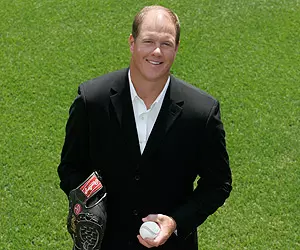
Born without a right hand on September 19, 1967, in Flint, Michigan, Jim Abbott became one of baseball’s most improbable and enduring success stories. He didn’t pitch his way through the minor leagues. He didn’t ease into the spotlight. He went straight from the University of Michigan to the California Angels, won a gold medal at the 1988 Seoul Olympics before ever playing a professional game, and then, on September 4, 1993, stood on the mound at Yankee Stadium and threw a complete-game no-hitter against the Cleveland Indians , one hand, one of baseball’s rarest achievements, one of sport’s greatest moments.
This complete Jim Abbott biography covers his childhood in Flint, the glove-switching technique he mastered as a boy, his extraordinary amateur career, his 10 seasons in Major League Baseball, his landmark no-hitter, his best-selling memoir, his life after baseball as one of America’s most sought-after motivational speakers, his net worth, and the philosophy of resilience that has made him a hero to millions of people far beyond the baseball diamond.
Quick Facts About Jim Abbott
| Detail | Information |
| Date of Birth | September 19, 1967 |
| Birthplace | Flint, Michigan, USA |
| Nationality | American |
| Height | 6’3″ (190 cm) |
| Estimated Net Worth | ~$6 million (2026 estimate) |
| Spouse | Dana Abbott (married 1991) |
| Children | 2 |
| Occupation | Former MLB Pitcher, Author, Public Speaker |
| Education | University of Michigan |
| Known For | One-handed MLB pitcher, 1993 Yankees no-hitter, Olympic gold medalist, motivational speaker |
Early Life , Growing Up Without a Right Hand
The story of Jim Abbott begins in Flint, Michigan, a rust-belt city that has always known something about resilience. He was born on September 19, 1967, with a condition called congenital amputation , his right arm ended at the wrist, with no hand present from birth.
What followed was not a story of tragedy overcome. It was a story of possibility decided.
His parents , Mike and Kathy Abbott , made a deliberate and consequential choice early in Jim’s life: they would not let his limb difference define the boundaries of his ambition. There would be no special treatment, no lowered expectations, no quiet steering away from the things that other kids did. If Jim wanted to play ball, Jim would play ball. And Jim absolutely wanted to play ball.
By the time he was a young boy in Flint, Abbott had taught himself one of the most technically demanding workarounds in the history of sports: the glove switch. The mechanics of it are deceptively elegant. He would pitch with his left hand , his only hand , holding his glove on the end of his right arm. The moment the ball left his fingertips, he would slip his left hand into the glove, ready to field. If a ball came back at him, he would catch it, tuck the glove under his right arm, transfer the ball to his left hand, and throw , all in a single fluid motion that he had drilled so many thousands of times it became as natural as breathing.
Opposing coaches sent batters to bunt against him repeatedly, convinced the glove switch would be his undoing. It rarely was.
At Flint Central High School, Abbott was not just an accommodation story , he was a genuine star. He excelled as a pitcher on the baseball team and as a quarterback on the football team, earning All-State recognition in baseball. College recruiters from programs across the country came to watch. He was not a curiosity. He was a prospect.
College and the 1988 Olympics
Abbott chose the University of Michigan one of the most storied college baseball programs in America, and proceeded to justify every bit of the recruitment attention he had received.
At Michigan, he became one of the most dominant college pitchers in the country , not despite his one hand, but through the same combination of natural talent, mechanical precision, and relentless work that had defined him since childhood. His college career included:
- A record of 26–8 across his Michigan career
- Leading the Wolverines to consistent postseason contention
- Earning Big Ten recognition as one of the conference’s premier arms
But the achievement that truly announced Jim Abbott to the country came before he ever threw a professional pitch. In 1987, he was selected for the USA Baseball national team, and in 1988, he traveled to Seoul, South Korea for the Summer Olympics , the first year baseball was featured as a demonstration sport.
Abbott started the gold medal game against Japan and pitched brilliantly, leading Team USA to a 5–3 victory and the Olympic gold medal. He was 21 years old. He had never played a game below the college level.
That same year, he won the James E. Sullivan Award , presented annually by the Amateur Athletic Union to the nation’s outstanding amateur athlete. Previous winners included icons like Carl Lewis, Mary Lou Retton, and Mark Spitz. Abbott became the first baseball player in the award’s history to win it.
He had announced himself as something more than a feel-good story. He was a genuine talent at the highest level of amateur competition.
MLB Career , Going Straight to the Show
Most pitchers, even elite prospects, spend years in the minor leagues , Single-A, Double-A, Triple-A , before earning a roster spot in the major leagues. Jim Abbott skipped all of it.
The California Angels selected him in the first round of the 1988 MLB Draft and made the bold decision to bring him directly to the major league roster. He made his MLB debut on April 8, 1989, and did not embarrass them. He went 12–12 in his rookie season with a 3.92 ERA , solid numbers for any young pitcher, extraordinary in context.
California Angels (1989–1992)
His best season with the Angels came in 1991, when he finished 18–11 with a 2.89 ERA , numbers that placed him among the better left-handed starters in the American League and earned him genuine Cy Young Award consideration. He was not a novelty act. He was a rotation anchor.
His Angels career demonstrated something important: Abbott was not surviving at the major league level. He was competing and, in his best years, thriving.
New York Yankees (1993–1994)
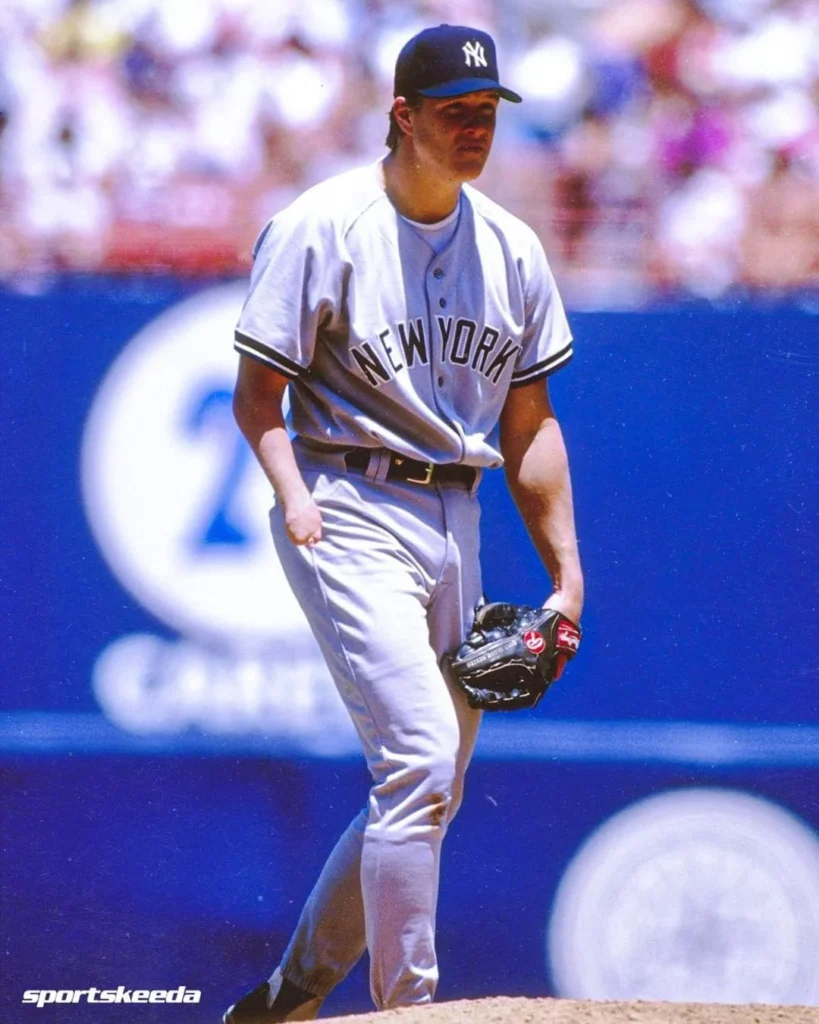
In December 1992, the Angels traded Abbott to the New York Yankees , the most scrutinized franchise in American sport, in the largest media market in the world. If there was any pressure in baseball to be applied to a young pitcher, New York provided it in abundance.
Abbott handled it. And then, on one September afternoon, he transcended it entirely.
Chicago White Sox and Milwaukee Brewers (1995–1999)
After his New York years, Abbott pitched for the Chicago White Sox, returned briefly to the California Angels, and finished his career with the Milwaukee Brewers. Injuries, particularly to his shoulder, diminished his effectiveness in his final seasons , a physical reality that catches nearly every pitcher eventually.
He retired following the 1999 season with a career record of 87 wins and 108 losses, a 4.25 ERA, and 888 strikeouts across 10 major league seasons. The numbers are those of a solid, durable major league starter. The story behind the numbers is unlike anything else in the history of the game.
The Yankees No-Hitter , September 4, 1993
There are no-hitters, and then there are moments that stop time. September 4, 1993 belongs to the second category.
On that Thursday afternoon at Yankee Stadium in the Bronx, Jim Abbott took the mound against the Cleveland Indians , a lineup that included Kenny Lofton, Albert Belle, and Manny Ramirez, among the most dangerous hitters in the American League.
For nine innings, not a single Indians batter reached base on a hit.
Abbott was not just surviving , he was dominant. He struck out three batters, induced ground balls and flyouts with mechanical precision, and navigated the middle innings , always the most dangerous for a no-hit bid , with the same calm that had defined him since his Flint childhood.
The final score was 4–0, New York Yankees. The final out came on a ground ball to shortstop. The crowd at Yankee Stadium rose in recognition of what they had just witnessed.
Consider the full weight of what happened that afternoon:
- A pitcher born without a right hand threw a complete-game no-hitter in the Bronx against a legitimate playoff contender
- He became just the fourth Yankees pitcher to that point to throw a no-hitter
- He did it in Year Five of a major league career that experts had questioned before it ever began
- He did it using a glove-switch technique he had invented as a boy in Flint, Michigan
No-hitters happen in baseball with some regularity. A one-handed pitcher’s no-hitter happened exactly once. It happened because of Jim Abbott.
Jim Abbott as a Public Speaker
After retiring from baseball, Jim Abbott found a second career that, in many ways, has extended his impact far beyond the sport.
He is today one of the most sought-after motivational and keynote speakers in the United States , regularly booked for events where organizations want a message of resilience, inclusion, and perseverance delivered by someone who has actually lived it.
He is the author of Imperfect: An Improbable Life (2012), a memoir co-written with Tim Brown that chronicles his journey from Flint to the major leagues with honesty, humor, and remarkable self-awareness. The book became a bestseller and remains one of the most compelling sports memoirs of its era.
Jim Abbott Speaking Topics
His most in-demand speaking topics include:
- Overcoming adversity , the philosophy of confronting limitation without being defined by it
- Disability, inclusion, and belonging , what organizations and teams can learn from the experience of people who have had to find creative solutions to real obstacles
- Resilience and persistence , how failure, setback, and public doubt can become the foundation of genuine achievement
- Defining yourself beyond your limitations , the choice to orient your identity toward capability rather than constraint
- The power of teamwork , lessons from a decade in professional baseball about what it actually means to compete alongside other people
- Mental performance under pressure , how Abbott maintained composure through some of baseball’s most scrutinized moments
He is regularly booked for:
- Corporate leadership and sales conferences , particularly those focused on culture, resilience, and performance under pressure
- Healthcare and disability awareness organizations , where his story carries deep personal resonance for patients, caregivers, and medical professionals
- College and university programs , athletic departments, leadership institutes, and STEM-focused campuses
- Youth sports organizations , where his message reaches young athletes navigating their own obstacles
His speaking style is characterized by warmth, self-deprecating humor, and an absolute refusal to frame his story as one of superhuman heroism. He is consistent in redirecting attention from what he lacked to what he chose , a distinction that lands with particular force in corporate and educational settings.
Jim Abbott Net Worth 2026
Jim Abbott’s estimated net worth is approximately $6 million as of 2026, accumulated across three distinct phases of his professional life.
The major contributors include:
- MLB career earnings (1989–1999): Across 10 major league seasons, Abbott earned competitive salaries that grew substantially during his Yankees years , the highest-profile and highest-paying period of his career. His peak annual salary with the Yankees is estimated at approximately $2.35 million per season (1993 dollars), with total career baseball earnings estimated in the range of $10–12 million pre-tax over the full decade.
- Book royalties: Imperfect: An Improbable Life (2012) was a commercial and critical success, generating meaningful royalty income and sustaining sales through the sports memoir market for more than a decade.
- Speaking fees: As one of America’s most recognizable disability and resilience speakers, Abbott commands estimated fees of $30,000–$75,000 per engagement, with consistent corporate and institutional bookings.
- Endorsements and media appearances: Throughout his playing career and in retirement, occasional brand partnerships and broadcast media appearances have contributed supplementary income.
The $6 million estimate reflects both his career earnings and the natural attrition of living expenses, taxes, and the passage of time since his peak playing years , a realistic, grounded figure for an athlete of his era and caliber.
Personal Life
Jim Abbott has been married to Dana Abbott since 1991 , a partnership that has spanned his entire major league career and the decades of public life that followed. They have twochildren and are based in Michigan, maintaining a deliberate connection to the Midwest roots that shaped him.
In an era of athlete celebrity culture, Abbott has consistently chosen a different path. He is famously humble , almost to the point of deflection , when it comes to his own achievements. In dozens of interviews over three decades, he has returned again and again to the same theme: that the real story of his life is not about his hand but about his parents’ refusal to limit him, his coaches’ willingness to trust him, and his teammates’ decision to see a pitcher rather than a disability.
That consistency of character , the same man off the mound that he appeared to be on it , is perhaps the most remarkable thing about the full arc of the Jim Abbott biography.
He reads widely, engages actively with disability advocacy communities, and maintains relationships with youth baseball programs in Michigan. He is, by all accounts, exactly what he appears to be.
Jim Abbott Best Quotes
These are some of the most powerful and widely cited words from Jim Abbott , on disability, baseball, determination, and the choice to define yourself on your own terms:
On his disability:
“I never thought of myself as a one-handed pitcher. I thought of myself as a pitcher. The hand was just part of the deal.”
On his parents:
“My parents gave me the most important thing anyone can give a child , they refused to feel sorry for me.”
On the no-hitter:
“I don’t know that I’ve ever been more locked in. That day, everything just clicked , and I didn’t let myself think about what it might mean until the last out.”
On adversity:
“Everybody has something. Mine happened to be visible. The question isn’t whether you have a limitation , it’s what you decide to do with it.”
On failure:
“There were plenty of games I lost. Plenty of days I got shelled. Those days taught me more than the no-hitter ever could.”
On the glove switch:
“I practiced it so many times as a kid that it stopped being a workaround. It just became how I played baseball.”
On resilience:
“Resilience isn’t a gift. It’s a decision you make, over and over, to keep showing up.”
On what baseball taught him:
“Baseball is relentless. It will find every weakness you have. And if you stay long enough, it will make you better for it.”
Frequently Asked Questions
Yes. Jim Abbott was born with congenital amputation , his right arm ends at the wrist, with no hand present from birth. He developed a signature glove-switching technique as a child that allowed him to pitch with his left hand, quickly transfer the glove, and field balls. He never wore a prosthetic during games. He pitched 10 seasons in Major League Baseball using this technique.
Jim Abbott’s estimated net worth is approximately $6 million as of 2026. His wealth derives from 10 seasons of MLB earnings , including a peak salary of approximately $2.35 million per season with the New York Yankees , royalties from his memoir Imperfect: An Improbable Life, and speaking fees estimated at $30,000–$75,000 per engagement as one of America’s most in-demand motivational speakers.
Yes , and it stands as one of the most remarkable achievements in baseball history. On September 4, 1993, pitching for the New York Yankees, Jim Abbott threw a complete-game no-hitter against the Cleveland Indians at Yankee Stadium, winning 4–0. He struck out three batters and held one of the American League’s most dangerous lineups hitless across all nine innings. He did it with one hand.
Jim Abbott is one of America’s most sought-after motivational speakers, delivering keynotes on overcoming adversity, disability and inclusion, resilience and persistence, performance under pressure, and defining yourself beyond your limitations. He is regularly booked for corporate conferences, healthcare organizations, disability awareness programs, and university events. His speaking fees are estimated at $30,000–$75,000 per engagement depending on event type and scope.
Jim Abbott remains highly active as a motivational speaker and author, continuing to draw on his baseball career and personal story to inspire audiences across the country. He is involved with youth baseball programs and disability advocacy in Michigan, where he is based with his family. He periodically appears on baseball broadcasts and in documentary features commemorating significant anniversaries of his career, including the 1993 no-hitter.
Conclusion
The Jim Abbott biography is one of the purest expressions of human will that American sport has ever produced. From the backfields of Flint to the mound at Yankee Stadium, from an Olympic gold medal to a no-hitter that no one who saw it will ever forget, Abbott built a career on the radical proposition that limitation is a fact but destiny is a choice. He did it with one hand, enormous talent, and a character as steady as his curveball. Long after the final strikeout, he continues to inspire , now from the stage, where his story reaches audiences who never watched him pitch but who need, just as urgently, to hear what he has to say.
Leave a Reply