
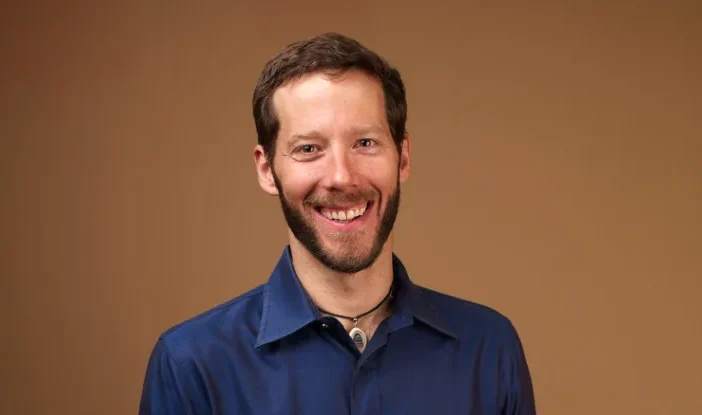
He cut off his own arm with a dull two-inch pocketknife, and then rappelled a 65-foot cliff and hiked seven miles to safety. That single sentence captures why the Aron Ralston biography is one of the most extraordinary survival stories in human history.
On April 26, 2003, a solo hiker in Utah’s remote Bluejohn Canyon became trapped beneath an 800-pound boulder for 127 hours, over five days, with virtually no water, no food, and no way to call for help. His survival, his subsequent bestselling book Between a Rock and a Hard Place, the Academy Award-nominated film 127 Hours, and his career as one of the world’s most sought-after motivational speakers make this a life unlike any other.
Quick Facts About Aron Ralston
| Detail | Information |
| Full Name | Aron Lee Ralston |
| Date of Birth | October 27, 1975 |
| Age (2026) | 50 years old |
| Birthplace | Marion, Ohio, USA |
| Nationality | American |
| Height | 6 feet 1 inch (185 cm) |
| Net Worth (2026) | ~$4 million (estimated) |
| Former Spouse | Jessica Trusty (married 2009, divorced 2012) |
| Children | Two, son Leo Ralston (b. 2010); daughter with Vita Shannon (b. 2012) |
| Occupation | Motivational Speaker, Author, Mountaineer, Former Mechanical Engineer |
| Known For | Between a Rock and a Hard Place (2004); Film 127 Hours (2010) |
Early Life and Background
Aron Lee Ralston was born on October 27, 1975, in Marion, Ohio, to Larry and Donna Ralston. When Aron was 12 years old, his family relocated to Denver, Colorado, a move that would change the trajectory of his life. Denver’s proximity to the Rockies placed him in nature’s backyard at a formative age, and he quickly took to skiing, backpacking, and mountain exploration.
He attended Cherry Creek High School in Denver, where he developed into a well-rounded student athlete. His parents fostered a deep love for the outdoors, taking the family on regular trips to national parks. That early exposure to wild places planted a seed in Aron that corporate life would never fully suppress.
After high school, Ralston enrolled at Carnegie Mellon University in Pittsburgh, one of the most rigorous engineering schools in the country. He double-majored in Mechanical Engineering and French and minored in piano, graduating in 1997 with a B.S. in both fields. At Carnegie Mellon, he was a resident assistant, studied abroad, and worked summers as a rafting guide, his first paid adventure job.
Career Beginnings
After graduating, Ralston took a position as a mechanical engineer with Intel, working at facilities in Chandler, Tacoma, and Albuquerque over five years. He was good at the work. He was also, quietly, going stir-crazy.
While employed at Intel, Aron spent every available weekend building his mountaineering skills, training in the Colorado Rockies with increasing intensity. He set an ambitious personal goal: become the first person to solo-climb all 59 of Colorado’s “fourteeners”, peaks exceeding 14,000 feet, alone, during winter conditions. It was an objective that had never been accomplished and would take years of preparation.
In 2002, Ralston made the leap. He resigned from Intel, moved to Aspen, Colorado, and took a part-time job at a mountain gear shop while dedicating his life to climbing. By early 2003, he was approximately three-quarters of the way through his fourteeners project. He was also developing the habit of solo hiking without leaving an itinerary, a decision that nearly killed him.
Major Career Highlights
The Accident: Bluejohn Canyon, April 26, 2003
On April 26, 2003, Aron Ralston descended alone into Bluejohn Canyon, a narrow slot canyon in eastern Wayne County, Utah, just south of the Horseshoe Canyon unit of Canyonlands National Park. He had told no one where he was going.
During his descent, an 800-pound suspended boulder dislodged. It smashed his left hand first, then crushed his right hand, pinning it against the canyon wall. He was alone, in a slot canyon so narrow that rescue workers couldn’t easily enter, with approximately 350 ml of water (about 12 ounces), and two burritos.
The next five days unfolded like this:
- Days 1–3: Repeated attempts to lift, chip, or rig the boulder. All failed. He rationed his water knowing it would run out.
- Day 4: He realized the only way out was through the bone. His cheap multi-tool’s 2-inch blade couldn’t cut through it. He carved his name, date of birth, and presumed death date into the sandstone wall.
- Day 5: He ran out of food and water entirely. He began drinking his own urine. He recorded farewell videos to his family on a small camera.
- Night of Day 5: Convinced he would die before dawn, Ralston began to hallucinate. He saw a vision of himself, one-armed, playing with a small blond-haired boy on a living room floor. He interpreted it as a vision of his future son. That vision saved his life.
- Day 6, Dawn, May 1, 2003: Ralston woke to find his trapped arm had begun to decompose from lack of circulation. He experienced what he later described as an epiphany: he could break his radius and ulna using torque against the boulder, then cut through the severed bone.
At dawn on May 1, 2003, he applied torque, snapped both bones in his right forearm, then used the dull 2-inch blade and a pair of pliers for the tougher tendons. He used tubing from his CamelBak hydration pack as a tourniquet. The amputation took approximately one hour.
He then rigged an anchor, rappelled 65 feet down the canyon wall, and hiked approximately 7 miles through the desert heat before encountering a Dutch family, Marius and Monique Doets and their son Andy, who provided water and called for rescue. A helicopter arrived shortly after. He was severely dehydrated, had lost 25% of his body weight, and had nearly fatal blood loss, but he was alive.
His severed hand and forearm remained trapped under the boulder. It took 13 men, a winch, and a hydraulic jack to eventually move the rock and retrieve the remains, which were cremated and returned to Ralston.
Between a Rock and a Hard Place, The Book (2004)
In 2004, Ralston published his autobiography, Between a Rock and a Hard Place, through publisher Atria Books (Simon & Schuster). The book became a New York Times bestseller and detailed not only the five days in the canyon but his entire life, from childhood in Ohio to his Intel years, his Colorado climbing mission, and the spiritual dimensions of what he experienced during entrapment.
The book has sold millions of copies worldwide and remains in print more than two decades after its release. It is used in business schools and leadership programs as a case study in decision-making under extreme stress.
127 Hours, The Film (2010)
In 2010, director Danny Boyle, fresh off his Slumdog Millionaire Oscar win, adapted Ralston’s memoir into 127 Hours, starring James Franco as Aron Ralston. The film earned six Academy Award nominations, including Best Picture and Best Actor for Franco.
The film grossed over $60 million worldwide on a modest budget, introduced Ralston’s story to a global audience of millions who had never read the book, and cemented his place in popular culture. The amputation sequence remains one of the most viscerally intense scenes in modern cinema.
The film’s release dramatically expanded Ralston’s speaking career, book sales, and media profile, establishing the financial foundation he continues to draw from today.
The Fourteeners Achievement (2005)
In 2005, two years after surviving the canyon, Ralston completed what he had set out to do before the accident: he became the first person to solo-climb all 59 of Colorado’s fourteeners in winter conditions.
It was an achievement that, in isolation, would have made him legendary in mountaineering circles. Given what came before it, it was an almost incomprehensible act of physical and psychological determination.
Prosthetic Arm Design and Return to Climbing
Following the amputation, Ralston worked with engineers and prosthetists, drawing on his own mechanical engineering background, to help design specialized prosthetic arms tailored to mountaineering. He helped create attachments including an ice axe prosthetic for high-altitude winter climbing.
Rather than retreating from the outdoors after losing his right hand and forearm, Ralston returned to elite mountaineering with a determination that stunned the adventure community. He has completed numerous challenging climbs and outdoor expeditions since the accident, including backcountry skiing in Colorado. His prosthetic arm, and the story behind it, became a powerful symbol of the idea that limitation, properly reframed, is an entry point to possibility.
Television and Media Appearances
Ralston’s story has reached audiences through an extensive list of media appearances, including:
- Tom Brokaw, NBC News documentary, Survivor: The Aron Ralston Story
- David Letterman, The Late Show
- Jay Leno, The Tonight Show
- Good Morning America and The Today Show
- GQ Magazine, named one of the “Men of the Year”
- The Simpsons, cameo in “Treehouse of Horror XXII” (2011)
- Minute to Win It (NBC, 2011), won $125,000 for the Wilderness Workshop charity
- Miller Lite’s “Man Laws” campaign (2006)
- Tosh.0, featured segment on Comedy Central
Aron Ralston as a Public Speaker
Today, Aron Ralston is one of the most booked motivational speakers in the world, having delivered his presentation to over 500 organizations across more than 30 countries. He commands a domestic speaking fee of approximately $25,000 per engagement, rising to $37,000 for international events.
His speaking presentation takes audiences on a first-person, visceral journey through the canyon, using footage from his own video camera, footage from 127 Hours, and his own account of the decision to amputate, and then guides them through the philosophy he has extracted from that experience.
His core speaking themes include:
- Adversity as opportunity, reframing catastrophic setbacks as the entry point to a transformed life
- Decision-making under extreme pressure, how to act when all options are bad
- The power of human will, what the body and mind can endure when survival is at stake
- Gratitude and presence, living fully in each moment rather than projecting into fear
- Mental health and resilience, particularly relevant to trauma survivors and first responders
Who books Aron Ralston:
- Fortune 500 corporations seeking leadership and resilience content
- Healthcare organizations and hospitals dealing with medical adversity
- Military organizations and first responder training programs
- Universities and college campuses, his most frequent venue type
- Cancer foundations, disability advocacy groups, and mental health organizations
Attendees have credited his presentation with pulling them back from suicidal ideation, helping them through cancer diagnoses, and reorienting their approach to personal loss. He has received standing ovations from virtually every group he has addressed, and the industry testimonials for his work are among the highest-rated in the professional speaking circuit.
Aron Ralston Net Worth 2026
Aron Ralston’s estimated net worth in 2026 is approximately $4 million, built over two decades of work across speaking, publishing, film, and entrepreneurial ventures.
His income streams include:
- Motivational speaking, fees ranging from $25,000 (domestic) to $37,000 (international) per engagement, with hundreds of events delivered to date
- Book sales and royalties, Between a Rock and a Hard Place has sold millions of copies globally and continues to generate steady royalties
- Film rights and royalties, 127 Hours grossed $60+ million worldwide and continues to generate licensing revenue through streaming platforms
- Endorsements and sponsorships, outdoor gear companies, adventure sports brands, and equipment manufacturers
- Real estate investments, properties in Colorado and Utah
- Media appearances, recurring TV, podcast, and documentary fees
- Philanthropy, Ralston has donated portions of his income to organizations including the Wilderness Workshop and outdoor accessibility initiatives
His wealth is modest relative to entertainment celebrities, but significant given the niche nature of his fame. He has expressed publicly that he prioritizes living meaningfully over accumulating wealth, consistent with the philosophy the canyon experience crystallized in him.
Personal Life
Aron Ralston’s personal life has been as turbulent as his professional one is inspiring. In August 2009, he married Jessica Trusty in a ceremony that drew significant media attention. Their son, Leo Ralston, was born in February 2010, fulfilling, in one of the most eerie ways imaginable, the vision of the little boy Ralston had hallucinated while dying in the canyon seven years earlier. The marriage ended in divorce in early 2012.
Ralston later entered a relationship with Vita Shannon, with whom he had a daughter in 2012. In December 2013, both Ralston and Shannon faced domestic violence charges stemming from an altercation at their residence in Colorado. Charges against Ralston were subsequently dropped; charges against Shannon were dismissed after Ralston did not appear at a court hearing.
As of 2026, Ralston has spoken publicly about having two children and describes fatherhood as the most transformative dimension of his life post-canyon. In recent podcast appearances, he has said he now measures his victories in moments of connection with his children, not in summits conquered.
He currently lives in Aspen, Colorado, surrounded by the mountains that have defined his life. He continues to ski, climb, and pursue outdoor adventures. His prosthetic arm has become famous in its own right, he helped design attachments including a custom mountaineering ice axe mount, and he has spoken extensively about the process of adaptation and acceptance that came with it.
Ralston has been candid about the darker chapters of his post-survival years. He has acknowledged losing friends to suicide in the mid-2000s, experiencing depression after a breakup in 2006, and grappling with a dangerous sense of invincibility that replaced the humility one might expect from someone who nearly died. He has since reoriented toward mental health advocacy, speaking openly about trauma processing and the long arc of healing.
His philosophy, refined over two decades, is summarized in the phrase he uses to close most speeches: “May your boulders be your blessings.”
Aron Ralston Best Quotes
His most famous mantra:
“May your boulders be your blessings. May you be able to embrace them.”, The closing line of virtually every speaking engagement, his signature distillation of everything the canyon taught him.
On choice and response:
“We don’t get to control what happens to us, we get to choose how we respond.”, From a 2025 podcast appearance, describing two decades of post-trauma wisdom compressed into a single sentence.
On gratitude and despair:
“You cannot simultaneously hold profound despair and profound gratitude in your heart at the same time.”, Ralston’s practical philosophy for navigating life’s hardest moments, offered to audiences worldwide.
On the vision of his future son:
“This experience, this out-of-body experience, this vision, this premonition of my interaction with what would be my future son, showed me that I was not going to die in the canyon.”, From his Joy Trip Project interview, describing the hallucination that gave him the will to survive.
On his camera as a lifeline:
“It’s like this lifeline to the outer world, to other living beings, to love. That’s what kept me alive.”, Describing the small video camera he used to record farewell messages during his five days trapped.
On leaving Intel:
“It felt like I was wearing an ill-fitted suit that just wasn’t for me.”, Describing why he quit his engineering career at Intel in 2002 to pursue climbing full-time.
On what the boulder actually gave him:
“The boulder didn’t take my arm, it gave me everything else.”, The title of a major podcast appearance in 2025, and perhaps his most profound reframe of the canyon experience.
On fatherhood and victory: As he approaches 50, Ralston has said his definition of winning has completely changed, from conquering summits to moments of presence and connection with his children. The boy he saw in his canyon hallucination became his son Leo. That, he has said, is the most astonishing fact of his entire life.
Frequently Asked Questions
On April 26, 2003, an 800-pound boulder pinned Aron Ralston’s right hand against the wall of Bluejohn Canyon in Utah. After 127 hours (five days) trapped without food or water, he broke both bones in his forearm using torque against the rock, then cut through the flesh and tendons with a dull 2-inch pocketknife. He used his CamelBak tubing as a tourniquet. His severed arm was later cremated and returned to him.
Aron Ralston’s book, Between a Rock and a Hard Place (published 2004, Atria Books/Simon & Schuster), is a first-person memoir of his five days trapped in Bluejohn Canyon, Utah. It covers his life before the accident, growing up in Ohio and Colorado, studying at Carnegie Mellon, working at Intel, and pursuing mountaineering, as well as his hour-by-hour account of the canyon ordeal, amputation, rescue, and its aftermath.
Yes, Aron Ralston is alive and active as of 2026. Now 50 years old, he lives in Aspen, Colorado, and continues working as a motivational speaker, commanding fees of $25,000–$37,000 per engagement. He still climbs and skis using a custom prosthetic arm he helped design. He has two children and has spoken extensively in recent years about fatherhood, mental health, and what it means to live fully after surviving the unsurvivable.
James Franco portrayed Aron Ralston in the 2010 film 127 Hours, directed by Danny Boyle. The film earned six Academy Award nominations, including Best Picture and Best Actor for Franco. It grossed over $60 million worldwide. The film closely follows Ralston’s memoir Between a Rock and a Hard Place and was made with Ralston’s direct involvement and cooperation.
Aron Ralston’s estimated net worth in 2026 is approximately $4 million. His wealth comes from motivational speaking fees ($25,000–$37,000 per event), book royalties from Between a Rock and a Hard Place (millions of copies sold), film royalties and licensing from 127 Hours ($60M+ box office), endorsements from outdoor brands, and real estate investments in Colorado and Utah.
Conclusion
The Aron Ralston biography is, at its core, a story about what human beings are capable of when they have no choice. From a mechanical engineer in Ohio to a man who snapped his own bones in a Utah desert, rappelled a cliff on one arm, and hiked to safety, and then rebuilt his entire life around that experience, Ralston’s journey is without parallel.
His book, his arm, his film, his family, his speaking career, and his evolving philosophy of gratitude have made him one of the most impactful voices on resilience anywhere in the world. At 50 years old, with two children, a mountain to ski, and five hundred standing ovations in his wake, Aron Ralston is proof that boulders, given time, can become blessings.
Leave a Reply