
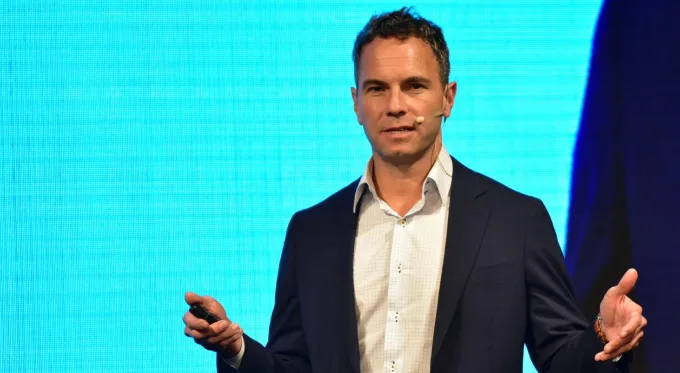
In 2000, Chris Barton had an idea that would change the way humans interact with music forever: what if your phone could identify any song it heard? That single question led him to co-found Shazam, the music recognition app that Apple acquired for approximately $400 million in 2018 and that is now used by hundreds of millions of people every single month. Born in Australia and educated at two of the world’s most prestigious institutions, UC Berkeley and Harvard Business School, Barton is one of Silicon Valley’s most celebrated entrepreneur-executives. This Chris Barton biography covers his early life, the founding of Shazam, his career at Google, his life as an author and speaker, his net worth, and the values that have shaped one of tech’s most quietly influential careers.
Quick Facts About Chris Barton
| Detail | Information |
| Nationality | Australian-American |
| Education | UC Berkeley (BA), Harvard Business School (MBA) |
| Known For | Co-founding Shazam |
| Other Roles | Google Director (former), Serial Entrepreneur, Author, Speaker |
| Notable Work | Can’t Stop Won’t Stop (children’s book) |
| Occupation | Entrepreneur, Advisor, Public Speaker, Author |
| Based In | San Francisco Bay Area, USA |
| Estimated Net Worth | $20 million+ (estimated) |
Early Life and Background: Australia to UC Berkeley
Chris Barton was born and raised in Australia, where he developed the intellectual curiosity and tenacity that would later define his entrepreneurial career. Growing up in a country far removed from the epicenter of global tech, Barton cultivated a sense of ambition that pushed him to look beyond his immediate surroundings.
He pursued his undergraduate education at the University of California, Berkeley, one of the most academically rigorous public universities in the world and a school with deep ties to Silicon Valley’s startup ecosystem. Berkeley gave Barton access not just to world-class faculty but to a culture of innovation, interdisciplinary thinking, and technical problem-solving.
After Berkeley, Barton took the next logical step for someone with global ambitions: he enrolled at Harvard Business School, earning his MBA. Harvard’s network, its case-study method, and its emphasis on entrepreneurial leadership helped Barton build the strategic toolkit he would need to turn a radical idea into a company worth hundreds of millions of dollars.
It was this combination, Australian grit, Berkeley’s technical culture, and Harvard’s business acumen, that positioned Barton perfectly for what came next.
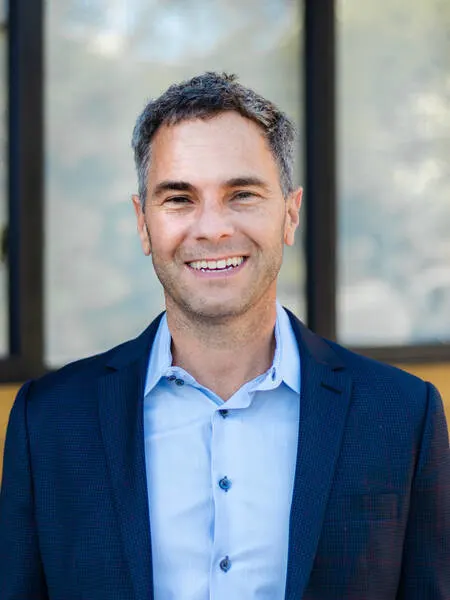
Co-Founding Shazam (2000): Before Smartphones, Before Apps, Before Streaming
The year was 2000. There were no smartphones. There was no App Store. Spotify was still eight years away. And yet, Chris Barton and three co-founders, Philip Inghelbrecht, Avery Wang, and Dhiraj Mukherjee, looked at the world and asked a question nobody else had commercially solved: what if a phone could tell you what song was playing?
The original Shazam product was elegantly simple and almost absurdly ahead of its time. A user would dial 2580 from any mobile phone, hold it near a speaker or audio source, and within seconds receive a text message with the song’s title and artist. No app. No internet connection. Just a phone call, an audio sample, and a database of music fingerprints.
The core technology was built around a music fingerprinting algorithm developed by co-founder Avery Wang, a PhD from Stanford, that could match a short audio clip against millions of songs even in noisy environments. It was, for its time, genuinely magical.
Shazam officially launched as a consumer service in the United Kingdom in 2002, initially operating as a premium SMS service. The company’s fortunes transformed dramatically when Apple’s App Store launched in 2008, making Shazam one of the original App Store applications and catapulting it into mainstream global adoption.
Key Shazam milestones:
- 2000, Company founded in London by Barton, Inghelbrecht, Wang, and Mukherjee
- 2002, UK consumer launch via the 2580 dial-in service
- 2008, Launch on the Apple App Store; rapid global growth begins
- 2014, Shazam reaches 500 million users worldwide
- 2018, Apple acquires Shazam for approximately $400 million
The Apple acquisition cemented Shazam’s status as one of the defining consumer technology stories of the smartphone era, and validated the extraordinary foresight of its founding team.
Chris Barton’s Career at Google: Director in the Android Era
After his founding chapter at Shazam, Chris Barton joined Google as a Director, where he worked on business development in areas including Android and Google’s broader developer ecosystem.
His tenure at Google placed him at the center of the mobile revolution he had helped ignite with Shazam. Android was rapidly becoming the world’s dominant mobile operating system, and Barton’s deep understanding of mobile consumer behavior, earned firsthand through Shazam’s global growth, made him a valuable strategic voice inside one of the world’s most powerful technology companies.
Working at Google gave Barton a view from the inside of how a company at massive scale operates, innovates, and expands into new markets. It added a corporate chapter to a career defined by entrepreneurial firsts, rounding out his perspective in ways that continue to inform his speaking and advisory work today.
Serial Entrepreneur, Advisor, and Author: Life After Google
Chris Barton has never been content to rest on a single achievement. Following his time at Google, he continued to engage with the startup and venture ecosystem as an entrepreneur and advisor, bringing his pattern recognition, built across founding, scaling, and navigating an acquisition, to early-stage companies and growth-stage teams.
He is also the author of Can’t Stop Won’t Stop, a children’s picture book that tells the story of Shazam’s founding in an age-appropriate, visually engaging way. The book centers on themes of perseverance, creativity, and belief in a seemingly impossible idea, values that defined the real Shazam story.
Can’t Stop Won’t Stop has found an audience not only with young readers but with parents, educators, and startup communities who use it as an accessible entry point into entrepreneurship education. It is a rare crossover: a founder’s memoir reimagined as a picture book.
Key work and contributions in this phase:
- Authoring Can’t Stop Won’t Stop, entrepreneurship for the next generation
- Advisory work across technology and media startups
- Speaking engagements at business schools, tech conferences, and innovation summits
- Continued investment and mentorship in Silicon Valley’s founding community
Chris Barton as a Public Speaker: Topics, Audiences & Why He Gets Booked
Chris Barton is one of the most compelling innovation speakers working today, and his appeal is easy to understand: he doesn’t just talk about entrepreneurship, he lived one of its most cinematic origin stories.
His Core Speaking Topics Include:
- The Origin of Shazam, the full story of the idea, the founding, the early years of struggle, and the path to global scale
- Turning an Idea Into a Global Product, the tactical and emotional journey from concept to execution
- Perseverance Through Failure, how the Shazam team navigated rejection, near-death moments, and a market that didn’t yet exist
- The Intersection of Music, Technology, and Mobile, how Shazam anticipated mobile behavior before the smartphone era
- Silicon Valley Innovation Culture, what it actually takes to build something new inside the world’s most competitive startup ecosystem
- Lessons from the Apple Acquisition, navigating M&A as a founder
Who Books Chris Barton?
Barton is regularly engaged by:
- Business schools and universities, including MBA programs and entrepreneurship centers
- Technology conferences, from regional startup summits to global innovation events
- Corporate innovation teams, companies investing in internal entrepreneurship culture
- Media and entertainment companies, given Shazam’s unique position at the intersection of music and tech
His speaking style is described as warm, intellectually precise, and deeply narrative-driven. He doesn’t deliver a keynote; he tells a story. And the Shazam story, from a 2580 dial code to a $400 million Apple acquisition, is one that resonates universally with audiences who believe in the power of an original idea.
Chris Barton Net Worth 2026: How He Built His Wealth
Chris Barton’s estimated net worth in 2026 is $20 million or more, though like most private technology figures, his exact financial picture is not publicly disclosed.
His wealth has been built across several income and equity streams:
- Shazam Co-Founder Equity, As a co-founder of Shazam, Barton held equity in the company that Apple acquired for approximately $400 million in 2018. Co-founder stakes in acquisitions of that size typically represent meaningful multi-million-dollar outcomes, depending on dilution and vesting terms over 18 years of growth.
- Google Compensation, His tenure as a Director at Google would have included a competitive combination of base salary, bonuses, and Google stock (GOOGL), which has appreciated significantly over the years.
- Advisory Equity, Barton’s advisory roles in technology startups typically come with equity compensation, giving him a diversified portfolio of early-stage bets.
- Speaking Fees, As a keynote speaker with a genuine world-class founding story, Barton commands premium speaking fees from corporate and academic clients.
- Book Royalties, Can’t Stop Won’t Stop contributes an additional, if smaller, income stream through ongoing book sales and school/institutional licensing.
The combination of founding equity, corporate compensation, advisory stakes, and speaking income places Barton comfortably in the upper range of Silicon Valley’s non-billionaire but high-wealth entrepreneurial class.
Personal Life: Bay Area, Values, and the Shazam Story as a Life Philosophy
Chris Barton is based in the San Francisco Bay Area, the natural home for someone whose career has been so deeply intertwined with Silicon Valley’s founding culture. He is known within the tech community for combining intellectual rigor with genuine human warmth, qualities that translate directly into his writing and his keynote speaking.
The story of Shazam is not just a business story for Barton, it is, in many ways, a personal philosophy. The company was founded on the belief that an impossible-seeming idea, pursued with enough persistence and the right team, could reshape how people experience the world. That belief permeates everything he does publicly.
His decision to write Can’t Stop Won’t Stop as a children’s book, rather than a conventional founder memoir, says something important about how he sees entrepreneurship: not as an exclusive club for the technically gifted, but as a mindset available to anyone willing to believe in something before anyone else does.
Barton is regarded in speaking and advisory circles as someone who leads with authenticity, avoids the performative bravado common in founder culture, and treats the nuance of building companies, the doubt, the timing, the near-misses, with the honesty it deserves.
Chris Barton’s Best Quotes
On the original Shazam idea:
“Before there were smartphones, before there were apps, we believed you should be able to hold your phone up to any song and know what it was. That was the whole idea.”
On perseverance:
“The story of Shazam is fundamentally a story about not quitting. There were so many moments where a reasonable person would have walked away.”
On timing in entrepreneurship:
“We were early. Being early is uncomfortable. But being early is not the same as being wrong.”
On the Apple acquisition:
“When Apple acquired Shazam, it validated something the team had believed for nearly two decades. It also reminded me that the longer version of the story is always more interesting than the headline.”
On co-founding with the right people:
“You can’t build something like Shazam alone. The team is everything. The diversity of skills in our founding team, technical, commercial, strategic, was not accidental.”
On writing Can’t Stop Won’t Stop:
“I wanted kids to understand that great ideas are scary at first. The point of the book is that you do it anyway.”
On Silicon Valley culture:
“The best thing about this ecosystem is that failure is part of the vocabulary. The worst thing about this ecosystem is sometimes that’s used as an excuse not to take failure seriously.”
On the future of music technology:
“Shazam was about recognition, knowing what something is. The next frontier is understanding what music means to people in real time. We’re still in early innings.”
Frequently Asked Questions About Chris Barton
Chris Barton co-founded Shazam in 2000 alongside Philip Inghelbrecht, Avery Wang, and Dhiraj Mukherjee. The company was founded in London, UK. Avery Wang, a Stanford PhD, developed the core music fingerprinting algorithm that made the technology work. The four founders each brought distinct strengths, technical, commercial, and strategic, to what became one of the most successful consumer apps in history.
Chris Barton is best known as a co-founder of Shazam, the music recognition app that Apple acquired for approximately $400 million in 2018. Beyond Shazam, he is recognized for his career as a Director at Google, his work as a serial entrepreneur and advisor, and as the author of Can’t Stop Won’t Stop, a children’s picture book about the founding of Shazam. He is also an in-demand keynote speaker on entrepreneurship and innovation.
Chris Barton’s net worth is estimated at $20 million or more as of 2026, though exact figures are not publicly confirmed. His wealth derives primarily from his co-founder equity in Shazam at the time of Apple’s acquisition, his compensation during his tenure as a Director at Google, advisory equity in technology startups, speaker fees, and royalties from his book Can’t Stop Won’t Stop.
Yes. Apple acquired Shazam in 2018 for approximately $400 million, a deal that was confirmed after an initial announcement in late 2017. Apple integrated Shazam’s technology deeply into iOS, users can now identify songs directly through Siri and the Control Center without opening a separate app. The acquisition represented one of the largest consumer app deals Apple had made and validated Shazam’s 18-year journey from a dial-in SMS service to a global platform.
Chris Barton speaks primarily about entrepreneurship, innovation, and the founding story of Shazam. His keynote topics include turning an idea into a global product, perseverance through failure and rejection, the intersection of music and mobile technology, and lessons from building a company across nearly two decades. He is booked by business schools, technology conferences, corporate innovation teams, and startup events, and is known for a deeply narrative, story-driven speaking style.
Conclusion
The Chris Barton biography is ultimately a story about timing, tenacity, and the courage to believe in an idea before the market exists to support it. From his origins in Australia to UC Berkeley and Harvard Business School, from a dial code in London to a $400 million Apple acquisition, from Google’s inner corridors to a children’s picture book about never giving up, Barton’s career is one of the more genuinely inspiring narratives in modern technology.
He co-founded Shazam when smartphones didn’t exist. He built something that hundreds of millions of people now use without thinking. And he continues to pay that forward as a speaker, author, and advisor, reminding founders and aspiring entrepreneurs that the story is never as clean as the acquisition headline makes it seem.
Leave a Reply