
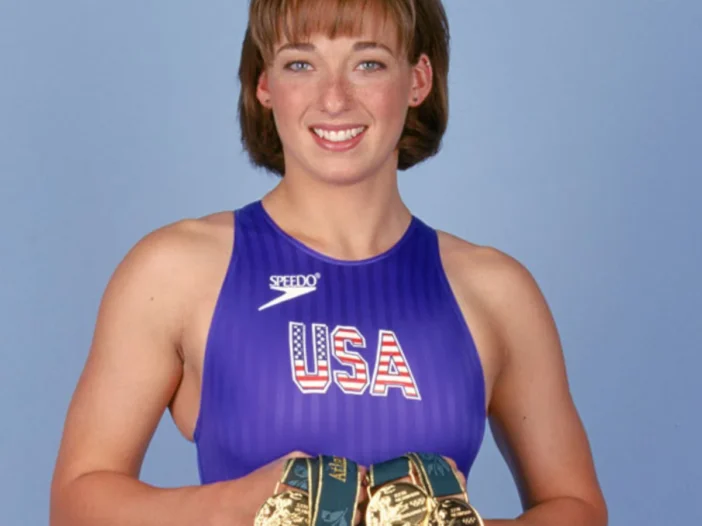
Amy Van Dyken won six Olympic gold medals across two Summer Olympics, more than any other American female swimmer at the time, and then, in 2014, survived an ATV accident that severed her spinal cord and left her paralyzed from the waist down. Her response to that diagnosis became the second great chapter of one of the most remarkable lives in American sports history.
Before the accident, Van Dyken was already a legend. She dominated the pool at the 1996 Atlanta Olympics, becoming the first American woman ever to win four gold medals at a single Games. She added two more in Sydney in 2000, cementing her place in the pantheon of American athletics. Then came the accident. And then, the comeback that a nation watched in awe.
Born February 15, 1973, in Englewood, Colorado, Amy Van Dyken went from asthmatic kid to six-time Olympic champion to disability advocate. This is her complete story.
Quick Facts About Amy Van Dyken
| Detail | Information |
| Date of Birth | February 15, 1973 |
| Birthplace | Englewood, Colorado |
| Nationality | American |
| Height | 6 ft 0 in (183 cm) |
| Net Worth (est.) | $4 million |
| Spouse | Tom Rouen (m. 2002) |
| Children | None |
| Occupation | Retired Olympic Swimmer, Motivational Speaker, Disability Advocate, Broadcaster |
Early Life and Background: Asthma and the Pool
Amy Van Dyken was not born to be a swimmer. She was born with exercise-induced asthma, a condition that left her struggling to breathe during any sustained physical activity. Growing up in Englewood, a suburb south of Denver, Colorado, she was frequently side-lined while other kids ran and played without a second thought.
Her doctors offered an unusual prescription: swim. The warm, humid air above the water, they reasoned, would help her develop stronger lungs without triggering the worst of her asthmatic episodes. That advice turned out to be one of the most consequential medical recommendations in American Olympic history.
Van Dyken took to the pool slowly. She was not an immediate prodigy. She struggled through her early competitive years, often getting lapped by other swimmers and cut from teams that didn’t see her potential. The irony of an asthmatic becoming the greatest American female swimmer of her era is one of the most compelling threads of the Amy Van Dyken biography.
Education and Formative Years
Van Dyken attended Cherry Creek High School in Greenwood Village, Colorado, where she began to find her competitive footing. She went on to Colorado State University, where she swam collegiately and developed into an elite-level competitor. She later transferred to the University of Arizona, which had one of the country’s top swimming programs.
Her college career was marked by steady improvement rather than overnight stardom. Van Dyken was defined by her work ethic, long hours in the pool, relentless focus on her stroke mechanics, and a refusal to accept her own limitations. Those qualities would carry her all the way to Atlanta.
Career Beginnings: Fighting for a Lane
Before she was an Olympian, Amy Van Dyken was a swimmer who got cut from her high school team, twice. She missed qualifying for the 1992 Barcelona Olympics and had to watch from home as other Americans competed on the sport’s biggest stage. Most athletes would have quietly moved on. Van Dyken went back to training.
Her breakthrough began in the early 1990s as she sharpened her specialty events: the 50-meter freestyle and the 100-meter butterfly. These are sprinting events, explosive, powerful, decided in seconds. They suited Van Dyken’s muscular build and fierce competitive temperament far better than distance swimming.
By 1994 and 1995, she was posting times that turned heads on the international circuit. The girl who had been told swimming was just therapy had become a genuine medal contender for Atlanta.
Major Career Highlights
The 1996 Atlanta Olympics, Four Gold Medals
The 1996 Summer Olympics in Atlanta transformed Amy Van Dyken from a rising star into an American icon. Over the course of eight days, she won four gold medals, a feat no American woman had ever accomplished at a single Olympics.
Her victories came in:
- 50-meter freestyle, her signature event, won with a gutsy surge to the wall
- 100-meter butterfly, a technical triumph that showcased her improved stroke
- 4×100-meter freestyle relay, anchoring the American team to a dominant gold
- 4×100-meter medley relay, a nail-biting team win that brought the crowd to its feet
She also won the hearts of the nation with her celebrations, unfiltered, jubilant, refreshingly unscripted. Van Dyken pumped her fists, screamed into the air, and shed tears without apology. In an era when American athletes were often coached to perform stoic professionalism, she was a genuine original.
The Atlanta Games made her the most decorated American female swimmer in a single Olympics, a record that stood for years.
The 2000 Sydney Olympics, Six Golds Total
Van Dyken returned to the Olympic pool at the 2000 Sydney Games as the defending champion and the face of American swimming. She was 27, seasoned, and carrying the expectations of an entire nation.
She delivered. Van Dyken added two more gold medals in Sydney, in the 4×100-meter freestyle relay and the 4×100-meter medley relay, bringing her career total to six Olympic gold medals.
At the time, that made her the most decorated female swimmer in American Olympic history. She retired from competitive swimming shortly after the Sydney Games, leaving the sport on her own terms and at the absolute summit of the sport.
The 2014 ATV Accident: The Day Everything Changed
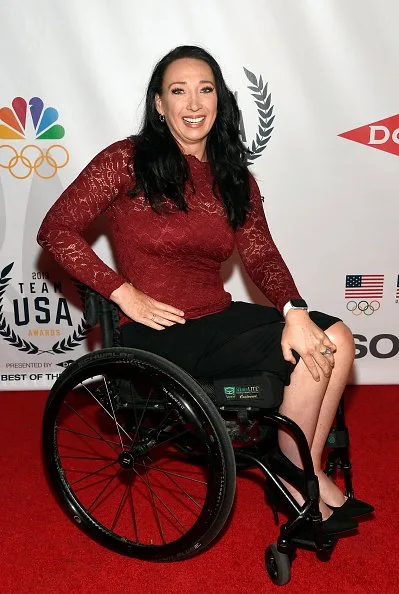
On June 6, 2014, Amy Van Dyken-Rouen was riding an ATV near her home in Fountain Hills, Arizona, when the vehicle dropped off a curb. The impact threw her into the ground and severed her spinal cord at the T11 vertebra, the thoracic region of the spine, near the lower back.
She was airlifted to Scottsdale Healthcare Osborn Medical Center, where surgeons worked to stabilize her. When she woke up, the diagnosis was delivered plainly: she would likely never walk again. The injury had caused complete paralysis from the waist down.
Van Dyken’s first public statement from the hospital became a defining moment. Rather than devastation or denial, she projected humour and resolve. She posted on social media, joked with nurses, and began talking openly about her reality, paralysis, rehabilitation, the grind of learning to exist in a body that had been fundamentally changed. The public response was overwhelming.
“I am not going to let this stop me,” she said. And she meant it.
Recovery and Advocacy: Roaring Back
Amy Van Dyken spent months in intensive rehabilitation. She worked with specialists at Craig Hospital in Englewood, Colorado, one of the country’s premier rehabilitations centers for spinal cord and traumatic brain injuries, to rebuild strength, adapt to wheelchair life, and develop strategies for independence.
She made remarkable progress in some areas. She regained some sensation and limited movement, defying some of the most pessimistic early prognoses. But she has been honest and clear: she is a permanent wheelchair user, and her goal has never been to “overcome” paralysis so much as to live fully within her new physical reality.
Van Dyken co-wrote her memoir, Roar: A Story of Courage and Resilience, which details her Olympic journey, the accident, her rehabilitation, and the emotional and psychological dimensions of her recovery. The book became a resource not just for athletes but for anyone navigating catastrophic life change.
She became a prominent disability advocate, using her platform to raise awareness about spinal cord injuries, accessible design, and the full humanity of wheelchair users. She has partnered with rehabilitation organizations and lobbied for expanded support and research.
Amy Van Dyken as a Public Speaker
Amy Van Dyken is one of the most in-demand motivational speakers in the United States, booked consistently for corporate conferences, healthcare summits, sports organizations, and university campuses.
Her speaking topics include:
- Peak athletic performance, what it actually takes to compete and win at the Olympic level
- Resilience after catastrophic setbacks, drawing directly from her accident and recovery
- Disability, inclusion, and accessibility, advocating for systemic change and individual empowerment
- Mental toughness and overcoming adversity, applicable to athletes, executives, and students alike
- Women in sports and leadership, her journey breaking barriers in competitive swimming
Who Books Amy Van Dyken?
Her audiences span a remarkable range:
- Corporate clients in healthcare, insurance, and technology who value resilience-focused leadership content
- Sports organizations seeking an authentic Olympic voice
- College and university campuses looking for assembly and commencement speakers who connect with young adults
- Healthcare and rehabilitation conferences where her lived experience as a patient and survivor carries unique authority
Her signature combination, elite athletic achievement plus a profound and public experience of disability, gives her a credibility on stage that few speakers can match.
Amy Van Dyken Net Worth 2026
Amy Van Dyken’s estimated net worth is $4 million, accumulated across a career that spans elite athletics, broadcasting, endorsements, writing, and professional speaking.
Her primary income sources include:
- Olympic-era endorsements, during her peak years, Van Dyken held sponsorship deals with major athletic and consumer brands
- Broadcasting career, she worked as a sports analyst and commentator for Fox Sports, providing swimming commentary and broader sports coverage
- Speaking fees, top motivational speakers of her profile typically command $20,000–$50,000 per engagement
- Book royalties, from Roar and related publishing projects
- Advocacy partnerships, with non-profit organizations and disability-focused brands
It is worth noting that Van Dyken competed during an era when Olympic swimmers did not earn the kind of direct prize money and performance bonuses that today’s athletes receive. Her financial foundation was built primarily in the post-competition phase of her career, through media, speaking, and brand relationships.
Personal Life: Tom Rouen, Arizona, and Life on Her Terms
Amy Van Dyken married Tom Rouen in 2002. Rouen had a lengthy career in the NFL as a punter, playing for teams including the Denver Broncos, Cleveland Browns, and Seattle Seahawks. The couple share a life rooted in Colorado and Arizona, and Rouen has been a constant and public presence throughout Van Dyken’s recovery.
The couple has no children. They are based primarily in the Phoenix, Arizona area, where Van Dyken has spoken about the quality of rehabilitation resources and the outdoor lifestyle that supports her ongoing physical activity.
Van Dyken is known publicly for her sharp wit and self-deprecating humour; she was cracking jokes on social media from her hospital bed within days of the accident. She has spoken candidly about the emotional dimensions of her recovery, including depression, grief, and the gradual reconstruction of identity after catastrophic injury. That transparency has made her one of the most trusted and relatable voices in American sports.
Her values center on honesty, persistence, and community, qualities she attributes to her upbringing in Colorado and her years in elite competitive sport.
Amy Van Dyken Best Quotes
On being told she’d never walk again:
“I am not going to let this define me in a negative way. I’m going to redefine what it means.”
On her asthma diagnosis as a child:
“Doctors told me to swim to help my lungs. That’s really all this is, a medical recommendation that got a little out of hand.”
On the 1996 Atlanta Olympics:
“Four gold medals. I still can’t believe it happened. I really can’t. I was the kid who got cut from the team.”
On mental toughness:
“Strength doesn’t come from what you can do. It comes from overcoming the things you once thought you couldn’t.”
On disability:
“I’m not broken. I’m different. And different doesn’t mean less.”
On recovery:
“Every day is a negotiation with your body. The goal isn’t to win the negotiation, it’s to keep showing up for it.”
On her husband Tom:
“He has been my teammate in a way that goes so far beyond what I ever expected marriage to be.”
On what swimming taught her:
“The pool doesn’t care about your excuses. It just reflects back exactly the effort you put in. I wish more of life worked that way.”
Frequently Asked Questions
Amy Van Dyken won six Olympic gold medals across two Summer Olympics. She won four at the 1996 Atlanta Games, in the 50-meter freestyle, 100-meter butterfly, 4×100-meter freestyle relay, and 4×100-meter medley relay, making her the first American woman to win four golds at a single Olympics. She added two more in Sydney in 2000, bringing her total to six.
In June 2014, Amy Van Dyken was involved in an ATV accident near her home in Fountain Hills, Arizona. The accident severed her spinal cord at the T11 vertebra, causing paralysis from the waist down. She was airlifted to a trauma center and underwent emergency surgery. She has used a wheelchair since the accident and has become an outspoken disability advocate and motivational speaker.
Yes. Amy Van Dyken has been paralyzed from the waist down since her 2014 ATV accident, which severed her spinal cord. She uses a wheelchair and has spoken publicly about building a full and active life as a wheelchair user. While she has regained some sensation and limited movement through intensive rehabilitation, she is a permanent wheelchair user and does not frame her recovery as a return to walking.
Amy Van Dyken’s net worth is estimated at approximately $4 million. Her wealth comes from multiple sources: endorsement deals during her Olympic career, a broadcasting career with Fox Sports, professional motivational speaking fees (typically $20,000–$50,000 per event), royalties from her memoir Roar, and advocacy partnerships. Her peak earning years have come after retirement through media and the speaking circuit.
Amy Van Dyken speaks on themes of resilience, peak performance, disability and inclusion, and mental toughness. She draws on her experience as a six-time Olympic gold medalist and as a spinal cord injury survivor. Her audiences include corporate clients, healthcare organizations, sports teams, and college campuses. She is particularly sought after for her ability to connect elite athletic achievement with deeply human experiences of loss, adaptation, and recovery.
Conclusion
The Amy Van Dyken biography is, at its core, a story about redefining what is possible, told twice. First, as an asthmatic girl from Colorado who became the most decorated female swimmer in American Olympic history. And then again, from a hospital bed in Arizona, as a woman who looked at a wheelchair and decided it was a vehicle, not a verdict.
Van Dyken’s six Olympic gold medals are the headline. But the second chapter of her life, the advocacy, the speaking, the humour, and the raw public honesty, may be the more enduring legacy. She remains one of the most compelling and authentic public figures in American sports.
Leave a Reply