
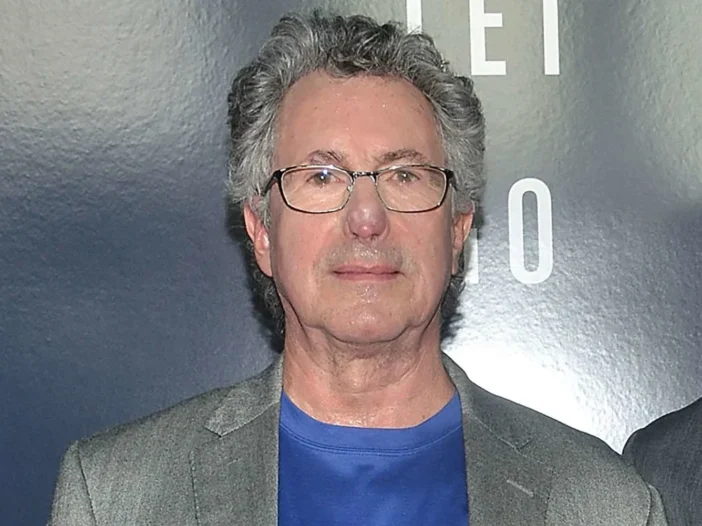
His family was told he was dead, twice. A physician from Dallas, Texas, left his wife and two children to climb the world’s highest mountain, was struck blind at 27,000 feet, survived a hypothermic coma overnight in a blizzard at 60 degrees below zero, and then, against every medical probability, stood up, walked back to camp, and came home.
This complete Dr Beck Weathers biography covers everything: his life before Everest, the full story of that catastrophic May 10, 1996 night, what happened to his arm and hand, his remarkable transformation, his enduring marriage to his wife Peach, whether he is still alive and still married today in 2026, his net worth, and the speaking career that has turned his darkest moment into a message heard around the world.
Quick Facts About Dr Beck Weathers
| Detail | Information |
| Full Name | Seaborn Beck Weathers |
| Date of Birth | December 16, 1946 |
| Age (2026) | 79 years old |
| Birthplace | Texas, USA (military family; moved frequently) |
| Nationality | American |
| Height | Not publicly documented |
| Net Worth (2026) | ~$1.5–4 million (estimated) |
| Wife | Peach Weathers (married before 1996; still together) |
| Children | Two, son S. Beck Weathers II; one daughter |
| Occupation | Retired Pathologist, Motivational Speaker, Author |
| Education | B.S. Chemistry, Midwestern State University (1968, summa cum laude); Medical Degree |
| Is Still Alive? | Yes, as of 2026 |
| Is Still Married? | Yes, to Peach Weathers |
Early Life and Background
Seaborn Beck Weathers was born on December 16, 1946, in Texas, into a military family that moved frequently during his childhood. That nomadic early life instilled a self-reliance and adaptability that would serve him decades later in ways no one could have predicted.
He attended college in Wichita Falls, Texas, and went on to earn a Bachelor of Science in Chemistry summa cum laude from Midwestern State University in 1968, a distinction that reflects the academic discipline underlying his career as a physician. He later obtained his medical degree and established himself as a diagnostic pathologist in Dallas, Texas, where he practiced for over three decades.
Beck met his future wife, Peach, during his college years in Texas, and the two married and built a life together in Dallas. They had two children: a son, S. Beck Weathers II (who later attended St. Mark’s School of Texas), and a daughter. On the surface, it was the portrait of a successful Texan physician and family man.
Beneath the surface, however, Beck Weathers was quietly struggling. He has described spending “most of my adult life in profound depression.” He never told anyone. Instead, he discovered that punishing physical exertion, long training sessions, mountain expeditions, silenced the darkness in his mind. “If you drove your body hard, when you did that, you couldn’t think,” he later said. That discovery would set the course for everything that followed.

Career Beginnings
Beck Weathers built a respected career as a diagnostic pathologist at Medical City Dallas, eventually rising to serve as the former president of the medical staff. The work was demanding and meaningful, but it was the mountains that truly held his attention.
In 1986, at age 39, he enrolled in a mountaineering course. The experience changed him. He set his sights on the Seven Summits, the highest peak on each of the seven continents, inspired by Richard Bass, the first man to accomplish the feat, who had made it seem possible for “regular guys.”
Over the following decade, Weathers methodically climbed some of the world’s most challenging peaks, including Kilimanjaro, Aconcagua, and Vinson Massif in Antarctica. In 1993, on Vinson Massif, he encountered Sandy Pittman, a climber he would meet again, fatefully, on Everest three years later.
His mountaineering obsession had real costs. His focus on climbing meant hours away from his family, training across multiple time zones, and missing anniversaries and milestones. His wife, Peach, bore the weight of the family while Beck chased summits. The marriage was quietly cracking under the pressure.
Major Career Highlights
Before Everest, The Life He Was Building
By May 1996, Beck Weathers was 49 years old, a respected pathologist, an accomplished amateur mountaineer, and a man whose marriage was in serious distress. Peach had made a quiet decision: when Beck returned from Nepal, she was going to ask for a divorce. She did not tell him before he left for Everest. “She had decided to divorce me,” Weathers later told People magazine, “but was not going to tell me while I was on the mountain.”
The Everest climb was, in part, meant to be a 50th birthday gift to himself, a crowning achievement that would complete his Seven Summits quest.
May 10, 1996, The Night Everest Tried to Kill Him
On May 10, 1996, Weathers was one of eight clients on the Adventure Consultants expedition led by legendary New Zealand guide Rob Hall. He had recently undergone radial keratotomy surgery, a precursor to LASIK that made small incisions in his corneas, without knowing that high altitude could warp the recovering corneas and cause near-total blindness.
As the team ascended toward the summit, Weathers realized he was effectively blind. Guide Rob Hall ordered him to wait at the Balcony, at 27,000 feet, until Hall came back down to escort him to safety. Hall promised he would return.
Hall never returned. He died high on the mountain, trapped in the summit storms, in one of the disaster’s most harrowing deaths.
As the afternoon summit teams began their chaotic descent, a catastrophic blizzard exploded across the upper mountain. Wind speeds exceeded 70 knots. Temperatures plummeted to 60 below zero. Weathers and ten other climbers became disoriented in a complete whiteout, unable to find Camp IV, which sat a mere quarter-mile away.
By the time the storm briefly broke, Weathers was so weakened that the surviving climbers faced a brutal calculation: leave the most incapacitated behind or lose everyone. Guide Anatoli Boukreev, from Scott Fischer’s rival expedition, staged a heroic rescue but could not reach Weathers in the darkness.
Beck Weathers was left for dead. Twice.
The first time, fellow climbers deemed him beyond help and focused on those they could save. The second time, a climbing doctor examined him, his face encrusted with ice, his body hypothermic, and described him as “as close to death and still breathing” as any patient he had ever seen.
A phone call was made to Dallas. Peach Weathers was told her husband was dead.
Waking Up, One of Medicine’s Unexplained Moments
Sometime the following afternoon, approximately 15 hours after he had been left for dead, Beck Weathers experienced something that science has never fully explained. He believes the afternoon sun warmed him just enough to trigger a flicker of consciousness: “My guess is the sun warmed me up just enough that it triggered consciousness.”
He woke up. He was lying face-down in the snow. His right arm, exposed to the elements for nearly a day, was black with frostbite. His left hand was unrecognizable. His face had turned the color of ash.
He stood. He stumbled. He walked, on frozen feet, with zero depth perception, toward the dim outline of a tent approximately 300 yards away. Climbers who had accepted his death were stunned to see a figure lurching out of the snow. One described it as the most frightening thing he had ever seen.
From there, climbers Stuart Hutchison, John Taske, and several Sherpas assisted him to Camp II, where medical help was staged. On May 13, Nepalese Army pilot Lieutenant Colonel Madan K.C. Khatri Chhetri volunteered to fly a Eurocopter Squirrel AS350 B3 to approximately 6,100 meters, at the time, one of the highest-altitude helicopter rescues ever performed, to extract Weathers and severely injured Taiwanese climber Makalu Gau.
He reached Kathmandu alive.
What Happened to His Arm, Hand, and Nose
The medical consequences of Beck Weathers’s night on Everest were severe and permanent. The prolonged exposure to extreme cold left much of his body with catastrophic frostbite. His surgeons ultimately performed the following amputations:
- Right arm, amputated halfway between the elbow and wrist
- All four fingers and the thumb of his left hand, amputated
- Parts of both feet, amputated
- His nose, amputated and reconstructed with tissue from his ear and forehead
He endured at least ten surgeries in the months following his rescue. The reconstructed nose permanently changed his appearance, making him, as he has himself acknowledged, a man who looks visibly, permanently different from who he was before Everest.
He describes himself in that period as looking like “a dead man walking.”
Left for Dead: My Journey Home from Everest (2000)
In 2000, Weathers published his autobiography, Left for Dead: My Journey Home from Everest, co-written with Stephen G. Michaud. The book became a bestseller and delivered something rare: it was not just a survival story. It was an unflinching account of the depression, the failed marriage, the mountaineering obsession, and the transformation that Everest forced upon him.
The book described how Peach had been preparing to leave him before the expedition, and how the disaster ironically saved their marriage. It remains one of the most honest accounts of how ambition and self-destruction can coexist in the same person.
The Films, Into Thin Air and Everest
Beck Weathers’s story was first documented in Jon Krakauer’s landmark 1997 book Into Thin Air, which became one of the best-selling nonfiction books of the decade.
Two major films brought his story to new audiences:
- Into Thin Air: Death on Everest (1997, TV film), Richard Jenkins portrayed Weathers
- Everest (2015, theatrical film), Josh Brolin portrayed Weathers in this major Hollywood production directed by Baltasar Kormákur; Robin Wright played Peach
The 2015 film grossed over $200 million worldwide and became the most widely seen portrayal of the 1996 disaster. Weathers has said he has watched the film three times and that “each time it basically runs me over.” He praised Brolin’s portrayal while noting the film accurately captured the events, and that the scenes of Peach being told her husband was dead were especially difficult to watch.
Dr Beck Weathers as a Public Speaker
Since recovering from Everest, Beck Weathers has built one of the most compelling speaking careers in the world. He has addressed audiences globally, from corporate boardrooms to medical schools to military institutions, for nearly three decades.
His presentations are uniquely powerful because they combine first-person survival drama with hard-won psychological transformation. He does not simply tell a story about mountaineering. He tells a story about what it means to lose everything and choose, consciously, to rebuild.
His core speaking themes include:
- The Everest night, an immersive, visceral account of the disaster and his impossible survival
- Depression, denial, and the dangerous substitutions we use to cope
- What near-death clarifies about what actually matters in life
- Rebuilding relationships and earning back trust after years of emotional absence
- Resilience as a choice, not a personality trait, but a daily decision
- The cost of achievement obsession and the freedom of letting it go
Who books Dr Beck Weathers:
- Hospitals, medical schools, and physician leadership conferences
- Corporate leadership events, particularly for high-performance, high-pressure industries
- Military and emergency services organizations
- Adventure sports and outdoor industry gatherings
- Universities and commencement events
- Non-profit and motivational conference circuits
He was most recently featured as a guest speaker in the 2023–2024 Dolores Evans Speaker Series at Lamplighter School in Dallas, demonstrating that his community presence and story remain in active demand approaching his 80th year.
Dr Beck Weathers Net Worth 2026
Dr Beck Weathers’s estimated net worth in 2026 ranges from $1.5 to $4 million across different published sources, a range that reflects the legitimate difficulty of assessing the finances of a private individual who has never publicized his earnings.
His income streams include:
- Medical career, over 30 years as a diagnostic pathologist at Medical City Dallas and other practices; physicians of his seniority routinely earn high six-figure annual incomes
- Motivational speaking fees, speakers of his profile and story typically command $10,000–$40,000 per engagement; he has delivered hundreds of appearances over nearly three decades
- Book royalties, Left for Dead (2000) became a bestseller and continues to generate royalty income, boosted each time the 2015 film revives interest in the story
- Film rights and licensing, proceeds from the 1997 TV film and the 2015 theatrical film Everest
- Documentary and media appearances, The Dark Side of Everest (2003), ABC News, and various podcast and documentary features
The most credible mid-range estimate places his net worth at approximately $1.5–2 million, with the $4 million figure appearing to include inflated celebrity database estimates. His lifestyle has always been described as modest and grounded in Dallas.
Personal Life, Before and After Everest
The story of Beck Weathers and his wife Peach is, in many ways, the emotional core of his entire public narrative.
Before Everest, the marriage was failing. Beck had spent years consumed by depression, using mountaineering as both escape and self-medication. He was physically present in Dallas as a doctor and father, but emotionally absent. He missed his 20th wedding anniversary to join the Everest climb. Peach had quietly decided she was done.
When the phone rang on May 11 telling her that her husband was dead, Peach organized a response to the crisis, contacting expedition members, making calls, refusing to simply accept the news. Her tenacity contributed to the helicopter rescue being arranged. In a profound irony, the man she had planned to divorce was the man she moved heaven and earth to bring home.
After Everest, the transformation Beck Weathers described was not instantaneous but it was genuine. Peach gave the marriage another chance. Beck, stripped of his ability to climb, stripped of the physical obsessions that had walled off his emotions, was forced to be present for the first time in years.
They are still married as of 2026. Beck is in his late 70s, and multiple sources confirm the couple remains together, living in Dallas, Texas. Beck has also become a grandfather, a role he has described with the same wonder that he once reserved for mountain summits.
He gave up flying, a private pilot hobby, in 2015 at Peach’s strongly expressed insistence. He has described that willingness to yield as evidence of how fundamentally the disaster changed him.
Their two children:
- Son, S. Beck Weathers II, attended St. Mark’s School of Texas and has remained close to his father
- Daughter, Beck has joked publicly that the day of the Everest summit attempt was supposed to be “the day of my daughter’s first date”, and that some fathers will do extraordinary things to prevent their daughters from going out with boys
His Catholic faith and deep connection to family have been the anchors of his post-Everest life. He is actively involved in speaking about depression, his own years of silent suffering, and he advocates for mental health awareness in a way that would have been unthinkable to the emotionally armored man who boarded a plane to Nepal in 1996.
Dr Beck Weathers Best Quotes
On his years of secret depression:
“I had spent most of my adult life in profound depression. I never let anybody know about it. And I discovered that if you drove your body hard, when you did that, you couldn’t think, and that lack of thinking as you punished your body and drove yourself was amazingly pleasant.”, From his book Left for Dead and various interviews.
On waking up from the hypothermic coma:
“My guess is the sun warmed me up just enough that it triggered consciousness.”, From his IMDb biography, describing the unexplained moment that saved his life.
On the trade he made on Everest:
“That day on the mountain I traded my hands for my family and for my future. It is a bargain I readily accept.”, From Left for Dead, the line that most completely captures his transformation.
On what survival clarified:
“For the first time in my life I have peace. I no longer seek to define myself externally through goals and achievements and material possessions. For the first time in my life, I’m comfortable inside my own skin.”, From Left for Dead, describing his inner state after recovery.
On Peach’s decision before the climb:
“She had decided to divorce me but was not going to tell me while I was on the mountain and was going to wait until I got home.”, Told to People magazine, about the state of his marriage before the disaster.
On watching the 2015 Everest film:
“Parts of it are easy to digest. I know the people, I know the story. Other parts just run over you with a wave of emotion. Moments where my wife, Peach, has to tell our two children that I’m dead and I’m not coming back anymore.”, To KERA News, Dallas, September 2015.
On storytelling and purpose:
“I’ve always been a storyteller. Peach says I could talk the ears off a rubber rabbit. But I didn’t really have a story. And then I did.”, From his IMDb biography, his wry summary of how Everest transformed him from a man without a story into a man with the most powerful story in the room.
On resilience and shared humanity: “We are all of the same clay. If I can survive of what is un-survivable, so can you. What is important is who we keep in our hearts and who keeps us in theirs.”, From a Healio interview, the distilled philosophy he brings to every audience.
Frequently Asked Questions
Yes, Dr Beck Weathers is alive as of 2026. Born on December 16, 1946, he is 79 years old. After surviving the 1996 Mount Everest disaster, he returned to his medical career as a pathologist in Dallas, Texas, became a motivational speaker, and has continued to make public appearances. He was a guest speaker at Dallas’s Lamplighter School in the 2023–2024 speaker series, confirming his continued public activity.
Yes. Beck Weathers and Peach Weathers are still married as of 2026. Peach had been considering divorce before the 1996 Everest disaster, but chose to give the marriage another chance after Beck’s miraculous survival. The tragedy transformed Beck’s priorities and emotional availability. Multiple sources confirm they remain together in Dallas, Texas, and Beck has since become a grandfather, with Peach described as his steadfast partner through decades of recovery and speaking work.
Due to severe frostbite from his night in the blizzard at over 26,000 feet, Beck Weathers underwent multiple amputations: his right arm was removed halfway between the elbow and wrist, all fingers and thumb on his left hand were amputated, parts of both feet were removed, and his nose was amputated and reconstructed using tissue from his ear and forehead. He endured at least ten surgeries in his recovery.
Beck Weathers’s autobiography is Left for Dead: My Journey Home from Everest (2000), co-written with Stephen G. Michaud and published by Bantam/Random House. The book covers his childhood, his career as a pathologist, his secret battle with depression, his mountaineering obsession, the night of May 10, 1996 in detail, his recovery from amputations, and the rebuilding of his marriage to Peach. It became a bestseller and remains the definitive first-person account of the 1996 disaster from a survivor’s perspective.
Josh Brolin portrayed Beck Weathers in the 2015 Hollywood film Everest, directed by Baltasar Kormákur. Robin Wright played his wife, Peach. The film grossed over $200 million worldwide and brought the story of the 1996 Mount Everest disaster to the largest audience in its history. An earlier TV film, Into Thin Air: Death on Everest (1997), featured Richard Jenkins as Weathers. Beck Weathers has praised both portrayals and described watching the 2015 film as deeply emotional.
Conclusion
The Dr Beck Weathers biography is the story of a man who had to lose nearly everything, his hands, his nose, his health, and nearly his life, to find what had been in front of him all along. A Texas pathologist who used mountains to silence his depression became a man who came down from Everest having traded his hands for his family, his old self for a new one, and his ambitions for something far more durable: presence, gratitude, and peace.
At 79 years old, still alive, still married to Peach, and still taking the stage to tell a story that has saved other lives, Beck Weathers remains one of the most powerful human examples of what it means to survive and transform.
Leave a Reply