
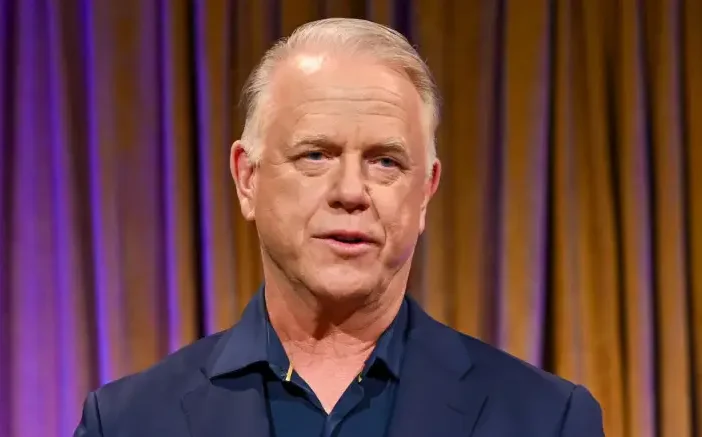
His mother named him “Boomer” before he was even born, because he wouldn’t stop kicking. That detail captures something essential about Norman Julius “Boomer” Esiason: he has always arrived with force.
This Boomer Esiason biography tells the complete story of one of the most compelling figures in NFL history, a left-handed quarterback who won the 1988 NFL MVP award, led the Cincinnati Bengals to Super Bowl XXIII, and then used his platform to raise over $100 million for cystic fibrosis research after his son’s diagnosis changed his life forever.
It covers his real name, his NFL career stats, his jersey number, his wife Cheryl, son Gunnar’s battle with CF, his height, his net worth, his Hall of Fame case, and what he’s doing now as one of the most familiar voices in sports media.
Quick Facts About Boomer Esiason
| Detail | Information |
| Real / Full Name | Norman Julius Esiason |
| Nickname | Boomer |
| Date of Birth | April 17, 1961 |
| Age (2026) | 65 years old |
| Birthplace | West Islip, New York (raised in East Islip, NY) |
| Nationality | American |
| Height | 6 feet 5 inches (196 cm) |
| Weight | 224 lbs (102 kg) |
| Net Worth (2026) | ~$20–25 million (estimated) |
| Wife | Cheryl Esiason (née Hyde), married May 24, 1986 |
| Children | Gunnar Esiason (son) and Sydney Esiason (daughter) |
| Jersey Number | #7 (Cincinnati Bengals) |
| Occupation | Retired NFL QB, Sports Broadcaster, Philanthropist |
| Education | University of Maryland (B.A. Communications, 1983) |
Early Life and Background
Norman Julius Esiason was born on April 17, 1961, in West Islip, New York, and grew up in nearby East Islip, Long Island. His nickname arrived before he did: his mother, Irene, a singer, dancer, and piano player, felt him kicking so relentlessly in the womb that she started calling him “Boomer.” The name never left.
Tragedy arrived early. Irene Esiason died of ovarian cancer at the age of 37, when Boomer was just six or seven years old. His father, Norman Esiason Sr., a World War II veteran of Norwegian and Swedish descent, never remarried. Instead, he raised Boomer and his two sisters, Susan and Robin, alone, commuting three hours a day to New York City to support the family. Boomer has credited his father’s resilience as the defining model for his own.
He attended Timber Point Elementary School and then East Islip High School, where he graduated in 1979. He was a three-sport varsity athlete, competing in football, basketball, and baseball, developing the athletic instincts that would define his NFL career.
Career Beginnings
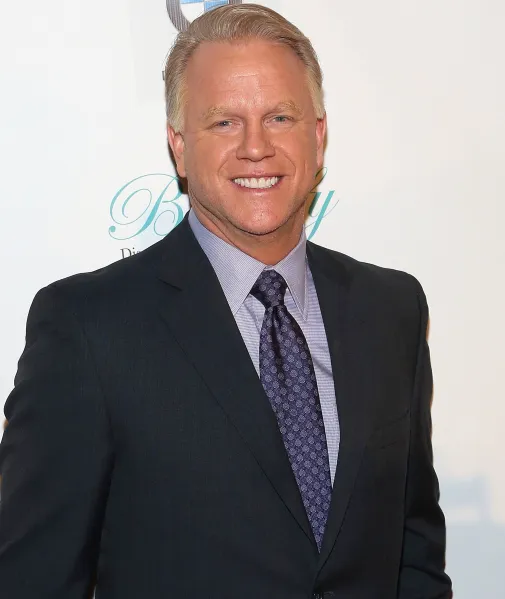
Boomer Esiason enrolled at the University of Maryland, where he played for head coaches Jerry Claiborne and Bobby Ross under offensive coordinator Ralph Friedgen. Maryland was the only college to offer him a scholarship, a detail that still strikes those who watched him play there as extraordinary. He set 17 school records at Maryland, completing 461 of 850 passes for 6,169 yards and 42 touchdowns.
His roommate at Maryland? Frank Reich, the future NFL quarterback and head coach, who would later serve as Boomer’s best man at his wedding. Esiason graduated in December 1983 with a Bachelor of Arts in Communications and was later honoured with the school’s Distinguished Alumnus Award in 1999.
Despite an elite college career, the 1984 NFL Draft ranked him curiously low. No quarterbacks were taken in the first round, Esiason was the first quarterback selected overall, but not until the second round, 38th pick overall, by the Cincinnati Bengals. Draft analyst Mel Kiper Jr. was, in Esiason’s own words, “going ballistic” that he was still available that late.
Major Career Highlights
Cincinnati Bengals, The First Era (1984–1992)
Esiason’s first pro start came on October 7, 1984, against the Houston Oilers [EXTERNAL LINK: Pro Football Reference, Boomer Esiason]. On a rainy day in Cincinnati, he led the Bengals to a 13–3 win, scoring the game’s only touchdown on a 3-yard run. He took over as the full-time starter in 1985 when he replaced the legendary Ken Anderson.
At 6’5″ and 224 pounds, with a powerful left arm and surprising mobility, Esiason became the orchestrator of head coach Sam Wyche’s revolutionary “no huddle” offense, one of the most innovative systems in the NFL at the time. He rushed for 1,598 yards and 7 touchdowns over his Bengals career, making him one of the most dangerous dual-threat quarterbacks of his era.
1988 NFL MVP Season and Super Bowl XXIII
The 1988 season was Esiason’s masterpiece. He led the league with a quarterback rating of 97.4, threw for 3,572 yards and 28 touchdowns, and posted just 14 interceptions. The Bengals went 12–4, earning Esiason the NFL Most Valuable Player award, the most coveted individual honor in the sport.
The Bengals reached Super Bowl XXIII in Miami, facing the San Francisco 49ers. It was an extraordinarily tight game, the first halftime tie (3–3) in Super Bowl history. Cincinnati led 16–13 with three minutes remaining. Then Joe Montana happened.
Montana marched the 49ers 92 yards in the final minutes, hitting receiver John Taylor with a touchdown pass with just 34 seconds remaining, for a 20–16 49ers win. It remains one of the most heartbreaking losses in Bengals history. Esiason, playing through a sore arm, finished 11 of 25 for 144 yards with one interception, not his finest performance, but the team’s margin was razor-thin without a single error from him to blame.
Career NFL Stats at a Glance
Over his 14-year NFL career, Boomer Esiason’s final numbers [EXTERNAL LINK: Pro Football Reference] were:
- Passing yards: 37,920
- Touchdowns: 247
- Completions: 2,969 of 5,205 attempts (57.0%)
- Passer rating: 81.1
- Rushing yards: 1,598 (career)
- Pro Bowl selections: 4 times (1986, 1988, 1989, 1993)
- First-team All-Pro: 1988
- Games played: 187
One single-game highlight stands above the rest: on November 10, 1996, while with the Jets, Esiason threw for 522 yards in a 37–34 overtime victory over the Washington Redskins, the 3rd-highest single-game passing total in NFL history at the time. His final career play, on December 21, 1997, was a 77-yard touchdown pass to wide receiver Darnay Scott, sealing a 16–14 Bengals victory over the Baltimore Ravens. A storybook ending.
New York Jets (1993–1995) and Arizona Cardinals (1996)
In 1993, the Bengals traded Esiason to the New York Jets in exchange for a third-round pick. He spent three seasons in New York, including a painful concussion-shortened 1995 campaign, before signing with the Arizona Cardinals as a free agent in 1996, where he threw for 522 yards in a single game (the Washington record game above was during his Jets tenure, confirming his arm strength remained elite late in his career).
Return to Cincinnati (1997), A Final Chapter
Esiason contemplated retirement after Arizona but was persuaded to return to Cincinnati for one final season in 1997. He replaced starter Jeff Blake midway through the year and was remarkably effective: 13 touchdowns, just 2 interceptions, and a passer rating over 106 for the season. The Bengals went 4–1 in his starts, scoring over 30 points four times. His last pass, that 77-yard TD strike, was the exclamation point on a 14-year career.
Broadcasting Career, The Second Act
Since retiring, Esiason has built one of the most durable careers in sports broadcasting:
- CBS Sports, The NFL Today (2002–2023): Two decades as an in-studio analyst alongside Greg Gumbel, Shannon Sharpe, and others
- Showtime, Inside the NFL: Long-running analyst role
- Westwood One, Monday Night Football and Super Bowl Radio: Broadcast 19 consecutive Super Bowls from XXXIV (2000) to LII (2018), a broadcast record
- ABC and HBO: Earlier broadcast work before joining CBS
- WFAN New York, Boomer and Gio: Co-hosts the flagship New York morning sports radio program daily, reaching a massive New York sports audience
He has appeared in TV shows and movies including Blue Bloods, The Game Plan, and Spin City, and authored both a children’s book (A Boy Named Boomer, 1995) and a novel (Toss, 1998, co-written with Lowell Cauffiel).
Boomer Esiason as a Public Speaker
Beyond broadcasting, Boomer Esiason is one of the most in-demand speakers in the sports and philanthropy world. His presentations combine the authenticity of a 14-year NFL veteran with the emotional depth of a father who turned personal tragedy into national impact.
His core speaking themes include:
- Leadership under pressure, drawing from the Bengals’ no-huddle offense and Super Bowl experience
- The Boomer Esiason Foundation, transforming family adversity into $100M+ in cystic fibrosis research funding
- Resilience in public life, losing his mother at age six, competing at the highest level, building a second career in media
- Community responsibility and the athlete as public servant
- The business of sports media and broadcasting
Who books Boomer Esiason:
- Corporate leadership events and annual meetings seeking sports celebrity credibility
- Healthcare and pharmaceutical organizations, particularly those involved in respiratory and genetic disease research
- Charity galas and foundation fundraisers
- University athletic departments and sports management programs
- NFL alumni and community engagement programs
His foundation hosts the annual Boomer Esiason Foundation Celebrity Golf Classic and the Guinness Cup Hockey Tournament, events that double as community gatherings and fundraising platforms. He is also a regular presence at cystic fibrosis awareness events across the country.
Boomer Esiason Net Worth 2026
Boomer Esiason’s estimated net worth in 2026 is approximately $20–25 million, built across four distinct phases of his career: NFL player, broadcaster, author, and philanthropist-entrepreneur.
His primary income streams include:
- NFL career earnings, 14 seasons as a starting quarterback, including peak contract years in the late 1980s and 1990s
- CBS Sports, two decades as an in-studio analyst on The NFL Today; multi-year broadcast contracts estimated in the low seven figures annually
- WFAN radio, Boomer and Gio, New York’s flagship sports radio morning show; significant radio contract
- Westwood One, 19 consecutive Super Bowl broadcasts at premium broadcast rates
- Real estate holdings, properties including a Bridgehampton, New York home valued at approximately $7.61 million (5,800 sq. ft. on 0.61 acres) and a vacation property in Carefree, Arizona, and a Cincinnati home from his playing days
- Endorsements, over 25 commercials throughout his career, including Diet Coke, Wheaties, Reebok, Domino’s Pizza, Hanes, Doritos, and Samsung
- Boomer Esiason Foundation, while not a personal income source, the Foundation has raised over $100 million, enhancing his public profile and speaking demand
- Book royalties and media appearances, A Boy Named Boomer (1995), Toss (1998), TV cameos
His financial footprint is that of a man who maximized every phase of his public life, from the field to the broadcast booth to the charity podium.
Personal Life
On May 24, 1986, Boomer Esiason married Cheryl Hyde, who became Cheryl Esiason. His college roommate and best friend, Frank Reich, the future NFL coach, served as best man. The couple has remained together for over four decades, one of the most stable marriages in the NFL alumni community.
They have two children:
- Gunnar Esiason (son), Born to Boomer and Cheryl, Gunnar’s life took a dramatic turn when, at the age of two in 1993, he was diagnosed with cystic fibrosis, a progressive, life-threatening disease of the lungs and digestive system. The diagnosis prompted Boomer and Cheryl to co-found the Boomer Esiason Foundation (BEF) in 1994. The Foundation has since raised over $115 million for cystic fibrosis research and patient support, earning a four-star rating from Charity Navigator every year. Gunnar graduated from Boston College, has undergone ongoing treatment for CF, and serves as the director of the Foundation, running a popular blog and podcast about living with the disease.
- Sydney Esiason (daughter, born August 15, 1992), A model and sportscaster, Sydney married Matt Martin, a professional hockey player with the New York Islanders, in 2019. The couple has children together, making Boomer a grandfather.
The Esiason family has lived in Plandome/Manhasset, New York since at least 1998. Boomer is an avid ice hockey fan, a devoted New York Rangers supporter, and in recent years has played up to 70 recreational-league hockey games per year. He and Gunnar have been teammates on their local hockey team. He also roots for the New York Mets and New York Knicks.
On the Hall of Fame question: Esiason has not been inducted into the Pro Football Hall of Fame, which remains a source of debate among fans and analysts. He is ranked among the top 25 quarterbacks of the post-merger NFL era by multiple publications, and his 1988 MVP season and Super Bowl appearance are on par with several enshrined quarterbacks. However, Esiason himself has addressed the topic with characteristic directness, acknowledging the honor would be meaningful while not dwelling on what he cannot control.
Boomer Esiason Best Quotes
On his mother naming him “Boomer”:
His mother Irene called him Boomer before he was born because of his constant kicking in the womb, a nickname that stuck for a lifetime and became one of sports’ most recognizable monikers. It is, as he has said, the one gift she left him with before she died.
On losing his mother at age six: Esiason has spoken openly about the loss of his mother to ovarian cancer, describing it as the foundational wound and the foundational strength of his life. His father’s decision to raise three children alone, commuting three hours a day, shaped his understanding of sacrifice and commitment.
On the Boomer Esiason Foundation:
The Foundation began because of Gunnar, but it belongs to every family that has ever watched someone they love struggle to breathe., Paraphrased from multiple public statements; the essential articulation of what the BEF means to him.
On Super Bowl XXIII:
We had it. We were right there with three minutes left. Joe Montana is just a different kind of player., His consistent, gracious framing of one of sports’ most agonizing near-misses.
On being a left-handed quarterback: Esiason is one of the most celebrated left-handed quarterbacks in NFL history, a rarity that gave him an unorthodox release and spiral that confused many pass rushers. He has discussed being left-handed as an advantage that took years for defenses to fully account for.
On his broadcasting career:
I always felt more comfortable talking about football than anything else. It was the language I grew up in., From various interviews about his transition from player to analyst.
On the Hall of Fame: Esiason has been measured and philosophical in public comments about his Hall of Fame absence, consistently saying he is proud of his career and acknowledges the honor is for others to bestow.
On paternity leave (the controversial comment): In 2014, Esiason sparked national debate when he commented on air that NFL QB Geno Smith should have rescheduled his wife’s C-section around the football schedule. The remark drew fierce criticism; Esiason publicly apologized and said he regretted the comment, calling it insensitive.
Frequently Asked Questions
Boomer Esiason’s real name is Norman Julius Esiason. He was born on April 17, 1961, in West Islip, New York. His mother, Irene, gave him the nickname “Boomer” before he was born because of his constant kicking in the womb. The nickname stuck throughout his life and became his universally recognized name in professional football and sports broadcasting. He has gone by Boomer professionally since his career at the University of Maryland.
Boomer Esiason played 14 NFL seasons, primarily with the Cincinnati Bengals. His career totals include 37,920 passing yards, 247 touchdowns, and a 57.0% completion rate across 187 games. He earned 4 Pro Bowl selections (1986, 1988, 1989, 1993), was named First-Team All-Pro in 1988, and won the NFL MVP award in 1988 with a league-leading 97.4 quarterback rating. He also rushed for 1,598 career yards.
Boomer Esiason has not been inducted into the Pro Football Hall of Fame in Canton, Ohio. He is, however, a member of the Nassau County Sports Hall of Fame (2004), the Suffolk Sports Hall of Fame (1990 Class), and was inducted into the Cincinnati Bengals Ring of Honor in 2023. Many analysts consider his Hall of Fame omission a significant oversight given his 1988 MVP, four Pro Bowls, and Super Bowl appearance.
Boomer Esiason’s wife is Cheryl Esiason (née Cheryl Hyde). The couple married on May 24, 1986, with Boomer’s college roommate Frank Reich serving as best man. They have been married for over four decades and have two children: son Gunnar and daughter Sydney. Cheryl is the co-founder and co-chairman of the Boomer Esiason Foundation, which has raised over $115 million for cystic fibrosis research.
Boomer Esiason’s son Gunnar was diagnosed with cystic fibrosis at age two in 1993, a progressive lung and digestive disease. The diagnosis prompted Boomer and Cheryl to found the Boomer Esiason Foundation (BEF) in 1994, which has since raised over $115 million for CF research and patient support. Gunnar graduated from Boston College, manages daily CF treatments, and serves as the director of the Boomer Esiason Foundation, running a widely followed blog and podcast about his life with the disease.
Conclusion
The Boomer Esiason biography is the story of a man whose name, talent, and purpose all arrived with force. From a fatherless childhood on Long Island to an NFL MVP season and a Super Bowl appearance, from a devastating family diagnosis to raising over $115 million for cystic fibrosis research, from the broadcast booth to the radio airwaves of New York, Boomer Esiason has lived a life that demands more than a single chapter.
His real name is Norman. His jersey number was 7. His Hall of Fame case is unresolved. But his impact, on the Bengals, on his family, on every person living with cystic fibrosis, is beyond debate. At 65 years old, he remains one of the most recognizable voices in American sports.
Leave a Reply