Table of contents
- Early Life and Navy Service
- Career Beginnings: Joining The Washington Post
- Watergate, The Story That Ended a Presidency
- 22 Books on American Power
- All the President’s Men (1974) and The Final Days (1976)
- Bob Woodward as a Public Speaker
- Bob Woodward Net Worth 2026
- Personal Life
- Bob Woodward Best Quotes
- Frequently Asked Questions
- Conclusion
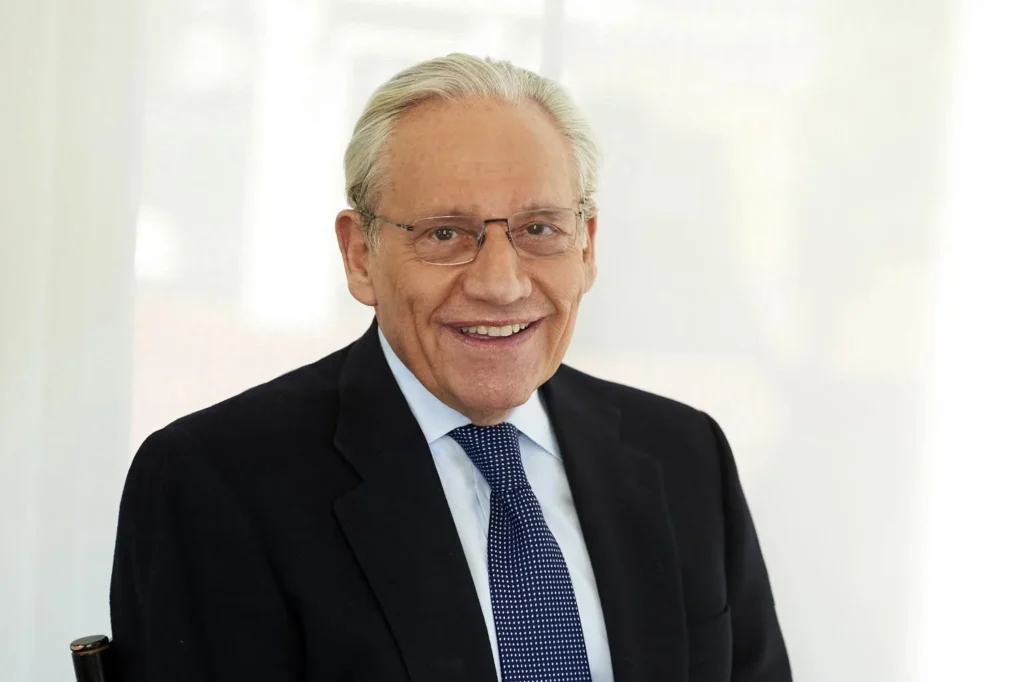
He toppled a president with a notepad, a phone, and a source named Deep Throat. Bob Woodward is widely regarded as the most consequential investigative journalist in American history. As a reporter for The Washington Post, Woodward, alongside partner Carl Bernstein, broke open the Watergate scandal, a political cover-up so vast it forced President Richard Nixon to resign on August 9, 1974. That feat alone would cement any journalist’s legacy. But Woodward didn’t stop there. Over the five decades that followed, he published 22 books, many of them explosive accounts of presidential power from Nixon through Biden, and never stopped reporting. This complete Bob Woodward biography traces his life from a small Illinois town to the halls of every White House since the 1970s.
Early Life and Navy Service
Robert Upshur Woodward was born on March 26, 1943, in Geneva, Illinois, a quiet suburb west of Chicago. He grew up in a middle-class family, his father, Alfred Eno Woodward, was a judge, and the household prized order, discipline, and civic duty.
Woodward was a strong student and won a scholarship to Yale University, where he graduated in 1965 with a Bachelor of Arts in English Literature. The Ivy League polish, however, was quickly followed by something far more formative: five years of service in the United States Navy.
He worked as a communications officer, learning to synthesize complex information quickly, manage high-stakes intelligence, and stay composed under pressure. Those skills, pattern recognition, relentless follow-through, comfort with classified worlds, would define his journalism for the next half-century. When he left the Navy in 1970, Woodward had never worked a day in a newsroom.
Career Beginnings: Joining The Washington Post
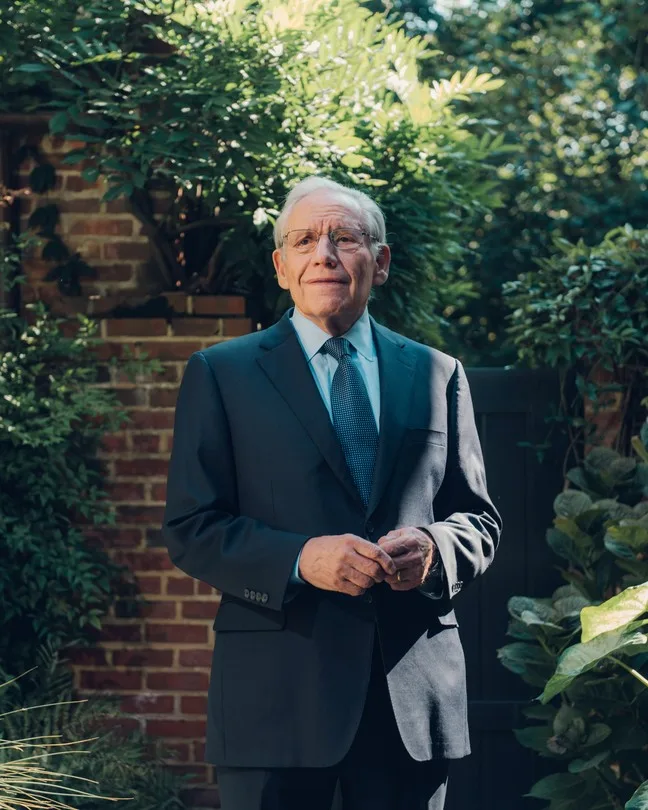
Woodward applied to The Washington Post immediately after his discharge. He was rejected. The paper’s metro editor suggested he get some experience first, so Woodward spent a year at the Montgomery County Sentinel, a small Maryland weekly, where he filed hundreds of stories in twelve months.
He reapplied to The Washington Post in 1971 and was hired. and joined the metro desk as a general assignment reporter, covering courts, crime, and local government, the unglamorous foundation of serious journalism.
He was fast, meticulous, and unusually skilled at building sources. Editors noticed. Within months of his arrival, he was landing stories that other reporters weren’t getting close to. That track record is what put him in position for the assignment that would change American history.
Watergate, The Story That Ended a Presidency
On the morning of June 17, 1972, authorities arrested five men for breaking into the Democratic National Committee headquarters at the Watergate complex in Washington, D.C. The newspaper assigned Woodward to cover their arraignment.What looked like a minor burglary story became, over the next two years, the most significant political investigation in American journalism.
Woodward and his reporting partner Carl Bernstein pursued every thread. They cultivated sources inside the FBI, the Justice Department, and the White House itself. Woodward’s most famous source was a senior government official known as “Deep Throat.” Later, the public learned that he was FBI Associate Director Mark Felt. He guided the reporting with his now-legendary advice: “Follow the money.”
Their stories revealed that the burglary was connected to a vast campaign of political espionage and sabotage directed by officials close to President Richard Nixon, and that Nixon himself had participated in obstructing the subsequent investigation.
The reporting’s impact was seismic:
- Nixon resigned the presidency on August 9, 1974, the only president in U.S. history to do so.
- Woodward and Bernstein shared the Pulitzer Prize for Public Service as part of The Washington Post’s 1973 award.
- Their account of the investigation, All the President’s Men (1974), became an instant bestseller.
- The 1976 film adaptation, starring Robert Redford as Woodward and Dustin Hoffman as Bernstein, became one of the most celebrated political films ever made.
The Watergate reporting didn’t just bring down a president. It permanently elevated the status of investigative journalism in America and inspired a generation of reporters to pursue accountability at the highest levels of power.
22 Books on American Power
After Watergate, Woodward could have coasted. Instead, he became the most prolific chronicler of presidential power in modern American publishing. His books are distinguished by extraordinary access, he routinely secures on-record and background conversations with presidents, cabinet secretaries, generals, and senior intelligence officials that no other journalist can match.
All the President’s Men (1974) and The Final Days (1976)
The twin pillars of his early career. All the President’s Men reconstructed the Watergate investigation in real time. The Final Days provided an unflinching account of Nixon’s last days in the White House, reported through hundreds of interviews, and remains one of the most gripping works of political nonfiction ever published.
The Brethren (1979)
A rare inside look at the U.S. Supreme Court, co-authored with Scott Armstrong. The book drew on interviews with law clerks and justices and revealed how the court’s most consequential decisions were actually made behind closed doors.
Wired (1984)
A biography of comedian and Saturday Night Live star John Belushi, focusing on the events that led to his death from a drug overdose. The book was controversial but demonstrated Woodward’s willingness to take his method, deep sourcing, exhaustive interviews, beyond the political world.
The Agenda (1994) and Beyond
Through the 1990s and 2000s, Woodward published a string of inside accounts of the Clinton, Bush, and Obama administrations. Titles including The Agenda, The Choice, Shadow, Bush at War, Plan of Attack, State of Denial, The War Within, and Obama’s Wars formed a continuous, multi-volume history of American presidential decision-making that no single author had attempted before at this scale.
The Trump Trilogy: Fear (2018), Rage (2020), and Peril (2021)
Woodward’s three books on Donald Trump’s presidency became among the most commercially successful of his career.
- Fear: Trump in the White House (2018) depicted an administration in near-constant chaos, with senior officials quietly removing documents from the president’s desk to prevent impulsive decisions.
- Rage (2020) was built partly on 18 recorded phone conversations between Woodward and Trump, a journalistic coup, and revealed that Trump had privately acknowledged in early February 2020 that COVID-19 was far more dangerous than he was publicly admitting.
- Peril (2021), co-authored with Washington Post reporter Robert Costa, reported that General Mark Milley, Chairman of the Joint Chiefs, had taken extraordinary steps to prevent a potential unauthorized military action in the final days of Trump’s presidency.
War (2024)
Woodward’s most recent book covers the Biden administration’s handling of the wars in Ukraine and Gaza, drawing on his signature blend of insider access and on-the-record interviews. It was published in October 2024 and immediately debuted at the top of bestseller charts.
Bob Woodward as a Public Speaker
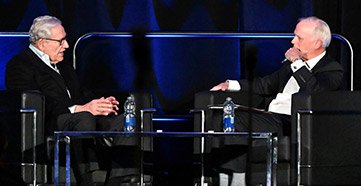
Beyond the page, Bob Woodward is one of the most sought-after voices on the American lecture circuit. His speaking career draws from five decades at the center of American political history, an archive of experience that no other living journalist can match.
Speaking Topics
Woodward’s keynote presentations cover a wide range of themes, including:
- Investigative journalism and the First Amendment, the tools, ethics, and methods that power accountability reporting
- The Watergate investigation, a first-hand account of the reporting that changed America
- Presidential power and decision-making, how America’s commanders-in-chief actually govern, based on 50+ years of insider reporting
- The future of the American press, challenges facing journalism in a polarized, digital media landscape
- Leadership under pressure, lessons drawn from reporting on presidents, generals, and intelligence chiefs
Who Books Bob Woodward?
Woodward commands some of the highest speaking fees in journalism, with estimates ranging from $75,000 to $150,000 per appearance. He is regularly booked for:
- University journalism and political science programs, particularly at top-ranked schools
- Corporate leadership summits, executives pay premium prices for his perspective on power and accountability
- Media industry conferences, where his insights on the state of journalism carry enormous weight
- Public affairs and civic organizations, think tanks, foundations, and non-profits focused on democracy and press freedom
His credibility is entirely biographical. There are no hypotheticals in a Bob Woodward speech. Every lesson comes from a real president, a real source, and a real moment in American history.
Bob Woodward Net Worth 2026
Bob Woodward’s estimated net worth in 2026 is approximately $25 million. That figure reflects more than half a century of work across multiple high-earning channels:
- Book advances and royalties, 22 books, most of them bestsellers, including multiple #1 New York Times titles with international distribution deals
- Speaking fees, estimated at $75,000–$150,000 per engagement, with dozens of appearances annually
- Film and adaptation royalties, All the President’s Men (1976) remains in wide academic and commercial circulation
- Washington Post salary and equity, Woodward has been with the paper for over 50 years and has held senior editorial positions
- Documentary and broadcast projects, multiple documentary appearances and consulting engagements
Woodward’s wealth is the product of sustained excellence in a field where few journalists ever achieve mainstream commercial success. Over the course of his career, his approach to access journalism, backed by exhaustive sourcing, proved particularly effective. As a result, he developed a model that combined deep reporting with commercially successful books and media projects. Ultimately, this approach helped him build a highly successful and enduring career.
Personal Life
Bob Woodward married journalist and author Elsa Walsh in 1989. Walsh, a former Washington Post staff writer, is the author of several books of her own, including Divided Lives and The Prince, and the couple share a deep commitment to reporting and literary journalism. They have three children together.
The family is based in Washington, D.C., where Woodward has lived and worked for most of his adult life. Despite his high-profile career, he remains a private person outside his public persona. In particular, colleagues know him for his disciplined work habits, extensive interview preparation, and meticulous approach to research. Furthermore, Woodward generally prefers to let his books and reporting speak for themselves rather than focus on his personal life.
At 82 years old in 2026, Woodward remains an active journalist. He continues to report for The Washington Post, conduct interviews, and, based on his publishing history, is almost certainly working on his next book.
Bob Woodward Best Quotes
On journalism’s purpose:
“The central dilemma in journalism is that you don’t know what you don’t know.”, Often cited in journalism school lectures; a reminder that the story you’re not seeing is often the most important one.
On Watergate:
“Watergate showed that the system worked. Properly motivated, the press, the prosecutors, the judges, and the Congress did their duty.”, From a retrospective essay; Woodward’s view that institutions held, though barely.
On sources:
“I’ve always felt that if you get the right people to talk to you honestly, you can find out what’s really going on.”, His core methodology, stated simply: access is everything.
On Donald Trump:
“Trump is the most unusual president in American history.”, From interviews promoting Rage in 2020; Woodward deliberately left the judgment understated.
On accountability:
“The press is the enemy of secrecy.”, A recurring theme across decades of speeches and interviews.
On Deep Throat:
After Mark Felt’s identity as Deep Throat became public in 2005, Woodward said, “He could have been fired or prosecuted. He took enormous risks. I think history will see him as a man of great conscience.”
On writing:
“The goal is to understand and explain, not to judge. The judgment belongs to the reader.”, Woodward’s long-held editorial philosophy, applied across 22 books.
On power:
“Every president I’ve covered has believed they were acting in the national interest. However, the question is always: what information were they working from? Ultimately, this reflection captures Woodward’s perspective after decades of reporting from inside the White House.”
Frequently Asked Questions
Bob Woodward is an American investigative journalist and author best known for his reporting on the Watergate scandal alongside Carl Bernstein for The Washington Post in the early 1970s. Their investigation helped uncover the connection between the break-in and the Nixon administration, contributing to President Richard Nixon’s resignation in 1974. Woodward has since written numerous books examining American politics, presidents, and political power.
Woodward and Carl Bernstein investigated the 1972 break-in at the Democratic National Committee headquarters in the Watergate complex in Washington, D.C. Over the following two years, they uncovered connections between the burglary and the Nixon White House. Their reporting, supported by information from the anonymous source known as “Deep Throat,” became central to the Watergate investigation and helped expose the political scandal that ultimately led to Nixon’s resignation.
Bob Woodward’s net worth is estimated at approximately $25 million, although exact figures are not publicly verified. His income has come from his long career at The Washington Post, bestselling books, speaking engagements, and other media projects. Because private financial information is not publicly disclosed, net-worth estimates should be treated as approximate rather than definitive.
Bob Woodward has written three major books about Donald Trump’s presidency. Fear: Trump in the White House (2018) examined the internal workings and conflicts of the administration. Rage (2020) explored Trump’s presidency during the COVID-19 pandemic and included recorded conversations between Woodward and Trump. Peril (2021), co-authored with Robert Costa, examined the final months of Trump’s presidency and the aftermath of the 2020 election.
Bob Woodward’s speaking topics draw on decades of investigative journalism and reporting on American presidents. He discusses investigative journalism, press freedom, Watergate, presidential decision-making, political power, American democracy, and the inner workings of the U.S. government. His presentations provide audiences with insights gained from reporting on administrations from Richard Nixon through Joe Biden.
Conclusion
From a Navy communications officer who couldn’t get a job at a big-city newspaper to the journalist who brought down a president, and then kept going for another fifty years, the Bob Woodward biography is one of the most remarkable careers in American media history. His 22 books form an unprecedented archive of how power operates in the United States, reported from the inside, across eight administrations. Whether you know him from All the President’s Men, the Trump recordings in Rage, or his ongoing reporting for The Washington Post, Woodward remains the gold standard for what accountability journalism can accomplish. At 82, he shows no signs of stopping.
In the news
Sources
- Official website bobwoodward.com