
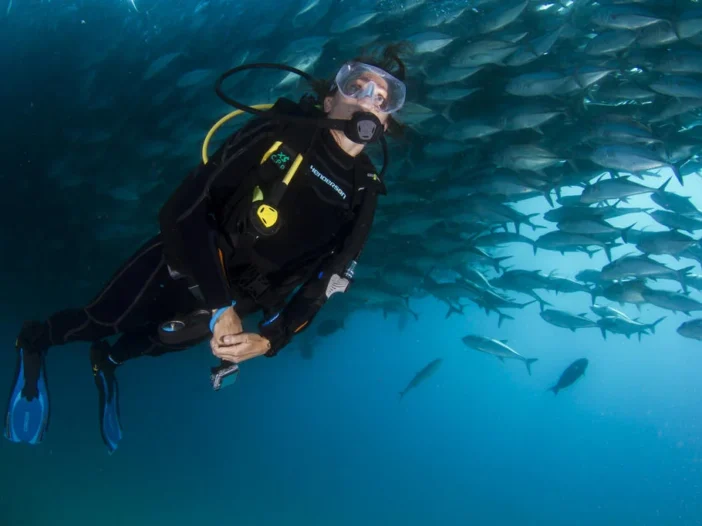
Celine Cousteau did not choose the ocean; the ocean chose her. She grew up aboard her grandfather’s legendary research vessel Calypso, watching Jacques Cousteau, the man who invented modern ocean exploration, work, film, and fight for the sea. That upbringing planted a seed that has since grown into one of the most distinctive environmental careers of her generation. Today, Celine is a filmmaker, explorer, indigenous rights advocate, and the founder of CauseCentric Productions, a company built on the belief that storytelling can save the planet. Born May 10, 1972, in France, she has built her own voice within one of history’s greatest conservation legacies. This Celine Cousteau biography covers her childhood on the Calypso, her filmmaking career, her advocacy work, and why she remains one of the most compelling environmental speakers in the world today.
Quick Facts About Celine Cousteau
| Detail | Information |
| Date of Birth | May 10, 1972 |
| Birthplace | France |
| Nationality | French-American |
| Education | Hampshire College, Massachusetts (Environmental Studies) |
| Occupation | Filmmaker, Explorer, Ocean Conservationist, Speaker |
| Company | CauseCentric Productions (Founder) |
| Known For | Tribes on the Edge, ocean advocacy, Cousteau family legacy |
| Estimated Net Worth | $3 million (est.) |
| Based In | Between Europe and the United States |
Early Life, Aboard the Calypso
Celine Cousteau was born into a world most people only dream about. Her grandfather, Jacques-Yves Cousteau, was already a global icon, the French marine biologist, naval officer, filmmaker, and co-inventor of the Aqua-Lung who had turned the ocean into a place of wonder for millions of television viewers worldwide. Celine did not just watch his documentaries. She lived them.
As a child, she spent time aboard the RV Calypso, Jacques Cousteau’s converted minesweeper that served as the floating home base for decades of ocean exploration and filmmaking. The rhythms of that life, the water, the research, the storytelling, shaped her in ways that no classroom alone could have.
Her father, Jean-Michel Cousteau, continued the family’s conservation work as an ocean environmentalist and filmmaker in his own right, deepening the sense that the ocean was not just a backdrop to Celine’s childhood, it was her inheritance.
Education and the Environmental Conviction
Celine brought her lived experience to formal study when she enrolled at Hampshire College in Amherst, Massachusetts, a school renowned for its interdisciplinary and independent approach to education. She studied Environmental Studies, building the intellectual framework to complement the instinctive ocean literacy she had absorbed aboard the Calypso.
Hampshire’s ethos, that students should design their own education around genuine questions, suited someone who had grown up with the world as her classroom. By the time she graduated, Celine had fused the Cousteau family’s visual storytelling tradition with a rigorous understanding of ecological systems and environmental justice.
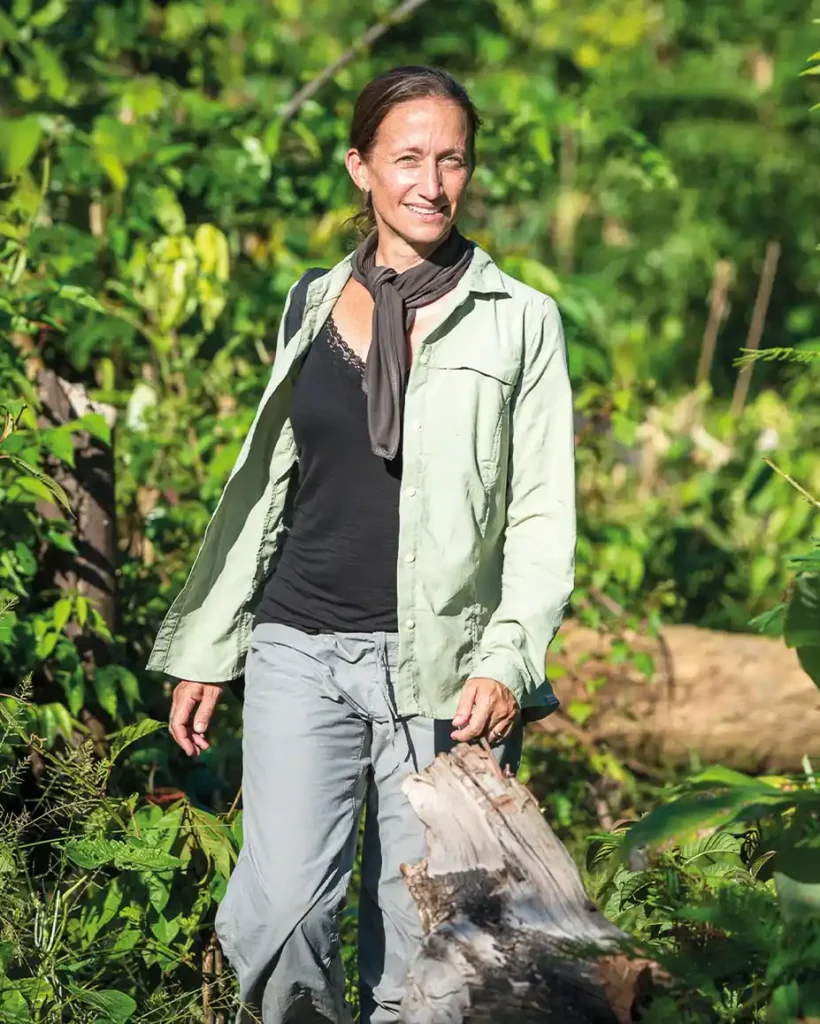
The Cousteau Legacy
The Cousteau name carries extraordinary weight. Jacques-Yves Cousteau (1910–1997) is widely regarded as the father of modern ocean conservation. He co-invented the Aqua-Lung diving regulator in 1943, produced the Oscar-winning documentary The Silent World (1956), and brought the ocean into living rooms around the world through his long-running television series The Undersea World of Jacques Cousteau.
He founded the Cousteau Society in 1973, which continues to advocate for the protection of marine ecosystems. He was awarded the Presidential Medal of Freedom by President Bill Clinton in 1985 and remains one of the most recognizable environmental figures in history.
Carrying the Name Forward
For Celine, the legacy is both a gift and a responsibility. She has spoken openly about the dual nature of growing up a Cousteau, the doors it opens and the expectations it carries.
Her approach has been to honor the tradition while building something distinctly her own. Where Jacques used television to bring the underwater world to a mass audience in the 20th century, Celine uses documentary film and advocacy to connect environmental destruction to human stories, particularly the stories of indigenous communities on the front lines of ecological collapse.
She is not simply curating a legacy. She is extending it into territory her grandfather never explored.
Filmmaking Career
Celine Cousteau’s films are built on a deceptively simple premise: that the most powerful way to change how people treat the environment is to show them the people who depend on it.
Tribes on the Edge (2018)
Her most celebrated documentary work, Tribes on the Edge, takes viewers deep into the Amazon basin to document indigenous communities whose lands, cultures, and lives are under existential threat from illegal logging, mining, and development. Shot over multiple years, the film is a deeply personal and visually stunning record of communities living at the intersection of environmental catastrophe and cultural erasure.
The film received critical attention at international documentary festivals and was widely praised for its intimate, non-exploitative approach to its subjects, a hallmark of Celine’s filmmaking philosophy.
Oceans of the Future
Celine’s ocean-focused work extends to projects examining the state of the world’s seas, from coral bleaching and plastic pollution to overfishing and the accelerating effects of climate change on marine ecosystems. Her films in this vein carry the visual DNA of the Cousteau tradition, breathtaking underwater photography, emotional immediacy, while updating the message for a generation facing a far more urgent ecological crisis than Jacques could have imagined in the 1960s.
Filmmaking as Advocacy
What distinguishes Celine’s approach from conventional nature documentary is her insistence that environmental stories are human stories. She is not primarily interested in filming spectacular wildlife. She is interested in the communities, indigenous, coastal, riverine, whose survival is bound up with healthy ecosystems.
This framing connects her filmmaking directly to her advocacy: both are rooted in the conviction that you cannot protect the environment without centering the people who live closest to it.
CauseCentric Productions
In 2006, Celine founded CauseCentric Productions, a film and media production company with a mission statement built into its name: cause-driven content for a cause-driven world.
CauseCentric operates at the intersection of documentary filmmaking, environmental advocacy, and social justice storytelling. The company produces films, branded content, and media projects that are explicitly designed to move audiences toward action, not just emotion.
The company reflects Celine’s belief that the entertainment industry has an underused capacity to drive genuine social change. By controlling her own production infrastructure, she can pursue stories that commercial studios would consider too niche, too political, or too slow-moving for mainstream audiences, while maintaining the creative and ethical integrity her subjects deserve.
CauseCentric has become a model for purpose-driven independent production, and Celine frequently speaks about the company’s philosophy when addressing audiences at media, sustainability, and social impact conferences.
Celine Cousteau as a Public Speaker
Celine Cousteau is one of the most in-demand voices at the intersection of ocean conservation, indigenous rights, and environmental storytelling. Her speaking engagements draw on personal history, professional expertise, and a Cousteau-caliber ability to make complex environmental issues feel vivid and urgent.
She brings something rare to the stage: she is not a scientist presenting data or a politician presenting policy. She is a storyteller presenting human stakes, and audiences feel the difference.
Speaking Topics
Celine’s keynotes and presentations address:
- Ocean conservation and the climate crisis, the accelerating threats facing the world’s oceans, from acidification and warming to plastic pollution and overfishing, presented through the lens of a lifetime at sea
- Indigenous rights and environmental justice, how indigenous communities serve as both the most vulnerable victims of environmental destruction and among its most effective guardians
- The Cousteau legacy and what it means today, personal reflections on growing up in the world’s most famous conservation family, and what responsibility looks like in the 21st century
- Filmmaking as advocacy, how documentary storytelling can shift public consciousness and drive policy change
- Inspiring the next generation of environmental stewards, her most requested topic at university campuses, connecting students to a sense of personal agency in the face of climate anxiety
Who Books Celine Cousteau?
Her speaker profile attracts a wide range of clients:
- University sustainability and environmental programs, her combination of personal legacy and academic rigor resonates strongly with student audiences
- Environmental and conservation conferences, organizations like the Ocean Conference, COP side events, and marine conservation summits
- Corporate sustainability events, companies seeking authentic environmental credibility for ESG initiatives and leadership retreats
- Film and media festivals, particularly those with documentary or social impact programming
- Indigenous rights forums, where her Tribes on the Edge work gives her specific credibility
Celine Cousteau Net Worth 2026
Celine Cousteau’s estimated net worth in 2026 is approximately $3 million, drawn from multiple income streams that reflect the breadth of her career.
Her wealth is built across several sources:
- Speaking fees, as a high-profile keynote speaker at international conferences and university events, Cousteau commands fees consistent with her platform and family brand
- Documentary filmmaking, film licensing, festival distribution deals, and broadcast rights for Tribes on the Edge and her other projects through CauseCentric Productions
- CauseCentric Productions revenue, branded content commissions, impact media projects, and co-productions with NGOs and foundations
- Cousteau family brand associations, partnerships and affiliations connected to the broader Cousteau name and the Cousteau Society
It is worth noting that Celine’s career choices reflect consistent prioritization of mission over margin. The projects she takes on are rarely the most commercially lucrative available to someone with her name and platform. Her net worth reflects a career built around purpose, and that context matters when evaluating the figure.
Personal Life
Celine Cousteau lives a life shaped by movement, between Europe and the United States, between ocean and land, between filmmaking and advocacy. She has described herself as someone who is most at home near water, a disposition she traces directly to her childhood on the Calypso.
She maintains a deep personal connection to ocean exploration, continuing to dive and travel to the marine environments her films document. Unlike some celebrity environmental advocates who engage with nature primarily through their platforms, Celine engages with it directly, in the water, in the Amazon, in the communities she films.
Her values center on:
- Reciprocity, the belief that humans must give back to ecosystems they depend on
- Humility before nature, a philosophical position she traces to both her grandfather’s influence and her own years in the field
- The primacy of local knowledge, particularly indigenous knowledge systems, which she argues are essential to any serious environmental strategy
- Intergenerational responsibility, a conviction, deeply personal given her family history, that the choices made today determine what is left for future generations
Celine has kept the details of her romantic life and immediate family largely private, and they do not form part of her public platform.
Celine Cousteau Best Quotes
These quotes capture Celine’s voice, poetic, urgent, and grounded in both personal history and global stakes.
On her grandfather’s legacy:
“My grandfather showed the world the ocean. My job is to show the world what we’re doing to it , and why that has to change.” , On carrying the Cousteau mission into the 21st century.
On indigenous communities and the environment:
“The people who live closest to nature are its best protectors, and the first ones we sacrifice when we fail to protect it.”, From a keynote on Tribes on the Edge and indigenous rights.
On storytelling as a tool for change:
“Data tells people what is happening. Story tells them why it matters. You need both, but story moves people to act.”, On the philosophy behind CauseCentric Productions.
On ocean conservation:
“The ocean covers more than 70 percent of this planet. When we treat it like a dumping ground, we are treating ourselves like one.”, From a conservation conference keynote.
On her childhood aboard the Calypso:
“I didn’t grow up watching nature documentaries. I grew up inside one. That changes how you see everything.”, In a profile interview reflecting on her upbringing.
On climate anxiety and the next generation:
“Fear is a reasonable response to what we’re facing. But it is not a strategy. We need to transform that fear into purpose.”, From a university commencement address.
On the Cousteau name:
“I am proud of where I come from. But I have to earn what that name means every day, I cannot simply inherit it.”, On the responsibility of her family legacy.
On the Amazon:
“When you sit with people whose entire world is under threat, their forest, their river, their culture, you stop talking about the environment as an abstract issue. It becomes a matter of survival.”, Reflecting on filming Tribes on the Edge.
Frequently Asked Questions
Celine Cousteau is a French-American filmmaker, ocean conservationist, explorer, and public speaker born on May 10, 1972, in France. She is the granddaughter of legendary marine explorer Jacques Cousteau and the daughter of ocean environmentalist Jean-Michel Cousteau. She is the founder of CauseCentric Productions and the director of the award-recognized documentary Tribes on the Edge. She speaks internationally on ocean conservation, indigenous rights, and environmental storytelling.
Yes. Celine Cousteau is the granddaughter of Jacques-Yves Cousteau, the French marine biologist, filmmaker, and co-inventor of the Aqua-Lung who is widely regarded as the father of modern ocean conservation. Her father is Jean-Michel Cousteau, Jacques’s son and a noted ocean environmentalist in his own right. Celine spent part of her childhood aboard the RV Calypso, her grandfather’s famous research vessel, which shaped her lifelong connection to the ocean.
Celine Cousteau is a documentary filmmaker, ocean conservationist, and public speaker. She founded CauseCentric Productions in 2006 to produce environmental and social justice films. Her most celebrated work is Tribes on the Edge (2018), documenting threatened indigenous communities in the Amazon basin. She also advocates for ocean conservation and speaks at universities, environmental conferences, and corporate sustainability events on topics including climate change, indigenous rights, and filmmaking as advocacy.
Celine Cousteau’s estimated net worth is approximately $3 million as of 2026. Her income comes from documentary filmmaking and distribution through CauseCentric Productions, international speaking engagements, branded content and impact media projects, and associations with the broader Cousteau family conservation brand. Celine has consistently prioritized mission-driven work over commercial projects, and her net worth reflects a career built around environmental and social purpose rather than maximum financial return.
Celine Cousteau speaks on ocean conservation and the climate crisis, indigenous rights and environmental justice, the Cousteau family legacy, and filmmaking as a tool for social change. She is especially sought after by university sustainability programs, conservation organizations, and corporate ESG events. Her presentations blend personal narrative, including her childhood on the Calypso, with urgent environmental analysis, making her equally compelling for student audiences and policy professionals.
Conclusion
The Celine Cousteau biography is the story of a legacy transformed, from underwater spectacle to human urgency, from television wonder to documentary reckoning. Raised aboard one of history’s most famous ships, she chose not to rest on her grandfather’s extraordinary achievements but to push past them, into the Amazon basin, into indigenous communities, into the hard questions about what ocean conservation actually demands of us now. As a filmmaker, founder, and speaker, she continues to prove that the most powerful tool for saving the planet may still be a well-told story.
Leave a Reply