
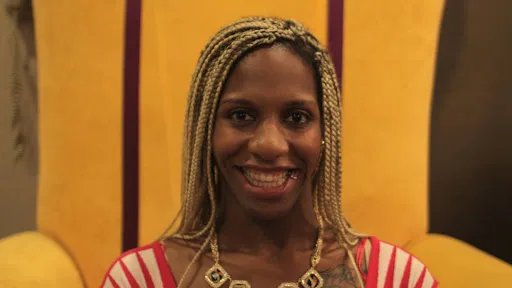
In June 2011, CeCe McDonald was walking to a Minneapolis grocery store with friends when a group of strangers began hurling racist and transphobic slurs at her. When the confrontation turned violent and she was slashed across the face with a broken beer glass, McDonald defended herself, and the attacker died. She was convicted of manslaughter and sent to a men’s prison despite identifying as a woman. The global #FreeCeCe movement she inspired changed the conversation about violence against Black trans women, self-defense law, and carceral injustice forever. This CeCe McDonald biography covers her Chicago upbringing, the attack, her incarceration, her release, and the advocacy career that has made her one of the most important transgender voices in America today.
Quick Facts About CeCe McDonald
| Detail | Information |
| Date of Birth | May 26, 1989 |
| Birthplace | Chicago, Illinois |
| Nationality | American |
| Occupation | Trans Activist, Community Organizer, Public Speaker |
| Known For | #FreeCeCe campaign, Free CeCe documentary (2016), self-defense advocacy |
| Awards | Bayard Rustin Civil Rights Award (2014); The Advocate 40 Under 40 (2014) |
| Partner | Not publicly disclosed |
| Based In | Minneapolis, Minnesota |
Early Life and Background
CeCe McDonald was born May 26, 1989, in Chicago, Illinois, and grew up navigating a world that rarely made space for young Black trans women. She relocated to Minneapolis, Minnesota, as a young adult, where she found community, purpose, and what many call a “chosen family” among other LGBTQ+ youth of color.
In Minneapolis, McDonald enrolled at Minnesota Community and Technical College, where she studied fashion design. She was drawn to creativity, self-expression, and craftsmanship, interests that would later take on layered meaning when the tools of her trade became part of her legal case.
Her early years were shaped by the realities that disproportionately confront Black transgender women in America: economic precarity, housing instability, and the near-constant threat of street harassment and violence. These experiences did not break McDonald. They made her the activist she would become.
The 2011 Attack and Conviction
On the night of June 5, 2011, McDonald and a group of friends were walking to a grocery store near a bar in South Minneapolis. A group of white men and women outside the bar began directing racist and transphobic slurs at them, including a slur targeting McDonald specifically as a trans woman.
The confrontation escalated rapidly. Dean Schmitz, one of the men in the group, smashed a glass against McDonald’s face, perforating her cheek and lacerating her salivary gland. What happened next would become the subject of national debate.
McDonald defended herself with a pair of fabric shears she was carrying. Schmitz died from a stab wound. McDonald and her supporters maintained she acted in self-defense. Prosecutors disagreed.
The Prosecution and Sentencing
McDonald was charged with second-degree murder. Under pressure, and facing the risk of a longer sentence at trial, she accepted a plea deal and was convicted of second-degree manslaughter in May 2012.
She was sentenced to 41 months in a Minnesota correctional facility, and placed in a men’s prison, despite being a transgender woman. Her legal team and advocates argued this placement exposed her to additional risk and amounted to a failure of the justice system to recognize her identity.
McDonald served 19 months before her release in January 2014.
Why the Case Became a National Flashpoint
The McDonald case arrived at a moment when conversations about trans women of color and violence were just beginning to gain mainstream attention.
Critics of the conviction pointed to several troubling elements:
- The apparent disproportion between provocation and consequence, McDonald was the one attacked first
- The state’s failure to seriously weigh her right to self-defense
- Her placement in a men’s facility in clear contradiction of her gender identity
- The racial dynamics of a Black trans woman being prosecuted for defending herself against a white attacker
Legal scholars, civil rights organizations, and LGBTQ+ advocates framed her case as a microcosm of how the criminal justice system fails Black trans women at every turn.
#FreeCeCe, The Global Movement
The campaign to free CeCe McDonald began almost immediately after her sentencing and grew into one of the most visible transgender justice campaigns in modern American history.
Activists organized rallies in Minneapolis, New York, San Francisco, and cities across Europe. Petitions gathered hundreds of thousands of signatures. The hashtag #FreeCeCe circulated widely across social media, connecting prison abolitionists, trans advocates, and racial justice organizers in a unified call.
The Free CeCe Documentary (2016)
The movement’s most lasting cultural artifact is the 2016 documentary Free CeCe, produced and narrated by actress and activist Laverne Cox. Cox, herself a Black trans woman who had risen to national prominence through Orange Is the New Black, brought both personal connection and significant platform to the project.
The film, directed by Jac Gipson, traces McDonald’s story from the night of the attack through her imprisonment and release, weaving in expert testimony on racism, transphobia, and the failure of the legal system to protect trans women of color. It premiered to critical acclaim and remains one of the most important documentary records of the transgender rights movement.
Cox has spoken publicly about her deep identification with McDonald’s story and the responsibility she felt to amplify it.
Release and Aftermath
McDonald was released from prison in January 2014, after serving 19 months of her 41-month sentence. Supporters greeted her release with celebration, but also with recognition that the work was far from over.
Her case had shifted the national discourse. Organizations like the Sylvia Rivera Law Project, the Transgender Law Center, and the National Center for Transgender Equality cited it in policy advocacy. Law professors used it in classrooms. Journalists wrote about it in Rolling Stone, Mother Jones, Ebony, and VICE.
Life After Prison, Advocacy and Organizing
After her release, McDonald did not retreat from public life. She stepped directly into it.
She was named to The Advocate’s “40 Under 40” list in 2014, recognizing the most influential LGBTQ+ people under the age of 40. That same year, she received the Bayard Rustin Civil Rights Award from the Harvey Milk LGBT Democratic Club in San Francisco, an honor named for the openly gay Black civil rights strategist who helped organize the 1963 March on Washington.
McDonald has been profiled by some of the most respected outlets in American journalism:
- Rolling Stone
- Mother Jones
- Ebony
- VICE
- The Guardian
She continues to organize independently, speak nationally, and show up in coalitions working at the intersection of trans liberation, racial justice, and prison abolition.
CeCe McDonald as a Public Speaker
CeCe McDonald is one of the most compelling and sought-after speakers at the intersection of transgender rights, prison abolition, and racial justice in the country. Her talks are rooted in lived experience and shaped by years of organizing, making them equally powerful in academic, activist, and institutional settings.
Speaking Topics
McDonald typically addresses the following themes:
- Trans liberation and the violence facing trans women of color, drawing on her own experience to humanize statistics and policies
- Prison abolition and carceral justice, critiquing the U.S. prison system’s treatment of LGBTQ+ people, particularly trans women placed in men’s facilities
- Intersectionality, exploring how race, gender identity, and class compound vulnerability and shape legal outcomes
- Self-defense and the law, examining how stand-your-ground and self-defense frameworks are applied unequally
- Movement building through storytelling, the power of sharing personal narrative to advance policy and cultural change
Who Books CeCe McDonald?
McDonald is regularly invited to speak at:
- University and college LGBTQ+ resource centers and student organizations
- Social justice conferences and activist convenings
- Prison reform and abolitionist organizations
- Legal advocacy and policy forums
- Black history and trans awareness month programming
Her combination of personal authority, rigorous political analysis, and magnetic presence makes her equally effective with student audiences and policy professionals.
CeCe McDonald Net Worth 2026
Estimating CeCe McDonald’s net worth requires understanding what has, and has not, motivated her life since 2014. McDonald has consistently prioritized community organizing and movement work over commercial gain. Her income streams are consistent with this orientation:
- Speaking fees from universities and conferences
- Documentary participation and royalties
- Community organizing stipends and grants
- Media appearances and interviews
McDonald does not appear to have pursued corporate partnerships, brand deals, or the kind of commercial celebrity that inflates net worth figures. Reliable estimates are not publicly available, and any specific figures circulating online should be treated with skepticism.
What is certain is that McDonald has chosen to build social capital and movement impact over personal wealth, a choice that speaks directly to the values she articulates on stage and in interviews.
Personal Life
CeCe McDonald is based in Minneapolis, Minnesota, where she continues to organize and build community. She has spoken candidly in interviews about the psychological weight of her incarceration, and the ongoing work of healing.
She is known for her extraordinary candor about the experience of being Black and transgender in America, the fear, the resilience, the community, and the political stakes. She does not sanitize her story for palatability.
McDonald’s personal values are inseparable from her public work. She believes in:
- The humanity and dignity of all trans people, especially trans women of color
- The fundamental violence of the prison system and the necessity of abolition
- The power of community and chosen family as survival and resistance
- Radical honesty as a political act
Her relationship status and family life are not publicly disclosed, and she has not made these details part of her public platform.
CeCe McDonald Best Quotes
These quotes illuminate McDonald’s voice, powerful, precise, and rooted in lived experience.
On self-defense and justice:
“I was defending myself. I was protecting my life. And for that, I was criminalized.”, Reflecting on her conviction and what it revealed about how the law treats Black trans women.
On the prison system:
“The prison-industrial complex does not protect trans women. It puts us in danger and calls it policy.”, From a post-release interview discussing her placement in a men’s facility.
On visibility:
“My case wasn’t an anomaly. It’s what happens to us every day. I just had people paying attention.”, On the #FreeCeCe movement and media coverage of her case.
On Laverne Cox and the documentary:
“Laverne gave my story legs. She gave it a platform I never could have built alone, and I’m grateful for that forever.”, Speaking about the Free CeCe documentary and Cox’s role.
On intersectionality:
“You cannot understand what happened to me without understanding race, gender, and class all at once. They don’t happen separately in your body.”, From a university keynote address.
On healing:
“Healing isn’t private when you’ve been harmed publicly. My healing is political too.”, On the relationship between personal recovery and public advocacy.
On the movement:
“#FreeCeCe was never just about me. It was always about all of us, every trans woman who never got a hashtag.”, Reflecting on the meaning of the campaign’s global reach.
On belonging:
“My chosen family in Minneapolis saved my life long before June 2011. Community is not a luxury, it is how we survive.”, On the role of LGBTQ+ chosen family in her story.
Frequently Asked Questions
CeCe McDonald is a Black transgender activist, community organizer, and public speaker born on May 26, 1989, in Chicago, Illinois. She rose to national prominence after a 2011 self-defense incident in Minneapolis resulted in her conviction for manslaughter and imprisonment in a men’s facility. Her case sparked the global #FreeCeCe movement and the 2016 documentary produced by Laverne Cox. She is a recipient of the Bayard Rustin Civil Rights Award and The Advocate’s 40 Under 40.
On June 5, 2011, McDonald was attacked outside a Minneapolis bar by a group that directed racist and transphobic slurs at her and her friends. A member of the group struck her with a broken glass, cutting her face and lacerating her salivary gland. McDonald defended herself with fabric shears; the attacker, Dean Schmitz, died. McDonald accepted a plea deal, was convicted of second-degree manslaughter, and sentenced to 41 months in a men’s prison, where she served 19 months before release in January 2014.
Free CeCe is a 2016 documentary film directed by Jac Gipson and produced and narrated by actress and activist Laverne Cox. The film chronicles McDonald’s story, from the 2011 attack and her subsequent incarceration to her release and advocacy work. It examines the systemic failures that led to her imprisonment and places her case in the broader context of violence against Black trans women and the failures of the criminal justice system to protect them.
This remains a subject of significant debate. Advocates argue that McDonald was not treated fairly: she was the victim of an unprovoked physical attack, was prosecuted rather than protected, and was housed in a men’s correctional facility despite being a trans woman, exposing her to additional risks. Critics of her prosecution argue that the case reflected systemic biases against Black women and trans people in the legal system. The prosecution maintained the conviction was legally appropriate under Minnesota law.
CeCe McDonald speaks primarily on transgender rights and violence against trans women of color, prison abolition, intersectionality (the overlapping impacts of race, gender, and class), and self-defense law reform. She is regularly booked by universities, LGBTQ+ organizations, and social justice conferences. Her talks combine personal narrative with political analysis, making her a particularly effective speaker for student audiences and advocates working at the intersection of racial and gender justice.
Conclusion
The CeCe McDonald biography is not simply the story of one woman’s survival, it is a case study in how America treats its most vulnerable. From a violent attack on a Minneapolis sidewalk to a global movement, a celebrated documentary, and a career devoted to justice, McDonald’s journey has forced a reckoning with the violence faced by Black trans women, the failures of the carceral system, and the power of community to fight back. She continues to speak, organize, and bear witness, with extraordinary clarity and courage, on behalf of everyone who never got a hashtag.
Leave a Reply