
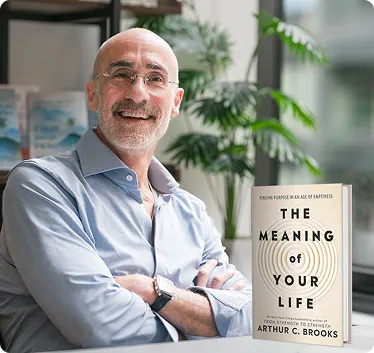
What do a French horn player in Barcelona, a conservative Washington think tank, Harvard’s hallowed halls, and Oprah Winfrey’s living room have in common? They’re all chapters in one of the most improbable careers in American intellectual life. Arthur C. Brooks, born May 21, 1964, in Seattle, Washington, is a Harvard professor, bestselling author, and the world’s foremost researcher on the science of happiness and human flourishing. His Atlantic column reaches millions. His books sit on the nightstands of CEOs, senators, and college freshmen alike. This Arthur C. Brooks biography traces the full arc: from classical musician to public intellectual, from think tank president to happiness guru. Here is everything you need to know.
Quick Facts About Arthur C. Brooks
| Detail | Information |
| Date of Birth | May 21, 1964 |
| Birthplace | Seattle, Washington |
| Nationality | American |
| Education | Thomas Edison State University (BA); Florida Atlantic University (MBA); RAND Graduate School (PhD, Policy Analysis) |
| Net Worth (est.) | $5 million |
| Spouse/Partner | Ester Munt-Codina |
| Children | 3 |
| Occupation | Harvard Professor, Author, Keynote Speaker, Former President of AEI |
Early Life and Background: The French Horn Player from Seattle
Arthur Brooks did not take the conventional path to intellectual stardom, and that is precisely what makes him so interesting.
Growing up in Seattle, Washington, Brooks showed an early aptitude not for economic or political science, but for music. He became a serious student of the French horn, developing a skill rare enough to open doors that few academics ever walk through.
In his early twenties, rather than enrolling in a traditional four-year university, Brooks joined the City Orchestra of Barcelona, performing professionally in Spain while his American peers were writing term papers. He learned to speak both Spanish and Catalan fluently, immersing himself in a culture far removed from the Pacific Northwest.
It was in Barcelona that Brooks met Ester Munt-Codina, the woman he would marry. Their relationship, forged during those years of artistic ambition and cultural immersion, remains the cornerstone of his personal life decades later.
The musician years were not a detour. Brooks frequently credits his time as a professional performer for shaping his understanding of meaning, discipline, and the gap between achievement and happiness, themes that would define his life’s work.
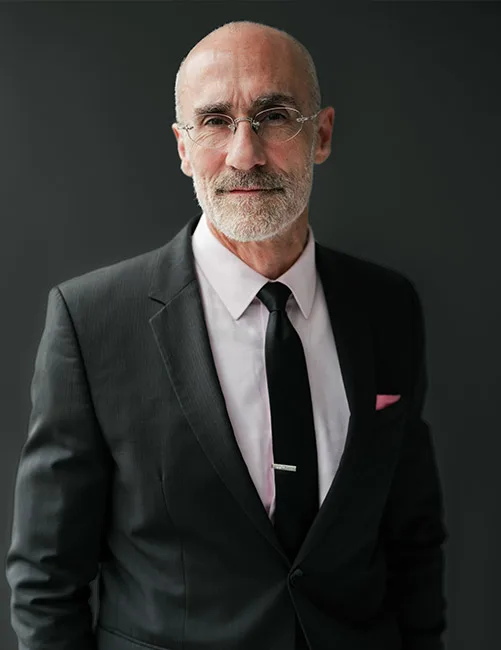
Career Beginnings: From Orchestra Pit to Academic Podium
The pivot from classical musician to policy scholar did not happen overnight, and it did not happen through any traditional academic pipeline.
Brooks earned his Bachelor of Arts from Thomas Edison State University, an institution designed for working adults and non-traditional students. He later completed an MBA from Florida Atlantic University before earning his PhD in Policy Analysis from the RAND Graduate School, one of the most rigorous and respected policy research programs in the United States.
His early academic career included a faculty appointment at Syracuse University’s Maxwell School of Citizenship and Public Affairs, widely regarded as one of America’s premier schools of public policy. There, he built a reputation as a sharp, data-driven thinker who could communicate complex ideas without losing his audience.
During this period, Brooks also began writing books, publishing research on philanthropy, civic culture, and the relationship between government policy and human happiness. These early works, though less widely read than his later bestsellers, established the intellectual scaffolding for everything that followed.
The unconventional résumé, professional musician, non-traditional undergraduate, RAND-trained policy scholar, gave Brooks a distinctive voice. He was rigorous but never dry, empirical but never cold.
Major Career Highlights
Leading the American Enterprise Institute (2009–2019)
In 2009, Brooks was named President of the American Enterprise Institute (AEI), one of Washington D.C.’s most influential conservative think tanks. He was 48 years old when he left the position a decade later, having transformed AEI’s reach, revenue, and reputation.
Under his leadership, AEI:
- Expanded its donor base and annual revenue significantly
- Positioned itself as a home for serious, evidence-based conservative policy thought
- Elevated the public profiles of its scholars through media, books, and speaking
- Navigated the turbulent political landscape of the Obama and Trump years without losing its intellectual footing
Brooks was widely praised, even by ideological opponents, as one of the most effective think tank leaders of his generation. His decade at AEI gave him a national platform, a Washington network, and a front-row seat to American political polarization. That experience would directly fuel his later work on civility and bridging divides.
“How to Build a Life”, The Atlantic Column
When Brooks left AEI in 2019, he launched one of the most-read columns in American journalism. “How to Build a Life”, published in The Atlantic, quickly became essential reading for anyone navigating questions of career, meaning, relationships, and purpose.
The column synthesizes three traditions that rarely appear together in mainstream media:
- Social science research (psychology, economics, behavioural science)
- Classical philosophy (Aristotle, the Stoics, Thomas Aquinas)
- Religious wisdom (drawn from multiple traditions, with Brooks’s own Catholicism as a touchstone)
The result is something unusual: rigorous without being academic, spiritual without being preachy, practical without being self-help cliché. Millions of readers, including many who do not share Brooks’s political or religious views, find it indispensable.
A Bestselling Book Catalog
Brooks has authored or co-authored 12 books. His most significant titles include:
- Gross National Happiness (2008), An early argument that public policy should measure and promote well-being, not just GDP
- The Battle (2010), A defense of free enterprise and American economic culture
- The Conservative Heart (2015), A call for conservatives to embrace a politics of compassion and opportunity
- Love Your Enemies (2019), His most overtly political book, arguing that contempt is destroying American civic life
- From Strength to Strength (2022), His biggest bestseller, a data-driven guide to thriving in the second half of life; it spent months on the New York Times bestseller list
- Build the Life You Want (2023, co-authored with Oprah Winfrey), A collaboration that reached a massive mainstream audience, combining Brooks’s research framework with Winfrey’s storytelling and lived experience From Strength to Strength and Build the Life You Want represent Brooks at his most commercially successful and culturally influential, books that found readers who had never picked up a policy paper or sat in a philosophy class.
Arthur C. Brooks as a Public Speaker
Few American intellectuals command a stage the way Arthur Brooks does. His background as a professional musician gives him a performer’s instinct for timing, presence, and connection that most academics never develop.
What he speaks about:
- Happiness and human flourishing, the science of what actually makes people satisfied with their lives
- Meaning vs. success, why professional achievement so often fails to deliver the fulfilment it promises
- Political civility and bridging divides, how contempt destroys relationships and institutions, and what to do about it
- Leadership and purpose, building organizations and careers around meaning, not just metrics
- The second half of life, navigating the shift from achievement-driven “fluid intelligence” to wisdom-based “crystallized intelligence”
- Faith, relationships, and the four pillars of a meaningful life
Who books Arthur Brooks:
- Fortune 500 companies hosting executive leadership retreats
- University commencements and convocation ceremonies
- Faith-based organizations and diocesan conferences
- Healthcare systems and hospital leadership groups
- Financial services firms exploring employee well-being
- Government agencies and public policy conferences
Brooks commands an estimated $100,000+ per keynote appearance, reflecting his A-list status on the speaking circuit. His ability to bring empirical research to life, and to challenge audiences without alienating them, makes him exceptionally versatile across sectors and ideological backgrounds.
His college campus presence is equally notable. He regularly speaks at universities across the political spectrum, from flagship state schools to elite private institutions, making him one of the few conservative-affiliated public intellectuals welcomed enthusiastically on most campuses.
Arthur C. Brooks Net Worth 2026
Arthur Brooks’s estimated net worth is $5 million, built across multiple income streams over a distinguished career.
His wealth comes from:
- Harvard professorship, as a Professor of the Practice of Public Leadership at both Harvard Business School and the Harvard Kennedy School, Brooks draws a senior faculty salary
- Book royalties, with two major bestsellers (From Strength to Strength and Build the Life You Want), plus 10 earlier titles, royalty income is substantial and ongoing
- Speaking fees, at $100,000+ per keynote, even a modest speaking schedule generates seven-figure annual income
- AEI compensation, A decade leading one of America’s best-funded think tanks included competitive executive compensation
Brooks is not known for conspicuous wealth. He lives by the philosophy he teaches, valuing relationships, meaning, and contribution over status and accumulation. His net worth reflects sustained intellectual output over decades, not a single windfall.
Personal Life
Arthur Brooks’s personal life is, by design, remarkably aligned with the values he researches and writes about.
He has been married to Ester Munt-Codina, the woman he met during his Barcelona years, for decades. Their relationship is a recurring example in his books and columns: a partnership forged in a foreign city, sustained through professional upheaval, and deepened by shared faith and purpose.
Together they have three children. Brooks splits his time between Massachusetts (near Harvard) and Washington, D.C.
His Catholic faith is central to his intellectual framework. Brooks does not impose it on readers or audiences, but he does not hide it. He treats religious tradition, across multiple faiths, as a serious source of wisdom about human flourishing, not a cultural artifact to be politely set aside.
He practices what he preaches in a fairly literal sense:
- He prioritizes his marriage and family with the same rigor he applies to his research
- He maintains close friendships, which he cites repeatedly as one of the most underrated predictors of happiness
- He is a regular practitioner of the daily habits, prayer, gratitude, exercise, rest, that appear in his columns and books
Brooks has written candidly about his own experience with the “success trap”, the disorienting feeling of achieving significant professional recognition and discovering it delivers less satisfaction than expected. That candour is a large part of why his readers trust him.
Arthur C. Brooks Best Quotes
On happiness and achievement:
“The secret to being happy is not to get what you want, it’s to want what you already have.”, From Strength to Strength (used in keynote addresses to challenge the assumption that more is always better)
On the danger of success:
“The greatest threat to your happiness is not failure. It’s the success you spent your life chasing, finally arriving, and feeling nothing.”, Frequently cited in his Atlantic columns on the second half of life
On political contempt:
“Contempt is the weapon of choice in today’s political wars, but it’s a weapon that destroys the person who wields it just as surely as the one it’s aimed at.”, Love Your Enemies (2019), a book that resonated across the political spectrum
On relationships:
“The research is unambiguous: the quality of your relationships determines the quality of your life. Not your salary. Not your title. Your relationships.”, Commencement address themes, drawn from the Harvard Study of Adult Development
On the four pillars of a meaningful life:
“You need four things to be happy: faith, family, friendship, and meaningful work. Miss any one of them and you will feel it.”, Synthesized across multiple Atlantic columns and keynote appearances
On the second half of life:
“Success in your 20s and 30s is a terrible template for success in your 50s and 60s. The skills that get you up the mountain are not the skills that help you come down it wisely.”, From Strength to Strength (core thesis)
On bridging divides:
“We don’t have a political problem in America. We have a love problem. And no policy can fix that.”, Used in speeches on civic renewal and civil discourse
On meaning vs. money:
“There is no salary high enough to compensate for a life without meaning. But a life of meaning will make almost any salary feel like abundance.”, Keynote addresses to financial services audiences
Frequently Asked Questions
Arthur C. Brooks is an American academic, author, and public speaker born on May 21, 1964, in Seattle, Washington. He is a Professor of the Practice of Public Leadership at both Harvard Business School and the Harvard Kennedy School, and served as President of the American Enterprise Institute from 2009 to 2019. He is best known for his research on happiness, human flourishing, and the science of a meaningful life, and for his Atlantic column “How to Build a Life.”
Brooks teaches courses focused on leadership, purpose, and the science of happiness at Harvard Business School and the Harvard Kennedy School. His work integrates social science research, philosophy, and practical wisdom. He is a Professor of the Practice of Public Leadership, a role that emphasizes applied, real-world knowledge over purely theoretical scholarship. His courses are among the most in-demand at Harvard and frequently referenced in major media coverage of the institution.
Brooks is best known for three things: his bestselling books, particularly From Strength to Strength (2022) and Build the Life You Want (2023, co-written with Oprah Winfrey); his widely-read Atlantic column “How to Build a Life”; and his decade as President of the American Enterprise Institute. He is also recognized as one of America’s premier keynote speakers on happiness, meaning, political civility, and leadership.
Arthur Brooks’s net worth is estimated at approximately $5 million. His wealth comes from multiple sources: his Harvard professorship, royalties from 12 books including two major bestsellers, a speaking fee of $100,000+ per keynote, and compensation from his decade leading the American Enterprise Institute. He is not known for a lavish lifestyle, choosing instead to model the values of meaning, relationships, and purpose that his research promotes.
Arthur Brooks speaks on happiness and human flourishing, the science of building a meaningful life, professional success versus genuine satisfaction, political civility and overcoming contempt, leadership and purpose, and navigating the second half of life. He is booked by Fortune 500 companies, universities, healthcare systems, faith-based organizations, and government agencies. His keynotes bridge rigorous social science with philosophy and practical wisdom, making him effective across diverse audiences and sectors.
Conclusion
Few figures in contemporary American public life have travelled a more unexpected road than Arthur C. Brooks. From the concert halls of Barcelona to the policy corridors of Washington to Harvard Yard, every chapter of the Arthur C. Brooks biography has been shaped by intellectual curiosity, a willingness to challenge conventional wisdom, and a genuine commitment to understanding what makes human beings flourish. His books have sold millions of copies. His Atlantic column has changed how readers think about careers, relationships, and the purpose of a life well lived. His speaking career carries those ideas into boardrooms, auditoriums, and college campuses from coast to coast. Whether you are searching for insight on happiness research, political civility, or what to do in the second half of your career, Brooks remains one of the most compelling and credible voices in the conversation.
Leave a Reply